Earthquake sends tremors through Turkey's fragile economy / Photo: © AFP

 Typhoon Dolphin makes landfall in China after flight cancellations, evacuations

 South Korea FA apologises after sex scandal adds to controversies

 Indonesia closes national park as wildfire spreads
 ZXMoto leads China's charge to dominate the global motorbike market

 Top-ranked Sabalenka, Pegula stunned in Toronto fourth round
 Japan nuclear debate unnerves proponents of pacifism

 Spanish teen Jodar ousts eighth seed Lehecka at Montreal

 Angers mounts in US over vast network of car license plate cams
 Darderi to face Nakashima in Montreal quarter-finals
 Espresso power fires Darderi past Borges in Montreal

 Shnaider upsets Pegula to book Toronto quarter-final with Swiatek

 Mount injury overshadows Man Utd draw with Paris Saint-Germain
 Ukraine denies targeting Bulgaria as drone explodes near pipeline

 Vollering grabs Tour de France lead in Nice

 Euros to showcase new TV guidelines on non-sexualisation of women athletes

 'Calm' Kiss savours first win as Wallabies boss
 Duplantis bids for fourth European title as stars align in Birmingham
 Ukraine warns of tough winter as Russia strikes kill 4 in Kyiv region

 Recovering Marchand to skip medleys at European swim champs
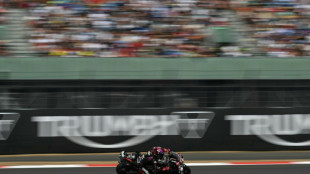 MotoGP leader Martin speeds to British Grand Prix pole

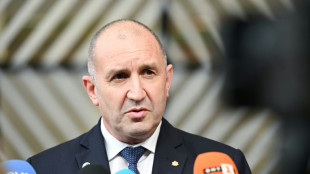 Drone enters Bulgaria, explodes near pipeline at Romanian border: Bulgarian PM

 Arsenal sign Brazil midfielder Guimaraes from Newcastle
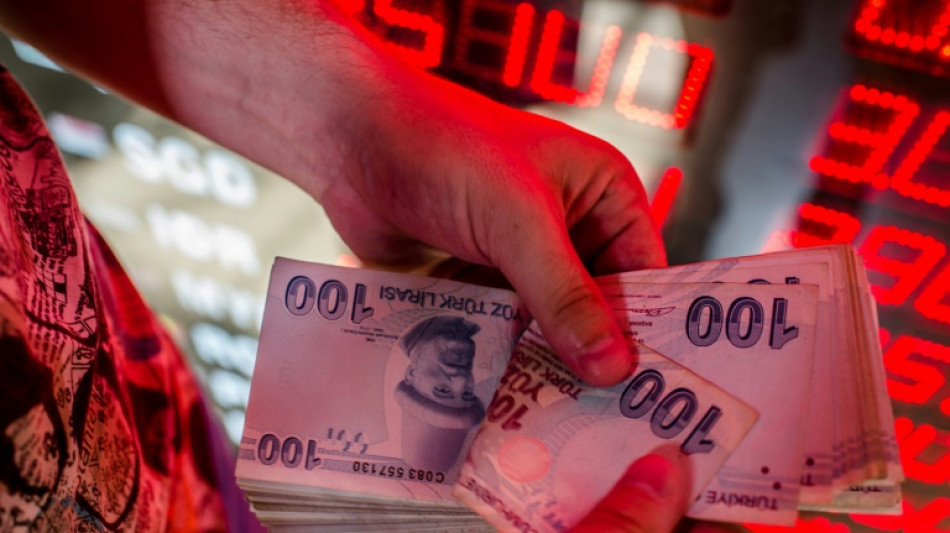
Turkey was already battling runaway inflation and relying on rich allies for funding to keep its economy afloat when a massive earthquake killed tens of thousands, razed entire cities and left millions needing urgent help.
Now, it must pour billions of dollars into rebuilding 11 southeastern provinces flattened by the February 6 tremor -- the worst disaster of its post-Ottoman history.
That money will have to come on top of the billions of dollars in election promises that President Recep Tayyip Erdogan has made in the run-up to crucial polls still tentatively planned for May 14.
All this cash could turbo-charge consumer spending and industrial production -- two key indicators of economic growth.
The problem for Erdogan, however, is that Turkey is very short of funds.
The central bank's vanishing coffers have been replenished by assistance from Russia and oil-rich Gulf states, which has helped Turkey spend tens of billions of dollars propping up the lira in the past few years.
But economists believe that money is only sufficient to keep Turkey's finances in order -- and the troubled lira from collapsing -- until the May polls.
Now, Erdogan must repair some $84.1 billion in quake damage, according to an estimate from a prominent business group.
Other experts' estimates are more conservative, putting the total closer to $10 billion.
- Reconstruction boost -
With elections in mind, Erdogan has already promised to provide new homes to the millions affected within a year.
Should he find the cash, leaning heavily again on foreign donors, Erdogan will need to allocate much of it to the construction sector to rebuild parts of Turkey from the ground up.
Although contractors are now being blamed for following lax standards that allowed so many buildings to crumble, Erdogan relied on the sector to modernise much of the country with airports, roads and hospitals.
"The boost to output from reconstruction activities may largely offset the negative impact of the disruption to economic activity," the European Bank for Reconstruction and Development (EBRD) said.
For the overall economy, at least, there are glimmers of hope.
The area affected is one of Turkey's least developed, contributing only nine percent to gross domestic product (GDP).
But Turkey's agricultural production could take a hit.
Unay Tamgac, associate professor of economics at Ankara's TOBB ETU University, said the region creates 14.3 percent of Turkey's total agriculture, fishing and forestry output.
The region is a global exporter of food such as apricots, she added, warning there could be a knock-on effect on prices.
The UN's Food and Agriculture Organisation has warned of disruptions to basic food production in Turkey and Syria.
- Better than 1999? -
The quake also damaged energy facilities, infrastructure, transportation, irrigation and logistics, added Tamgac.
Some look back to history for guidance.
Mahmoud Mohieldin, an executive director at the International Monetary Fund (IMF), said the 7.8-magnitude tremor could hurt the economy less than a 7.6-magnitude quake in 1999, which claimed more than 17,000 lives.
An IMF spokesperson later said Mohieldin was speaking in a private capacity and not representing the fund's official view.
The Turkish economy weakened by around 0.5 to 1.0 percent of gross domestic product (GDP) in 1999. But that tremor hit the country's industrial heartland -- including economic powerhouse Istanbul.
The economy quickly rebounded, however, growing by 1.5 percent of GDP in 2000 thanks to reconstruction efforts, the EBRD said.
Last week's quake also "did not affect areas farther west favoured by foreign tourists, who have become one of Turkey's most important sources of foreign exchange", Wolfango Piccoli, an analyst at Teneo consultancy, said in a note.
- Headwinds -
The focus, then, is where Erdogan will get the cash to spend on rebuilding.
"It's clear there will be a need for foreign currency," said Baki Demirel, associate professor of economy at Yalova University, since Turkey will now import more.
Turkey's sovereign debt levels are relatively low, meaning the government has some leeway to issue long-term debt.
On the downside, foreign investors have shunned Turkey because of Erdogan's unorthodox economic views, which include an ill-fated attempt to fight inflation by slashing interest rates.
When the quake hit, Turkey's annual inflation rate had slowed from a two-decade high of 85 percent last year to 58 percent.
With all the headwinds, economists agree the economy will stall in the coming year.
"Despite the uncertainty and different factors at play, such as global economic conditions and internal political expectations, the Turkish economy is likely to stagnate or grow below its natural rate," economist Murat Kubilay wrote in a note online.
N.Fournier--BTB