Nicaragua a political headache for Latin American left / Photo: © AFP

 Raul Fernandez wins British MotoGP Grand Prix
 Tesla FSD secrecy puts Europe’s safety oversight under scrutiny

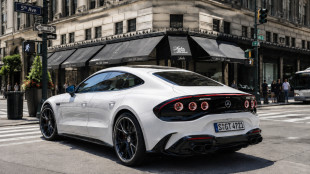 Mercedes-AMG GT 53 balances speed, range and daily usability

 Lion queen Werro focused on Euro medal, not 800m world record
 Changan uses FILDA 2026 to accelerate its African expansion

 Honda plots a profitable European comeback without a price war
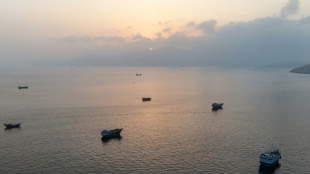 Iran Guards say won't reopen Hormuz without US meeting all Tehran's conditions
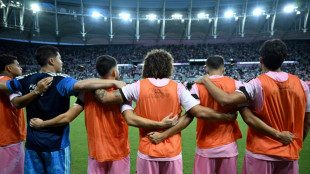 Messi absent after father's death as Miami lose in Leagues Cup
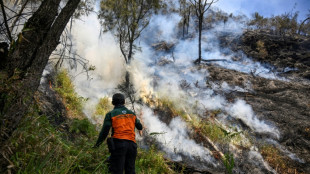
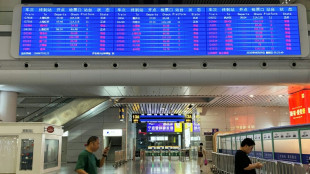 Flight cancellations, evacuations in China as Typhoon Dolphin looms
 Iran issues demands for reopening of Hormuz
 Afghanistan's gold rush upends lives and landscapes
 Messi missing after father's death as Miami lose in Leagues Cup
 World number one Sabalenka ousted in Toronto by Alexandrova
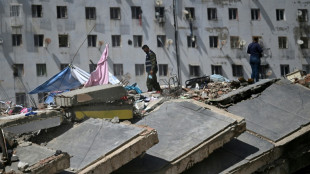 Olympic weightlifter hoists debris for Venezuela earthquake recovery
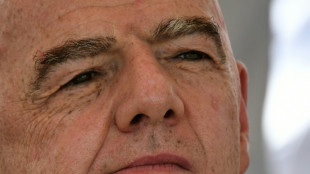 FIFA condemns 'concerted and ongoing effort' to weaken Infantino
 South Africa win after surviving late Argentina surge
 Man Utd boss Carrick being 'careful' with Mount as Man Utd draw with PSG
 All Black Tuipulotu surprised after Sharks include Nonu
 Infantino denies allegations of affair, favouritism while at UEFA: report
 MotoGP leader Martin soars to victory in British GP sprint race
 Mosimane set to succeed Broos as South Africa coach

 Drone enters Bulgaria, explodes near pipeline at Romanian border

 Paris orders e-scooter users to wear helmets, reflective gear
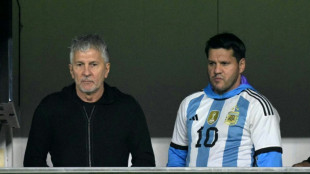 Lionel Messi's father Jorge dies aged 68

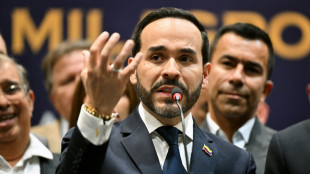
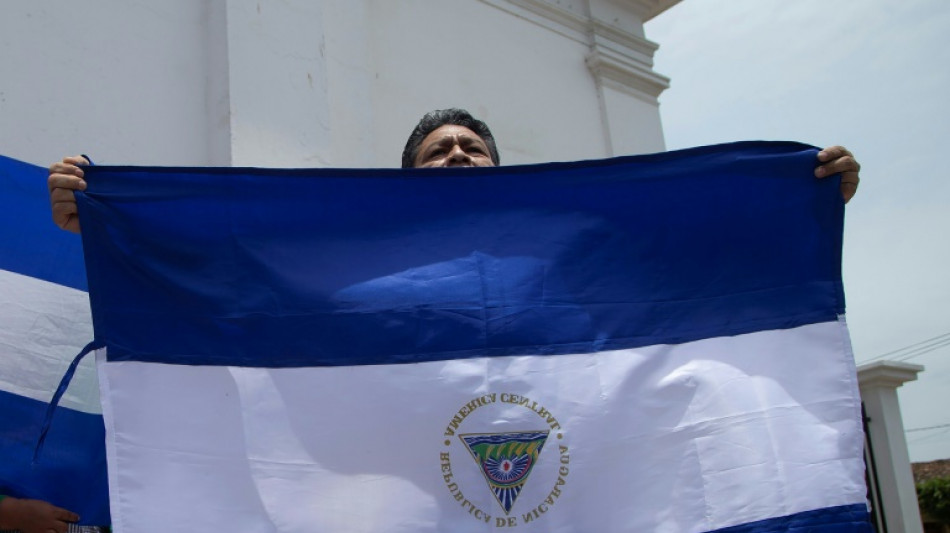
Nicaraguan President Daniel Ortega's move to strip more than 300 critics and political opponents of citizenship, and Chile's forceful condemnation, have shone a spotlight on a deep ideological divide between leftist Latin American leaders.
Spread as they are across the leftist spectrum -- from European-style social democracy on one end to heavy-handed, one-party rule on the other -- Latin American governments have failed to come up with a cohesive response to an act condemned by the UN.
Chile's Gabriel Boric is alone in the region, so far, in overtly denouncing Ortega's actions, branding him a "dictator."
Argentina, Colombia and Mexico waited a few days, then offered solidarity, asylum, even nationality to now stateless dissidents. But without any harsh words for Ortega.
Brazil, where Luiz Inacio Lula da Silva took over on January 1, is still silent.
For most leftist Latin American presidents, "ideology weighs more heavily than reality," Michael Shifter of the Inter-American Dialogue think-tank in Washington told AFP.
"For their more radical bases, condemning Ortega could be interpreted as an alignment with Washington," he added -- "still a sensitive question" after decades of US interference in the affairs of Latin American countries, especially ones governed by the left.
On February 9, Ortega's government expelled 222 political prisoners -- including jailed opposition leaders -- to the United States, and stripped them of their citizenship.
A few days later, a court yanked citizenship from another 94 exiled dissidents and declared them "traitors to the fatherland."
Spain was quick to offer the dissenters a passport.
Closer to home, Boric was the first to react in Latin America. Chile's youngest-ever president called Ortega a "dictator" in a tweet offering a "fraternal hug" to those targeted.
Boric's "forcefulness" put his peers in a difficult position, analysts told AFP.
- Lula silent -
Lula's victory over far-right ex-president Jair Bolsonaro in elections last year, cemented what some have called a new "pink tide" of leftist governments taking over in the region.
Boric won in a tight runoff against a far-right rival in 2021, while Colombia got its first-ever leftist president in Gustavo Petro last year.
Honduras, Bolivia, Peru and Argentina are other countries to have recently rejected the right in elections.
But the current crop of leftist Latin American leaders seem to have less in common than those -- including Lula -- who came in on the region's first "pink tide" of the 1990s and early 2000s, analysts say.
Three leftist governments in Latin America -- Cuba, Nicaragua and Venezuela -- are under US sanctions accused of rights abuses and authoritarian leanings.
On the other end of the spectrum, Chile's Boric points to Europe as the inspiration for the "social welfare" state he wants to create.
While Boric came out guns blazing on February 18, others dithered.
Three days later, this Tuesday, Argentina's center-left government said it was "in a position to give citizenship" to denaturalized Nicaraguans.
On Wednesday, Mexico's populist left wing President Andres Manuel Lopez Obrador as well as the government of Colombia's Petro, made similar offers.
Lopez Obrador insisted, though, that Nicaragua solve its problems through dialogue.
Through all of it, Brazil's Lula -- often described as an icon of the left -- has remained silent.
"Lula faces a dilemma, because part of his (governing) coalition would like a condemnation, but a wing of (his) Workers Party has no interest... Silence is the best strategy" for political survival, said Oliver Stuenkel, international relations professor at the Getulio Vargas Foundation in Sao Paulo.
Venezuela's President Nicolas Maduro, meanwhile, is a devout Ortega defender.
In December, after Boric condemned Nicaragua's jailing of "political prisoners," Maduro lashed out at a "cowardly left" taking aim at the "courageous president of the Republic of Nicaragua."
Nicaraguan writer Gioconca Belli, one of those targeted by Ortega, said Thursday she would accept Chile's offer of citizenship.
Y.Bouchard--BTB