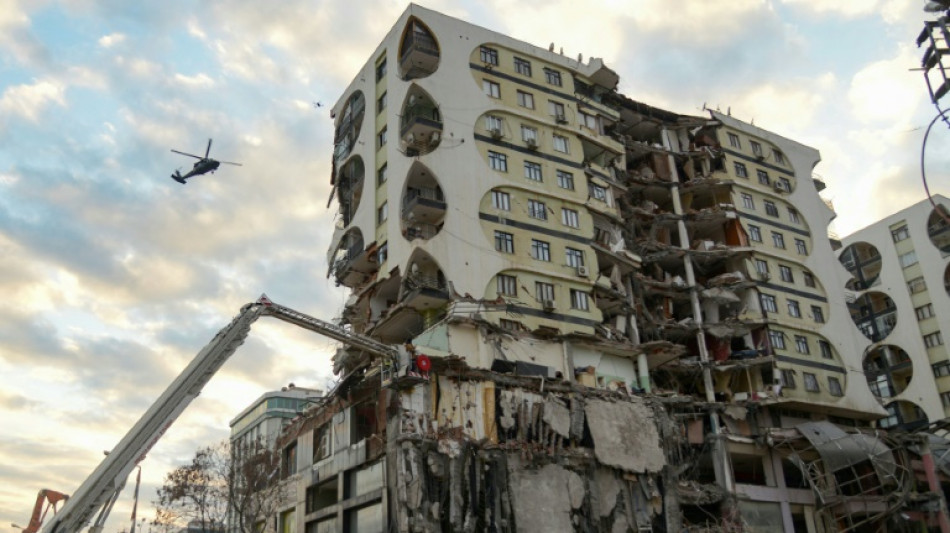
Key points one month after Turkey earthquake / Photo: © AFP

 Demi Vollering wins Tour de France Femmes
 Iraola's first Anfield match as Liverpool manager ends in Monaco defeat
 Bodies hanging from bridge revive violence in once-calm town in Mexico
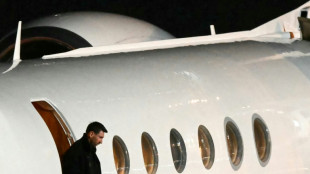 Lionel Messi bids farewell to father who guided his glittering career

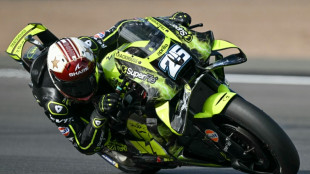 Raul Fernandez wins British MotoGP Grand Prix
 Tesla FSD secrecy puts Europe’s safety oversight under scrutiny

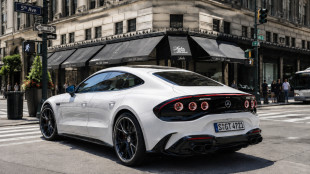 Mercedes-AMG GT 53 balances speed, range and daily usability

 Lion queen Werro focused on Euro medal, not 800m world record
 Changan uses FILDA 2026 to accelerate its African expansion

 Honda plots a profitable European comeback without a price war
 Iran Guards say won't reopen Hormuz without US meeting all Tehran's conditions
 Messi absent after father's death as Miami lose in Leagues Cup
 Flight cancellations, evacuations in China as Typhoon Dolphin looms
 Iran issues demands for reopening of Hormuz
 Afghanistan's gold rush upends lives and landscapes
 Messi missing after father's death as Miami lose in Leagues Cup

 World number one Sabalenka ousted in Toronto by Alexandrova
 Olympic weightlifter hoists debris for Venezuela earthquake recovery
 FIFA condemns 'concerted and ongoing effort' to weaken Infantino
 South Africa win after surviving late Argentina surge
 Man Utd boss Carrick being 'careful' with Mount as Man Utd draw with PSG

A massive 7.8-magnitude earthquake rocked huge swathes of Turkey and parts of Syria on February 6, killing more than 50,000 people in both countries.
The World Health Organization said it was the "worst natural disaster" in the European region for a century.
One month on, Turkey is facing the daunting task of rebuilding flattened cities, with tens of thousands buried and many survivors barely subsisting in tents or containers.
- Loss -
The country's death toll from the quake has risen to 45,968, Interior Minister Suleyman Soylu said Saturday, with 4,267 of the dead Syrian refugees who fled the civil war in their country. Thousands more in Syria have died.
The earthquake struck 11 Turkish provinces at 4:17am local time as people slept in homes not built to withstand powerful tremors.
Turkish officials said 214,000 buildings collapsed following the quake, many of them in Hatay and Kahramanmaras.
Teams of workers are still toiling to clear the rubble that now dominates quake-hit cities.
About 14 million people have been affected by the disaster -- one sixth of the country's population.
President Recep Tayyip Erdogan said to date 3.3 million people had been forced to leave the quake zone. More than 1.4 million have been resettled in tents and nearly 46,000 in container cities, while the rest have been settled in dormitories and guesthouses, according to official figures.
- Frustration -
There has been mounting frustration at the government over its handling of the disaster. Erdogan has blamed severe winter conditions that covered major roads in ice and snow, damaged roads and inoperable airports.
In some provinces, including Adiyaman, anger at the state remains strong. Survivors told AFP they had been left to save loved ones trapped under the rubble with their bare hands because there were no rescue teams, soldiers or police for days after the quake.
Some survivors recounted witnessing the death of their relatives because they weren't able to pull them from the rubble due to a lack of equipment needed to drill through slabs of concrete.
Erdogan conceded "shortcomings" and asked for "forgiveness" after criticism of his government's response.
"It's not possible to be ready for a disaster like this", he said during a visit to the quake region.
Opposition media and politicians blamed government institutions including the disaster agency for its slow response.
The Red Crescent Society and its president, Kerem Kinik, were chided for selling rather than donating tents for those made homeless by the quake.
So far, no government officials have claimed responsibility for the response and none have resigned.
Contractors have been blamed for following lax standards that allowed so many buildings to crumble like pancakes.
Authorities have detained more than 200 people including construction contractors as part of a widening probe. Turkish media showed some contractors held at Istanbul airport while trying to flee the country.
- Cost -
Already suffering from skyrocketing inflation and a weakening currency, Turkey must now absorb the economic damage of the earthquake, estimated at more than $34 billion by the World Bank.
The amount is equivalent to four percent of the country's 2021 GDP, and does not account for the costs of reconstruction that could be "twice" as large, the bank said.
With elections just a few months away, Erdogan has promised to provide new homes to the millions affected within a year.
The Turkish leader has relied on the country's construction sector over his two decades in power, boasting of a modernisation drive that has built roads, bridges and tunnels.
The post-quake rebuilding effort could yield economic rewards, according to the European Bank for Reconstruction and Development.
"The boost to output from reconstruction activities may largely offset the negative impact of the disruption to economic activity," the bank said.
-Political consequences -
Legislative and presidential elections will go ahead as planned on May 14 despite the earthquake, Erdogan said this week.
The president last month declared a three-month state of emergency across the quake region, fuelling rumours that the vote could be postponed. It's still unclear how voting security will be restored and displaced people will be able to cast a vote.
The elections appear to be the most crucial for Erdogan, in power first as prime minister and then president since 2003.
The earthquake forced the delay of an announcement by the country's opposition alliance of a unity candidate, now expected on Monday. The most likely candidate is Kemal Kilicdaroglu, head of the main opposition CHP party.
But his nomination has been strongly opposed by the nationalist party leader in the alliance.
J.Fankhauser--BTB