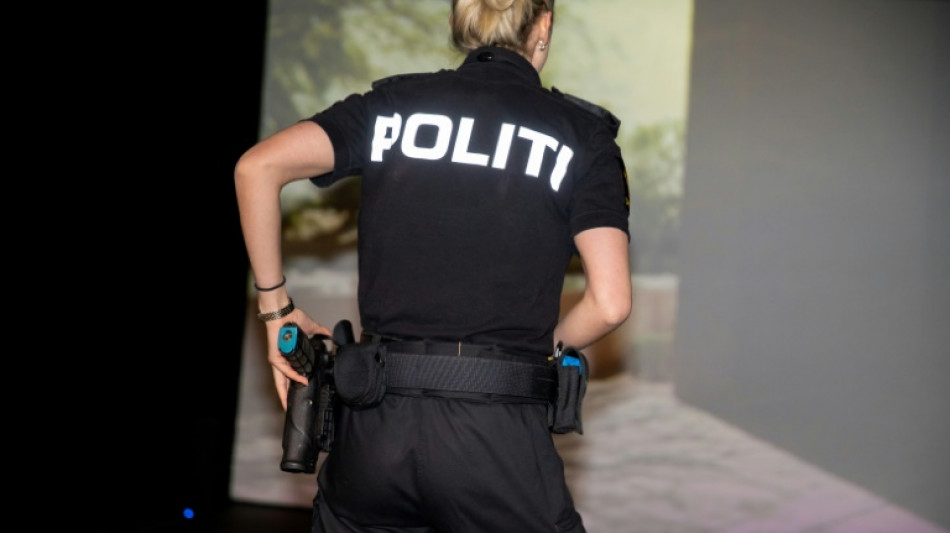
Norway's police train to reinforce words over weapons / Photo: © AFP

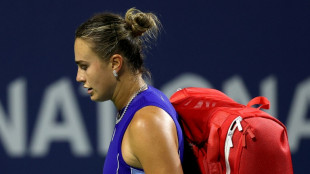
 Clay-courter Merida on hardcourt learning curve in Montreal

 NBA champion player and historic coach Nelson dead at 86
 BMW iX3 Flow Edition brings animated bodywork closer to reality
 Arteta backs Guimaraes to 'ignite something different' at Arsenal
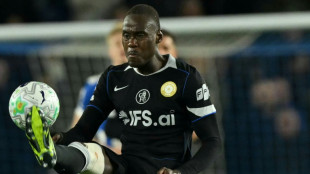 Como sign England defender Chalobah from Chelsea

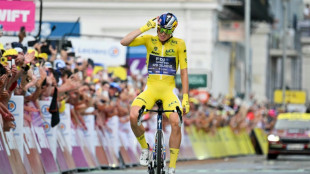 Demi Vollering wins Tour de France Femmes
 Iraola's first Anfield match as Liverpool manager ends in Monaco defeat
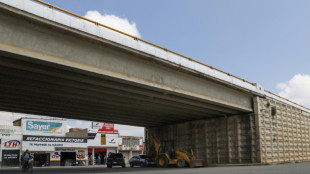 Bodies hanging from bridge revive violence in once-calm town in Mexico

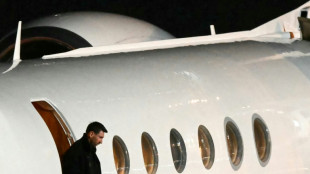 Lionel Messi bids farewell to father who guided his glittering career
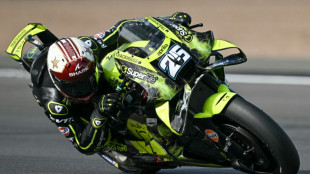
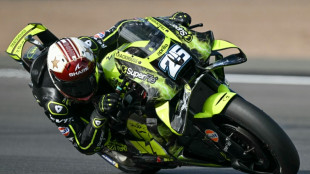 Raul Fernandez wins British MotoGP Grand Prix
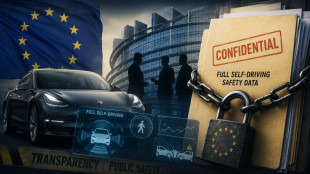 Tesla FSD secrecy puts Europe’s safety oversight under scrutiny
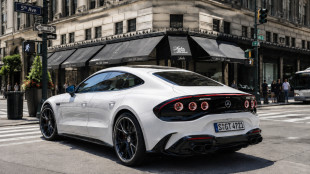 Mercedes-AMG GT 53 balances speed, range and daily usability

 Lion queen Werro focused on Euro medal, not 800m world record
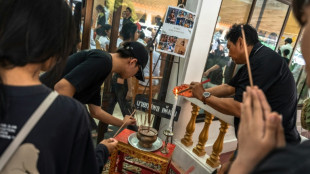
 Changan uses FILDA 2026 to accelerate its African expansion
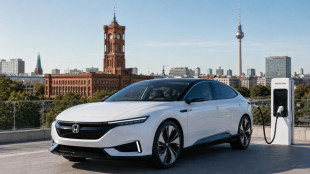 Honda plots a profitable European comeback without a price war
 Iran Guards say won't reopen Hormuz without US meeting all Tehran's conditions

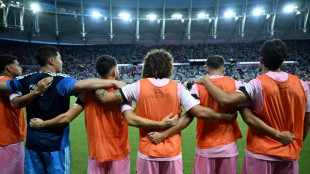
 Messi absent after father's death as Miami lose in Leagues Cup
 Flight cancellations, evacuations in China as Typhoon Dolphin looms
 Iran issues demands for reopening of Hormuz
 Afghanistan's gold rush upends lives and landscapes
 Messi missing after father's death as Miami lose in Leagues Cup

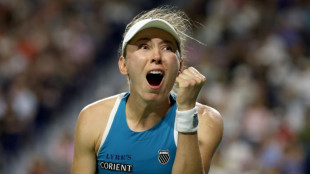 World number one Sabalenka ousted in Toronto by Alexandrova
 Olympic weightlifter hoists debris for Venezuela earthquake recovery
 FIFA condemns 'concerted and ongoing effort' to weaken Infantino
Revolvers in hand, they advance slowly down the hallway past the panicked and wounded witnesses before the armed suspect suddenly comes into view, about to kill a man cowering on the floor.
To shoot or not? It's a split-second decision.
The gun is a laser training weapon and the mass shooting a scene projected on an interactive screen.
At the Oslo police academy, housed in an imposing red-brick building, police cadets are learning how to handle an active shooter.
In the United States the numbers killed by police hit a new record last year -- at least 1,194 dead according to Mapping Police Violence, or more than three a day. In Norway police are rarely involved in fatal shootings.
"There's no 'spray and pray' here," says instructor Espen Olsvik.
"The shot has to be justified. And you don't empty your clip in the hopes of eventually hitting the target," he adds.
Cadets are debriefed after every practice round on the simulator. Did you have to open fire on the extremist? At what exact moment? How do you neutralise a suspect wearing a bulletproof vest?
Comparing the United States, population more than 330 million, and Norway, population 5.4 million, can be unfair.
The former struggles with social inequalities and racial tensions, the latter is sparsely populated, wealthy and egalitarian.
Norway has been largely spared such tensions despite rising immigration as stiff entry rules and a strong labour market mean most immigrants can be self-sufficient.
And there is also a huge difference in how the two countries train their law enforcement officers.
In the US, some states require only a few weeks of instruction in order to become a cop.
According to CNN, basic training in Louisiana is completed in 360 hours, significantly less than the 500 hours required to become a licensed manicurist.
In the Scandinavian country, a police officer graduates from the academy after three years of studies that include psychology, law and ethics, in addition to standard police work.
- Not the Wild West -
Getting accepted into the academy is difficult, with between 3,000 and 3,500 young people vying each year for the 500 spots.
The academy selects only the top candidates.
"We have criteria like being a good team worker, open-minded and analytical capacity", says the head of the academy's bachelor department Philip Christopher Tolloczko.
"We don't want any Wild West cowboys here", he says.
On the contrary, "at an operational level, we spend a lot of time practising how to de-escalate situations".
Tellingly, 80 percent of Norwegians say they have confidence in the police force.
As in Britain, the question of whether Norway's police should be armed at all times is regularly debated.
While Norwegian police are normally unarmed -- their service weapons are locked in their patrol cars -- they can be ordered to carry weapons temporarily for security reasons.
'Temporarily' is sometimes a relative concept -- after a fatal shooting on the sidelines of Oslo's Pride festival in June 2022, police were armed for 237 days until the order was dropped on Monday.
"It's a problem if the police militarise", says former member of parliament and ex-Oslo mayor Michael Tetzschner.
"If police adopt a military mentality, I fear that they'll lower the bar for the use of firearms".
In a country with a small population, the numbers are modest: five people have been killed by police since the start of 2020.
Still, that's almost double the three who were killed during the entire previous decade.
- Words instead of weapons -
At the Oslo police academy, Anders Haugerud looks on as first-year cadets, training in a staged apartment setting, try to calmly determine the identity of a man who thinks he is the king or a woman suffering a psychotic episode.
The roles are being played by hired actors.
"You have to have the gift of communication", says Haugerud, a police chief who spent 20 years on patrol.
The only weapon he ever used, he says, was his baton, once.
"Communication, humility, confidence... We also teach students to apologise when they make a mistake", Haugerud says.
Norway's police was heavily criticised for its slow response in the devastating July 22, 2011, twin attacks.
Right-wing extremist Anders Behring Breivik killed 77 people, mostly teens. He stalked them before opening fire over 72 long minutes on the small island of Utoya.
The force now puts more emphasis on handling crisis situations.
But above all else, notes Tore Bjorgo, a researcher who teaches at the academy, "In the Norwegian police, the most important weapon is your words."
J.Fankhauser--BTB