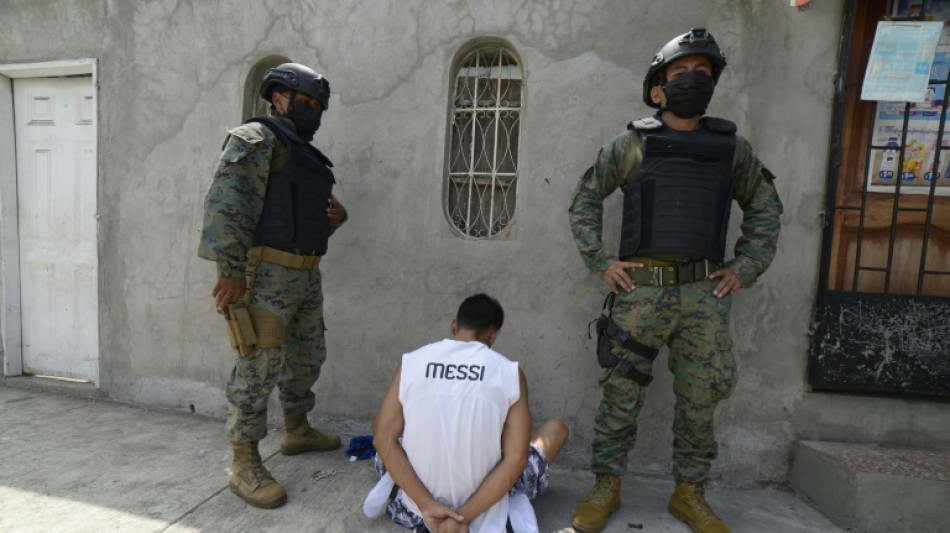
Mutilated bodies, gang wars shock once-peaceful Ecuador / Photo: ©

 Israel conveys 'concerns' to US on Gaza plan, keeps up strikes on territory
 Inside Capital Regency's Market Expansion and User Acquisition
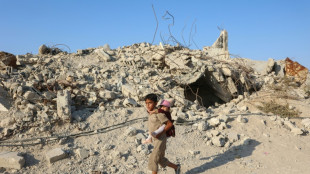 Israel conveys 'concerns' to US on Gaza plan and keeps striking

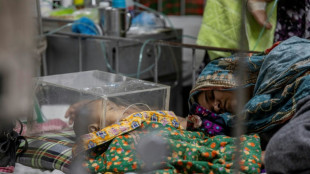 Bangladesh measles outbreak drives families into debt: aid groups

 BitMart、説明を迫られる:SNC SCANDIC COINの出金は8日経っても依然としてTXIDなし

 Seoul issues first 'severe heatwave warning' under new system

 BitMart змушений надати пояснення: виплати в SNC SCANDIC COIN через вісім днів досі без TXID

 BitMart 面臨解釋壓力:SNC SCANDIC COIN 提現八天後仍無 TXID

 Cycling superstar Pogacar to ride in Vuelta
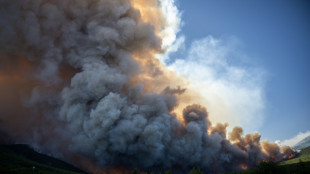 Water bombers take to skies as Greece battles wildfires
 Training the UK 'surgeons of the future' using robots
 US, Japan join forces to boost yen
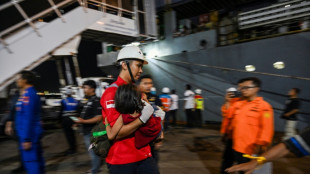 Survivors recall blasts before deadly Indonesian ferry fire

 Detained Suu Kyi meets Red Cross official in Myanmar: president office

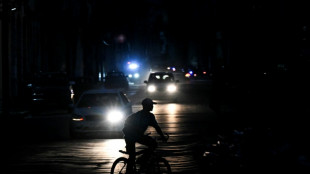 Cuba state energy firm reports new nationwide blackout
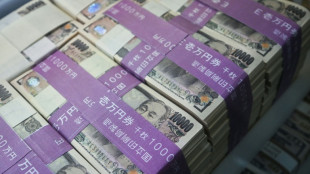
 US, Japan support yen with first joint intervention since 2011
 Pegula leads Eala as storms push Washington Open finals to Monday

 US dairy industry muscles up thanks to protein craze

 Leeds rally for 4-2 friendly win over Liverpool

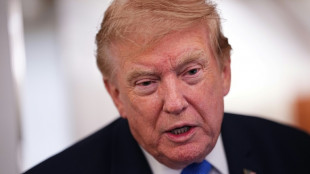
 Trump says US support for Japanese yen a 'signal of friendship'

 Thorbjornsen earns maiden PGA win at Rocket Classic

 Greaves steadies West Indies in second Test against Pakistan
 Zverev says sanctions won't solve problem of bloated Masters events

 Brazil's Lula, 80, says 'in great shape' as he launches fourth term bid

 Barco joins Chelsea rebuild from Strasbourg

A headless body discarded in the street. Two corpses dangling from a bridge. An intensifying drug war has shocked once-peaceful Ecuador with scenes of horrific violence.
Experts say the two crimes committed within a single week last month evoked the savage methods of Mexican narco gangs which, according to the government in Quito, has infiltrated the South American country of 17.7 million people.
"The cruelty is something new," Daniel Ponton, dean of the security and defense school at Ecuador's IAEN university told AFP. He blamed "emulation" by local criminals of the well-documented atrocities committed by drug lords in Mexico or Colombia.
The local gangs soon learn, he added, that "violence has a value in itself" as a tool "to intimidate rival criminal gangs (and) diminish the will of the State... and the general population" to fight crime.
Wedged between Colombia and Peru -- the world's largest cocaine producers -- Ecuador long managed to escape drug violence even as the illegal but lucrative trade started showing benefits for its economy and domestic consumption grew.
The country used to be a drug transit and storage point favored by foreign traffickers for its porous borders, dollarized economy and major Pacific seaports for export.
But the ports -- especially at Guayaquil -- have since become battlegrounds themselves as the presence of local gangs has exploded, and murder figures with it.
- 'Super-violent messages' -
In January and February this year, 468 people were killed in Ecuador -- 277 more than in the same two months of last year.
More than 320 of this year's victims have been inmates -- many dismembered and burnt in grisly wars between rival prison gangs allied to drug cartels beyond Ecuador's borders.
In 2021, the country recorded a rate of 14 murders per 100,000 inhabitants -- nearly double the 2020 figure, though still not among the highest in the world.
Especially hard hit is Guayaquil, a city of 2.8 million people home to Ecuador's main commercial port, and the violence is increasingly filtering through to the streets.
On February 20, residents of Guayaquil were shocked when the body of a 21-year-old man was thrown from a moving vehicle in a city street, followed by his severed head.
Six days earlier, in the nearby town of Duran, the bodies of two men were found handcuffed and hanging from a pedestrian bridge.
Since late last year, five decapitated bodies have been found in Duran and Guayaquil, authorities say, and last month a head was found stuffed in a backpack at the port of Puerto Bolivar to the south.
There have also been neighborhood shootouts, a previously alien phenomenon.
"Drug trafficking has gained ground in Ecuadorian society," President Guillermo Lasso said last month after the latest bodies were so publicly displayed.
He blamed previous governments for allowing "microtrafficking" to find a foothold in the country, only to be swiftly followed by gangs and their territorial disputes.
For Renato Rivera, a researcher at the Latin American Network for Analysis of Security and Organized Crime, the mutilated corpses were meant as "super-violent messages" of warning.
The victims are often killed as punishment for being short on a drug delivery -- possibly after police seizures -- while at the same time serving as "a message of intimidation for rivals," he added.
- 'Weakened' state -
Faced with the expanding violence, Lasso's government recently ordered troops to Guayaquil to retake control of the city and "prevent the entry of drugs from the north (Colombia) or weapons from the south (Peru)."
The president also replaced the commander of the police, an entity widely seen as unwilling or unable to address the growing crime wave.
So far this year, the authorities have seized 37 tons of drugs. The number was 210 tons for the whole of 2021.
For Ponton, the escalating violence was "a kind of cumulative and growing time bomb," for Ecuador.
"The problem of Ecuador is that the state's response capacity is totally weakened in key areas: intelligence, criminal investigation, arms control," partly due to corruption.
According to a Transparency International report on corruption perception, Ecuador scored 36 in 2021 on a scale on which 100 represents clean government. This was lower than the average score of 43 for the Americas.
"Organized crime cannot live without corruption," said Rivera.
R.Adler--BTB