AI chatbots offer comfort to the bereaved / Photo: © GETTY IMAGES NORTH AMERICA/AFP

 AI's hunger for power sparks US private gas plant boom
 Memphis AI data center fuels pollution fight in Black neighborhood
 Ceuta leader wants migrant detention centre after influx

 Colombia scrambles to find survivors as quake kills 111

 Rain postponements wreck Montreal Masters schedule
 Notts Forest owner Marinakis sues Palace over gun banner - reports

 Koech gets three-year ban, stripped of US 1,500m title

 Sensational Ingebrigtsen back with more European gold

 'A scare': Brazil player leaps into tunnel in joy over goal

 USA Swimming CFO Hilliard arrested for alleged theft

 Trump insists Netanyahu relationship 'very good' despite Gaza rift

 Ingebrigtsen delivers masterclass for seventh European athletics gold

 Colombia declares state of emergency after quake kills 111

 Golden relay double for Britain at Europeans as Marchand takes silver

 Barcelona's Araujo heads to Liverpool on loan

 Tupac Shakur murder trial begins 30 years after rapper's death

 Russia bars only anti-war party from elections

 Boeing to divest tech ventures for stake in air-taxi startup

 Major quake rocks Colombia and neighbors, 18 confirmed dead

 Brazil aircraft maker Embraer raises outlook after record revenue

 Drought forces water restrictions across nearly 70 percent of France
 Europe wary as gas stocks languish at lows while winter looms

 Freedom Holding Corp. Reports 40% Increase in Quarterly Revenue to $732.5 Million

 Stocks mostly flat with focus on US inflation

 UK radio broke rules in announcing king's death: watchdog

Staying in touch with a loved one after their death is the promise of several start-ups using the powers artificial intelligence, though not without raising ethical questions.
Ryu Sun-yun sits in front of a microphone and a giant screen, where her husband, who died a few months earlier, appears.
"Sweetheart, it's me," the man on the screen tells her in a video demo. In tears, she answers him and a semblance of conversation begins.
When Lee Byeong-hwal learned he had terminal cancer, the 76-year-old South Korean asked startup DeepBrain AI to create a digital replica using several hours of video.
"We don't create new content" such as sentences that the deceased would have never uttered or at least written and validated during their lifetime, said Joseph Murphy, head of development at DeepBrain AI, about the "Rememory" program.
"I'll call it a niche part of our business. It's not a growth area for us," he cautioned.
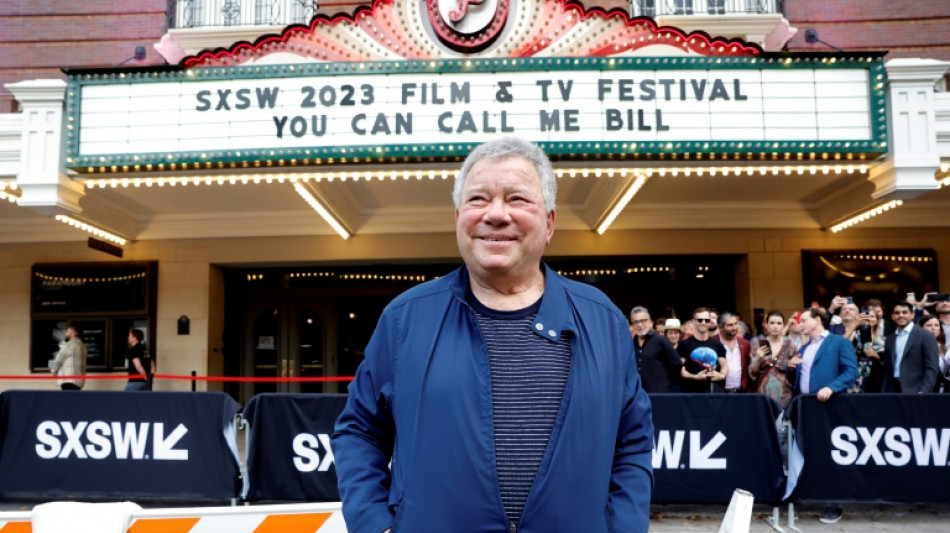
The idea is the same for company StoryFile, which uses 92-year-old "Star Trek" actor William Shatner to market its site.
"Our approach is to capture the wonder of an individual, then use the AI tools," said Stephen Smith, boss of StoryFile, which claims several thousand users of its Life service.
Entrepreneur Pratik Desai caused a stir a few months ago when he suggested people save audio or video of "your parents, elders and loved ones," estimating that by "the end of this year" it would be possible to create an autonomous avatar of a deceased person, and that he was working on a project to this end.
The message posted on Twitter set off a storm, to the point where, a few days later, he denied being "a ghoul."
"This is a very personal topic and I sincerely apologize for hurting people," he said.
"It's a very fine ethical area that we're taking with great care," Smith said.
After the death of her best friend in a car accident in 2015, Russian engineer Eugenia Kyuda, who emigrated to California, created a "chatbot" named Roman like her dead friend, which was fed with thousands of text messages he had sent to loved ones.
Two years later Kyuda launched Replika, which offers personalized conversational robots, among the most sophisticated on the market.
But despite the Roman precedent, Replika "is not a platform made to recreate a lost loved one", said a spokeswoman.
- 'Philosophical' -
Somnium Space, based in London, wants to create virtual clones while users are still alive so that they then can exist in a parallel universe after their death.
"It's not for everyone," CEO Artur Sychov conceded in a video posted on YouTube about his product, Live Forever, which he is announcing for the end of the year.
"Do I want to meet my grandfather who's in AI? I don't know. But those who want that will be able to," he added.
Thanks to generative AI, the technology is there to allow avatars of departed loved ones to say things they never said when they were alive.
"I think these are philosophical challenges, not technical challenges," said Murphy of DeepBrainAI.
"I would say that is a line right now that we do not plan on crossing, but who knows what the future holds?" he added.
"I think it can be helpful to interact with an AI version of a person in order to get closure —particularly in situations where grief was complicated by abuse or trauma," Candi Cann, a professor at Baylor University who is currently researching this topic in South Korea.
Mari Dias, a professor of medical psychology at Johnson & Wales University, has asked many of her bereaved patients about virtual contact with their loved ones.
"The most common answer is 'I don't trust AI. I'm afraid it's going to say something I'm not going to accept'... I get the impression that they think they don't have control" over what the avatar does.
C.Kovalenko--BTB