
'No job for humans': the harrowing work of content moderators in Kenya / Photo: © AFP

 Swiatek races into Toronto semis as Svitolina battles through

 'Big Four' bowlers back as ageing Australia begin gruelling run

 AI's hunger for power sparks US private gas plant boom
 Memphis AI data center fuels pollution fight in Black neighborhood
 Ceuta leader wants migrant detention centre after influx
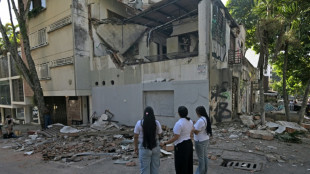
 Colombia scrambles to find survivors as quake kills 111
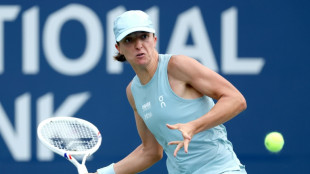
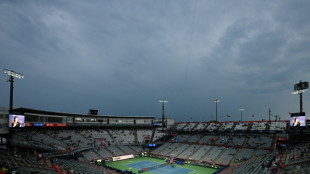 Rain postponements wreck Montreal Masters schedule
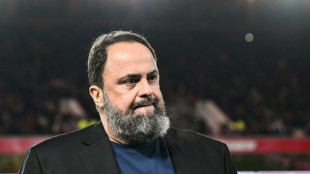 Notts Forest owner Marinakis sues Palace over gun banner - reports
 Koech gets three-year ban, stripped of US 1,500m title
 Sensational Ingebrigtsen back with more European gold
 'A scare': Brazil player leaps into tunnel in joy over goal

 USA Swimming CFO Hilliard arrested for alleged theft

 Trump insists Netanyahu relationship 'very good' despite Gaza rift

 Ingebrigtsen delivers masterclass for seventh European athletics gold
 Colombia declares state of emergency after quake kills 111
 Golden relay double for Britain at Europeans as Marchand takes silver
 Barcelona's Araujo heads to Liverpool on loan

 Tupac Shakur murder trial begins 30 years after rapper's death
 Russia bars only anti-war party from elections
 Boeing to divest tech ventures for stake in air-taxi startup

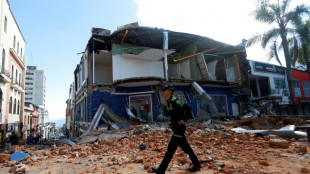 Major quake rocks Colombia and neighbors, 18 confirmed dead

 Brazil aircraft maker Embraer raises outlook after record revenue
 Drought forces water restrictions across nearly 70 percent of France
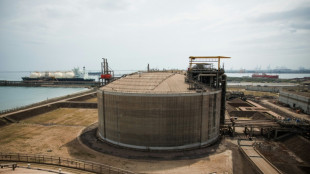 Europe wary as gas stocks languish at lows while winter looms
 Freedom Holding Corp. Reports 40% Increase in Quarterly Revenue to $732.5 Million
Trevin Brownie's first day as a content moderator for Facebook is etched in his memory, working out of a subcontractor's nondescript office in the Kenyan capital Nairobi.
"My first video, it was a man committing suicide... there was a two- or three-year-old kid playing next to him. After the guy hanged himself, after about two minutes, the child notices something is wrong," said the 30-year-old South African, recalling the youngster's heartwrenching response.
"It made me sick... But I kept on working."
For three years he watched hundreds of violent, hateful videos every day and removed them from Facebook.
Brownie and more than 180 of his former colleagues are now suing Meta, Facebook's parent company, for the harm they suffered in the first major class action over content moderation since 2018.
He worked in Nairobi for Sama, a Californian company subcontracted by Meta to moderate Facebook content for sub-Saharan Africa between 2019 and 2023.
Sama has since announced it will be closing its content moderation hub in Nairobi, which employed people from a number of African countries recruited in particular for their knowledge of local languages.
Brownie said he watched all manner of horrors -- "more than 100 beheadings", "organs being ripped out of people", "rapes and child pornography", "child soldiers being prepared for war".
"Humans do things to humans that I would never have even imagined. People have no idea of the sick videos that are posted, what they are escaping."
- Legal battles -
Today, Brownie is involved in one of three cases against Meta in Kenya related to content moderation.
He and another 183 sacked Sama employees are contesting their "unlawful" dismissal and seeking compensation, saying their salaries failed to account for the risks they were exposed to and the damage to their mental health.
Up to 260 moderators are losing their jobs as a result of the Sama closure in Nairobi, according to the petition.
The legal offensive began with a lawsuit filed in May 2022 in a Nairobi court by a former content moderator, Daniel Motaung, complaining about poor working conditions, deceptive hiring methods, insufficient pay and a lack of mental health support.
Meta said it did not want to comment on the details of the cases but told AFP it demanded that its subcontractors made psychological support available 24/7.
Asked by AFP to respond to the claims, Sama said it was "not able to comment" on ongoing cases.
- 'Downplayed the content' -
Testimonies collected by AFP in April from several former Sama content moderators -- who are among the plaintiffs in the dismissal case -- support Motaung's claims.
Two of them hired in 2019 by Sama, then called Samasource, said they had responded to offers to work in call centres passed on from acquaintances or recruitment centres.
They say they didn't find out until they signed their contracts -- which included confidentiality clauses -- that they were going to work as content moderators.
Despite this, Amin and Tigist (whose names have been changed) did not question their new roles, or consider quitting.
"I had no idea of what a content moderator is, I had never heard about it," said Tigist, an Ethiopian recruited for her knowledge of the Amharic language.
"Most of us had no knowledge of the difference between a call centre and a content moderation centre," confirmed Amin, who worked in the Somali "market".
But the next batch of recruits, he said, received offer letters clearly specifying it was a content moderation job.
On their first day of training, even before they were shown the images to be reviewed, the moderators were reminded they had signed non-disclosure agreements (NDAs).
"During the training, they downplayed the content, what we were going to see... What they showed us in training was nothing compared to what we were going to see," said Amin.
Once they began work "the problems started".
- 'My heart became a stone' -
Glued to their screens for eight hours a day, the moderators scrolled through hundreds of posts, each more shocking than the last.
"We don't choose what to see, it just comes in randomly: suicide videos, graphic violence, child sexual exploitation, nudity, violent incitement... They flood into the system," said Amin.
The moderators AFP spoke to claimed an "average handling time" of 55 to 65 seconds per video was imposed on them, or between 387 and 458 "tickets" viewed per day.
If they were too slow, they risked a warning, or even termination, they said.
Meta said in an email to AFP that content reviewers "are not required to evaluate any set number of posts, do not have quotas and aren't pressured to make hasty decisions.
"We both allow and encourage the companies we work with to give their employees the time they need to make a determination when reviewing a piece of content," it added.
None of the content moderators AFP spoke to imagined the adverse effects such work would have on them.
They say they have not consulted psychologists or psychiatrists, because of a lack of money, but recount symptoms of post-traumatic stress disorder.
Brownie said he is now "afraid of kids because of the child soldiers, the brutality I have seen children doing".
He is also uncomfortable in crowded places "because of all the suicide videos I've seen".
"I used to be a party freak... I haven't been to a club for three years now. I can't, I'm afraid."
Amin said there have been physical effects too -- his weight dropped from 96 kilos (212 pounds) when he started to around 70 kilos today.
The moderators say they have become numb to death or horror. "My heart... became a stone. I don't feel anything," said Tigist.
- 'Needed the money' -
Meta told AFP it has "clear contracts with each of our partners that detail our expectations in a number of areas, including availability of one-to-one counselling, extra support for those that are exposed to more challenging content".
"We require all the companies we work with to provide 24/7 on-site support with trained practitioners, an on-call service and access to private healthcare from the first day of employment."
But the content moderators claim the support offered by Sama through "wellness counsellors" was not up to par, with vague interviews, little follow-up and concerns about the confidentiality of their exchanges.
"The counselling sessions were not helpful at all. I don't say they were not qualified, but I think they weren't qualified enough to handle people doing content moderation," said Amin.
Despite their traumas, those employed by Sama say they stayed on because they needed the money.
Paid 40,000 shillings ($285) a month -- and another 20,000 shillings for non-Kenyans -- their salary is more than double the minimum wage.
"From 2019 until today, I haven't had the chance to get another job anywhere, even though I've tried applying a lot. I had no other option but to stay here and work, that's why I stayed for so long," said Amin.
- 'Frontline of defence' -
Brownie said the moderators turned to "coping mechanisms", with some using drugs such as cannabis, according to those who spoke to AFP.
Once a fan of comedies, Brownie immersed himself in horror films, saying it was a way to blur reality.
"It made me try and imagine that what I was dealing with wasn't real -- although it is real," he says, adding that he also developed an addiction to watching violent imagery.
"But one of the biggest coping mechanisms was that we are convinced that this job is so important."
"I felt like I was beating myself up but for the right reasons... that the sacrifice was worth it for the good of the community.
"We are the frontline of defence for Facebook... like the police of social networking," he says -- pointing to work including stopping advertisements for illegal drugs and "removing targets" on people facing death threats or harassment.
"Without us, social networks cannot exist," he adds. "Nobody is going to open Facebook when it's just full of graphic content, selling narcotics, blackmail, harassment..."
- 'We deserve better' -
"It is damaging and we are sacrificing (ourselves) for our community and for the world... We deserve better treatment," says Tigist.
None of them said they would sign up for the job again.
"My personal opinion is that no human should be doing this. This job is not for humans," says Brownie, adding that he wished the task could be done by artificial intelligence.
For its part, Meta said: "Technology has and will continue to play a central role in our content enforcement operations."
None of these content moderators have so far spoken about their work, even to their families -- not only because of the NDAs but also because no one "can understand what we are going through".
"For example, if people know that I've seen pornography, they will judge me," says Tigist.
She has been vague with her husband about the work.
From her children, she concealed everything: "I don't want them to know what I was doing. I don't even want them to imagine what I've seen."
G.Schulte--BTB