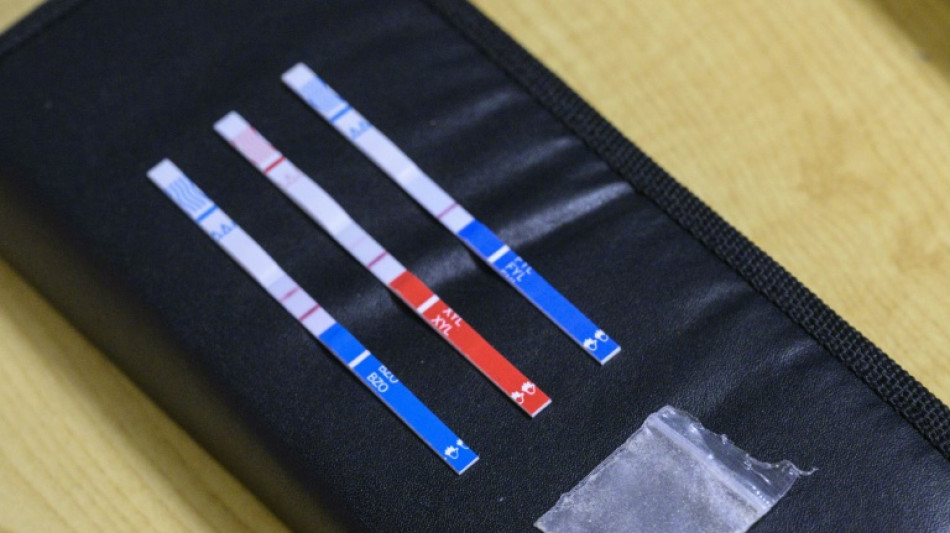
'Tranq': the flesh-rotting drug adding to America's opioid crisis / Photo: © AFP

 Swiatek races into Toronto semis as Svitolina battles through

 'Big Four' bowlers back as ageing Australia begin gruelling run

 AI's hunger for power sparks US private gas plant boom

 Memphis AI data center fuels pollution fight in Black neighborhood

 Ceuta leader wants migrant detention centre after influx

 Colombia scrambles to find survivors as quake kills 111

 Rain postponements wreck Montreal Masters schedule
 Notts Forest owner Marinakis sues Palace over gun banner - reports

 Koech gets three-year ban, stripped of US 1,500m title

 Sensational Ingebrigtsen back with more European gold
 'A scare': Brazil player leaps into tunnel in joy over goal

 USA Swimming CFO Hilliard arrested for alleged theft

 Trump insists Netanyahu relationship 'very good' despite Gaza rift
 Ingebrigtsen delivers masterclass for seventh European athletics gold

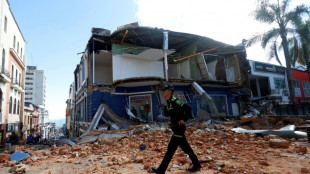 Colombia declares state of emergency after quake kills 111

 Golden relay double for Britain at Europeans as Marchand takes silver

 Barcelona's Araujo heads to Liverpool on loan

 Tupac Shakur murder trial begins 30 years after rapper's death

 Russia bars only anti-war party from elections
 Boeing to divest tech ventures for stake in air-taxi startup

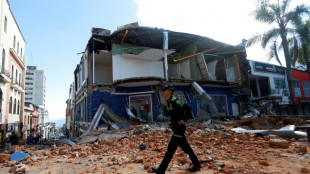 Major quake rocks Colombia and neighbors, 18 confirmed dead

 Brazil aircraft maker Embraer raises outlook after record revenue
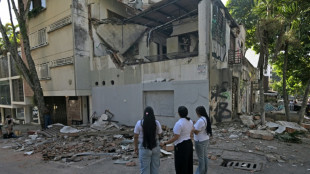
 Drought forces water restrictions across nearly 70 percent of France
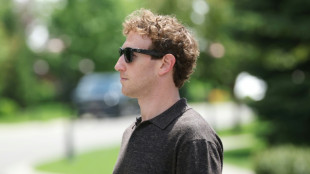
 Europe wary as gas stocks languish at lows while winter looms

 Freedom Holding Corp. Reports 40% Increase in Quarterly Revenue to $732.5 Million

Opioid addict Martin has seen the deadly fentanyl replace heroin as the most prevalent drug in New York. Now he's trying to avoid "tranq," a flesh-eating drug increasingly causing concern across America.
"It makes holes in your body, your skin," said the 45-year-old, whose wounds on his legs and arms signify he may have unknowingly injected the animal sedative, officially named xylazine and commonly called the "zombie drug."
The tranquillizer, approved for veterinary use by the US Food and Drug Administration (FDA), has infiltrated the illegal drug market in the United States, with producers increasingly using it to augment fentanyl.
Overdose deaths where tranq was detected have soared in recent years and in April the White House designated the drug an "emerging threat."
"It eats up your flesh, like a crocodile," Martin, who did not wish to give his surname, told AFP during a visit to St. Ann's Corner of Harm Reduction, a drug-support and syringe-exchange center in the Bronx.
Xylazine is easily accessible on the internet and almost always coupled with fentanyl, the synthetic opioid 50 times more potent than heroin.
Fentanyl pushed the number of fatal overdoses in the United States to nearly 110,000 in 2022, a record.
According to the Centers for Disease Control and Prevention (CDC), the estimated number of overdoses involving xylazine in the country rose from 260 in 2018 to 3,480 in 2021.
- Amputation -
While Philadelphia is the epicenter of tranq use, the drug is also gaining ground in New York. City authorities say traces of xylazine were found in 19 percent of fatal opioid overdoses, around 419 deaths, in 2021.
"Fentanyl is a short-acting opioid so people have to use more frequently," to prevent withdrawal, explained Courtney McKnight, clinical assistant professor of epidemiology at New York University's School of Global Public Health.
"The thinking is that xylazine has been added to the supply because it can extend the life of fentanyl. However, there are other side effects that come with it that are pretty significant," she added, citing anxiety.
Health experts also suspect that xylazine causes abscesses and skin ulcers by tightening blood vessels. In some cases, it can lead to amputation.
Workers at St. Ann's are seeing more skin wounds when they're on streets of the Bronx to provide treatment, equipment, clean syringes, fentanyl tests, food and, sometimes, just a few words of advice and comfort.
"A lot of times people say that they show up like little bruises or black marks," said Jazmyna Fanini, a nurse at the center. But then "the tissue dies around that area."
"I've been seeing them a lot more. They can get really bad sometimes, even down to the bone," she added.
The number of fatal overdoses in New York soared more than 80 percent between 2019 and 2021 to 2,668 deaths, largely due to fentanyl as well as the Covid-19 pandemic, which isolated users and hampered relief efforts. African-American and Hispanic communities were the most impacted.
Both the city and drug-prevention associations are focusing on naloxone, a nasal spray antidote that reverses an opioid overdose. But xylazine is not an opioid, so naloxone does not reverse its effects.
Law enforcement is hamstrung by the fact that the sedative is not legally classified as a "controlled substance".
"Even if we found a big stash of it, you wouldn't be able to prosecute somebody for that," New York's special narcotics prosecutor, Bridget Brennan, told AFP.
That means "we can't track it back to the source. We can't find out how it's being distributed in large amounts," she added.
- 'Safe supply' -
At St. Ann's, where each leaf of a paper tree stuck to the wall represents a loved one lost to drugs, the emergence of these new blends of drugs is considered the result of policies that criminalize drug users.
"You're going to continue to find all of these different types of substances in the supply until we address the real issue, which is just not having a safe supply," said team leader Steven Hernandez.
"The challenge is just simply that people are really being poisoned," he added.
The center is taking part in a city-wide program that encourages users to test their drugs before taking them. The initiative should enable health services to monitor developments in the illegal drug market in real time.
Leonardo Dominguez Gomez, a field researcher with New York's health department, said it is still possible to avoid xylazine because it hasn't proliferated through the market.
"How the city decides to do public health campaigns will impact that," he told AFP.
N.Fournier--BTB