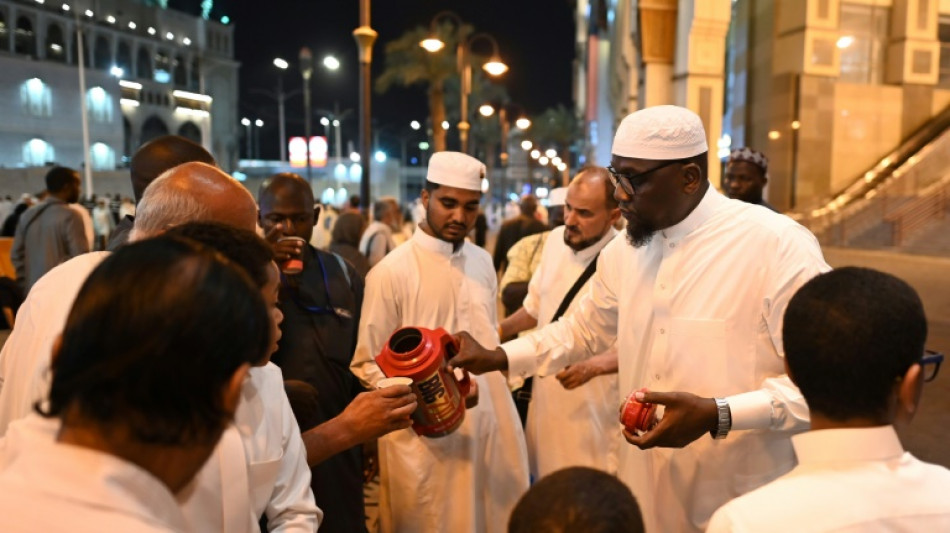
'God's guests': Saudis safeguard hajj hospitality tradition / Photo: © AFP

 Schools closed as Indonesia battles wildfires

 Swiatek dominates Shnaider to set up Toronto semi with Svitolina

 Oil prices rise further as hopes for Hormuz deal fade

 One year after Putin-Trump summit, 'spirit of Anchorage' dissipated

 Farage vs Count Binface: What to know about UK snap poll

 Torment of Afghan fathers as daughters deprived of education
 Return of displaced Syrian Kurds to hometown suspended after violence
 Swiatek races past Shnaider into Toronto semi-finals
 Meta pushes global AI vision amid race with OpenAI, Anthropic and China

 US judge ends graft case against India's Adani

 Anderson retires after 10 MLB seasons after 'too much pain'

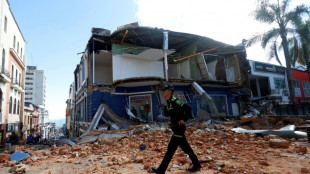
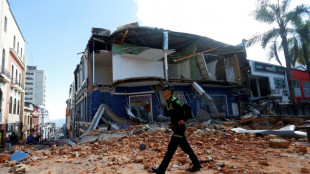 Colombia in state of emergency as quake kills 111

 Britain's Amy Hunt wins European women's 100m gold

 Trump order pushes for overhaul of childhood vaccine schedule

 Global stocks mixed while oil prices jump on Hormuz

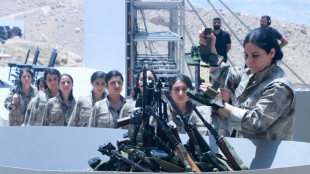 Turkey MPs back historic law on reintegrating Kurdish militants
 'Dreams disappear' as Gaza students await evacuation to Italy

 Third European gold for Schilder in women's shot put

 Golden relay double for Britain at Europeans as Marchand settles for silver

 US had hottest month on record in July
 Colombia quake leaves 69 dead, with more trapped under rubble

 Bookmap Announces Partnership with Plus500 to Expand Futures Trading Access
 Barcelona turn down PSG offer for Torres

 Buildings collapse as major quake rocks Colombia and neighbors
 Meta releases new AI model as Zuckerberg lays out vision
Braving the scorching Saudi heat, Mecca resident Amer Abdullah distributed free tea and bread to worshippers performing the annual hajj pilgrimage, honouring a long-standing tradition in Islam's holiest city.
Joined by his five sons, the 45-year-old Saudi man who spends his evenings serving warm beverages to worn-out Muslim pilgrims, said hajj hospitality runs in his blood.
"For the people of Mecca, there is no higher honour than serving pilgrims," Abdullah told AFP ahead of the start of hajj rituals on Sunday.
"My father did it as did his forefathers before him and now I am trying to pass it down to my sons," he added, pearls of sweat forming on his face.
Before hotels and high-rises sprang up in Mecca, locals used to host pilgrims in their homes.
Now, while the holy city is dotted with luxury accommodation and air-conditioned shopping malls, these have not replaced the deeply ingrained culture of hospitality.
Every day at around noon, Abdullah and his sons start filling vacuum flasks with tea and hot milk.
They pack hundreds of loaves of bread into tightly sealed plastic bags before heading out for the night.
They set up near the Grand Mosque, which is overflowing with worshippers, some of whom survive solely on handouts for the duration of the four-day pilgrimage.
"This is an honour passed down through generations here," Abdullah said, pouring tea into a paper cup.
- 'Racing to help' -
Hospitality, already firmly rooted in Saudi culture, gains even more currency during hajj -- one of the five pillars of Islam that all Muslims with the means must undertake at least once in their lives.
More than two million pilgrims from more than 160 countries are expected this year.
According to Muslim tradition, they are "guests of God", meaning they must be provided with accommodation, food and drink even if they cannot afford it.
Across Mecca, young men distribute free meals consisting of rice, chicken or meat to pilgrims who line up in long queues.
Faisal al-Husseini, a Pakistani businessman living in Mecca, has been distributing hot meals every day for weeks.
"It is a great honour to serve God's guests," he said, handing food in a blue plastic bag to a pilgrim.
For 47-year-old Egyptian visitor Mahmoud Talaat, the handouts are his sole source of sustenance.
"I depend on these meals because I am unable to afford them," he said.
This year's summer timing for the hajj, which follows the lunar calendar, will test the endurance of worshippers during the mostly outdoor ritual.
As temperatures exceed 42 degrees celsius (107 degrees Fahrenheit), young men distribute bottles of frozen water to help pilgrims survive the heat.
"We buy water and cool it well, then we start distributing it once or twice a day after prayers," said Mecca resident Hamza Taher, 25.
Standing near a truck loaded with water bottles, his brother Anas, 22, said they were not the only ones helping out.
"All of the people of Mecca are racing to help," he said.
The tradition of hosting pilgrims in Mecca's homes has died out in recent years, with Saudi authorities embarking on an infrastructural expansion project that has increased accommodation options.
But many of the city's residents still remember the centuries-old custom.
"When I was growing up, we used to host pilgrims in our homes," said a Mecca resident who asked not to be named over privacy concerns.
"It was a beautiful tradition".
And while some practices die out, younger ones are coming into play, including a state-led initiative by the education ministry that has dispatched hundreds of Mecca's school children to help with hajj.
Their tasks include assisting wheelchair-bound pilgrims and guiding non-Arabic speakers to holy sites.
"I am completing what my ancestors started hundreds of years ago," said 17-year-old student Sultan al-Ghamdi.
L.Janezki--BTB