Fukushima region forges renewable future after nuclear disaster / Photo: ©

 Wildfire flares up again in Greece as water bombers deployed
 Greece wildfire expert says season 'one of the worst' in a decade

 Sandoz strikes US settlements to resolve generic drug price dispute
 Israel conveys 'concerns' to US on Gaza plan, keeps up strikes on territory

 Inside Capital Regency's Market Expansion and User Acquisition
 Israel conveys 'concerns' to US on Gaza plan and keeps striking

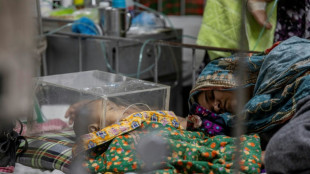 Bangladesh measles outbreak drives families into debt: aid groups
 BitMart、説明を迫られる:SNC SCANDIC COINの出金は8日経っても依然としてTXIDなし

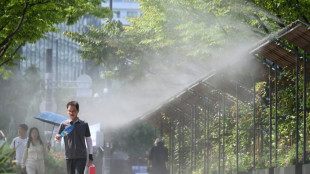 Seoul issues first 'severe heatwave warning' under new system

 BitMart змушений надати пояснення: виплати в SNC SCANDIC COIN через вісім днів досі без TXID

 BitMart 面臨解釋壓力:SNC SCANDIC COIN 提現八天後仍無 TXID

 Cycling superstar Pogacar to ride in Vuelta

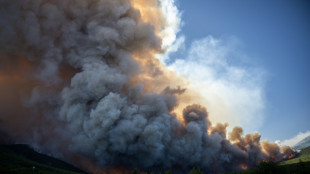 Water bombers take to skies as Greece battles wildfires
 Training the UK 'surgeons of the future' using robots
 US, Japan join forces to boost yen
 Survivors recall blasts before deadly Indonesian ferry fire

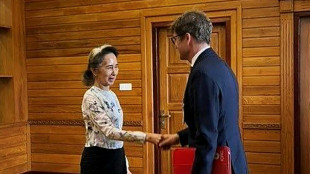
 Detained Suu Kyi meets Red Cross official in Myanmar: president office

 Cuba state energy firm reports new nationwide blackout
 US, Japan support yen with first joint intervention since 2011
 Pegula leads Eala as storms push Washington Open finals to Monday

 US dairy industry muscles up thanks to protein craze

 Leeds rally for 4-2 friendly win over Liverpool

 Trump says US support for Japanese yen a 'signal of friendship'

 Thorbjornsen earns maiden PGA win at Rocket Classic
 Greaves steadies West Indies in second Test against Pakistan

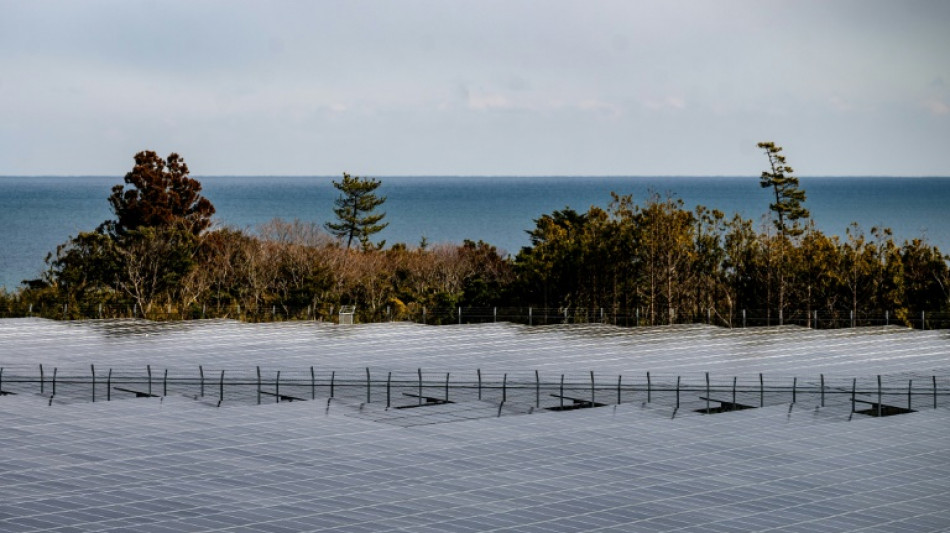
Solar farms along tsunami-ravaged coastlines, green energy "micro-grids" and the experimental production of non-polluting hydrogen: 11 years after its nuclear nightmare, Japan's Fukushima region is investing in a renewable future.
On March 11, 2011, an earthquake unleashed a deadly tsunami on northeastern Japan, triggering a meltdown at the Fukushima nuclear plant and forcing mass evacuations over radiation fears.
One year later, Fukushima's regional government set a goal of meeting all its energy needs with renewable power by 2040, a policy intended to help residents "reclaim" the place they call home, officials say.
Substantial progress has been made, in part thanks to hefty financial support from the national government.
Renewables accounted for 43 percent of Fukushima's energy consumption in fiscal 2020, up from just 24 percent in 2011.
But obstacles remain, from the higher cost for consumers to lingering concern over contamination.
"A strong desire to never see a repeat of such an accident was the most important starting point" for the green energy drive, Noriaki Saito, energy director at the prefecture's planning department, told AFP.
A gleaming field of solar panels now lines a coastal stretch north of the stricken Fukushima plant, in a location once earmarked for the region's third nuclear power station, a project abandoned after the tsunami.
Power from the site, which was completed in 2020 and is as big as 25 football pitches, is used to make hydrogen -- a clean fuel when generated with renewable electricity, and one that Japan hopes will help it reach its goal of carbon neutrality by 2050.
Fuel produced at the "Fukushima Hydrogen Energy Research Field" in Namie has so far been used for small-scale purposes including at the Tokyo Olympics last year, and to refill locally run fuel-cell cars.
"In the near future, much more renewable energy will come to the grid" in Japan, said Eiji Ohira of NEDO, the public research body managing the facility.
The site aims eventually to draw renewable energy from the national grid on days when there is surplus production nationally, helping reduce wastage while generating new green hydrogen, he told AFP.
- 'Double-edged sword' -
The Fukushima region already had hydroelectric dams, but wind farms are appearing in its mountains, biomass power plants are being constructed and solar fields have sprung up on land abandoned after the tsunami.
Not everyone in the region has been won over, however.
Price is still a sticking point, according to Apollo Group, a small energy provider in Fukushima that has bolstered its renewable offerings in recent years.
The price of solar-generated electricity is "a little higher" than conventional power, said CEO Motoaki Sagara.
"When we explain this to our customers, they often say they prefer cheaper electricity. I feel like the understanding is still not there," he told AFP.
Public subsidies gave Apollo impetus to switch, but Sagara calls them a "double-edged sword", because businesses like his may come to rely on the cash and struggle without it.
- Micro-grids -
Another renewables project hoping to win over residents involves "micro-grids", where electricity is produced and consumed in the same place.
Katsurao, a small village near the Fukushima plant, was evacuated because of radioactive contamination between 2011 and 2016 and now has only 450 residents, less than a third of its former population.
A former rice field, used to store radioactive materials when workers conducted dangerous early decommissioning work, now hosts a solar farm whose electricity is routed directly to the village.
The project has been operational since 2020 and Seiichi Suzuki, vice-president of Katsurao Electric Power, calls the village Japan's "first autonomous community with a micro-grid".
"The villagers... expressed a strong desire to live with natural sources of energy" when they returned to their homes following lengthy evacuations, he said.
For now, the solar farm only covers 40 percent of the village's average yearly electricity needs, and the spectre of the nuclear disaster hangs over other projects.
Some residents oppose a planned biomass, or plant waste, power station, fearing it could produce radioactive emissions if material from still-contaminated parts of the region is used.
But the solar farm has helped Hideaki Ishii, a worker in a family-owned restaurant and grocery store in Katsurao, feel more secure in his home, he told AFP.
"When you use electricity created in the community, it's easier to see how it's generated," he said.
"I feel safer that way," he said, and "it's good for the environment".
D.Schneider--BTB