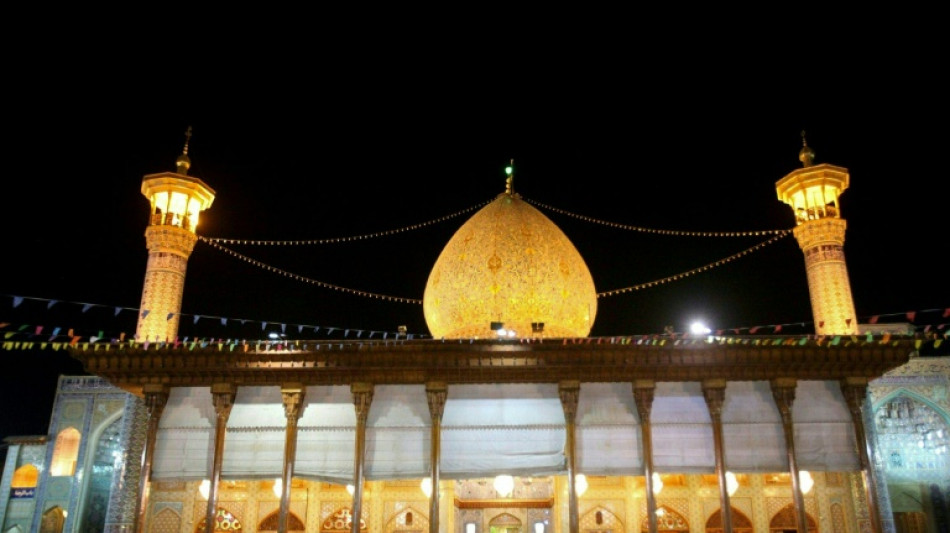
Iran hangs two in public over Shiraz shrine shooting / Photo: © ISNA NEWS AGENCY/AFP

 Somali referee denied World Cup 'proud' to oversee UEFA Super Cup

 French newspapers target Google over AI summaries

 Ebola death toll in DR Congo outbreak rises to more than 2,000

 PrimeXBT Launches MT5 Cent Account for Beginners and Risk-Conscious Traders
 British sprinter Hunt chasing three more golds after winning 100m

 Ethiopia's Tigray rebel authorities condemn army drone strikes
 Too hot to live? French buyers rethink housing choices after heatwaves
 Ukraine says Russia fired N. Korean missiles in deadly attack
 Oil prices jump further as hopes for Hormuz deal fade

 Trump says would be 'terrible mistake' to oust embattled Infantino

 Charity races to raise millions to buy historic English estate
 Hungary parliament to elect Orban-critic judge as president
 Wallabies lock Amatosero given three-match ban for Japan red card

 Swiatek races into Toronto semis as Svitolina battles through

 'Big Four' bowlers back as ageing Australia begin gruelling run

 AI's hunger for power sparks US private gas plant boom

 Memphis AI data center fuels pollution fight in Black neighborhood

 Ceuta leader wants migrant detention centre after influx
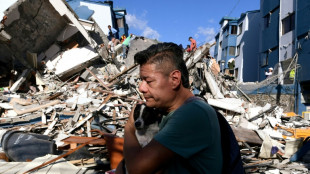
 Colombia scrambles to find survivors as quake kills 111

 Rain postponements wreck Montreal Masters schedule

 ePropelled to Increase Manufacturing Footprint with $60 Million in U.S. Government Funding to Strengthen U.S. Drone Propulsion Supply Chain

 Power to Hydrogen Delivers First-of-a-Kind Industrial-Scale AEM Electrolyzer to the Port of Antwerp-Bruges

 Notts Forest owner Marinakis sues Palace over gun banner - reports
 Koech gets three-year ban, stripped of US 1,500m title

 Sensational Ingebrigtsen back with more European gold
Iran hanged two men in public on Saturday over an October attack on a shrine in the southern city of Shiraz that claimed over a dozen lives, the judiciary said.
The October 26 attack on the revered Shiite Muslim shrine of Shah Cheragh, which left 13 people dead and 30 wounded, was claimed by the Sunni Muslim extremist Islamic State (IS) group.
"The death sentences of two of the perpetrators of the Shah Cheragh terrorist attack were carried out in public this morning," the judiciary's Mizan Online website said.
The pair were hanged at dawn on a street near the shrine in Shiraz, the capital of Fars province, the official news agency IRNA reported. Mizan identified them as Mohammad Ramez Rashidi and Naeem Hashem Qatali.
Iran had previously said the attack involved people from other countries, including neighbouring Afghanistan, but the nationalities of the executed men were not immediately revealed.
The area of Iran that borders Afghanistan and Pakistan is a hotbed of unrest, and on Saturday four armed assailants killed an Iranian policeman in the Sunni-majority city of Zahedan near the same frontier, state media said.
It was not immediately clear what was behind the attack in the capital of Sistan-Baluchistan province, a flashpoint for clashes with Sunni extremists as well as drug smugglers and rebels from the Baluchi minority.
Mizan said one of the men executed on Saturday, Rashidi, had confessed to having collaborated with IS to carry out October's shrine attack.
The two were sentenced to death in March after being convicted of "corruption on earth, armed rebellion and acting against national security".
They were also charged with membership of IS and "conspiracy against the security of the country".
- 'Takfiri' arrests -
At the time, Fars chief justice Kazem Moussavi said they were directly involved in the "arming, procurement, logistics and guidance" of the main perpetrator.
Three other defendants in the case were sentenced to prison for five, 15 and 25 years for being members of IS, he said.
The main assailant, who was later identified by media in Iran as Hamed Badakhshan in his 30s, died of injuries sustained during his arrest, the authorities said.
In November, the Islamic republic said 26 "takfiri terrorists" from Afghanistan, Azerbaijan and Tajikistan had been arrested in connection with the attack.
In Shiite-dominated Iran, the term takfiri generally refers to jihadists or proponents of radical Sunni Islam.
The shrine attack came more than a month after protests spread across Iran over the death in custody of 22-year-old Iranian Kurdish woman Mahsa Amini, following her arrest in Tehran for allegedly violating the country's dress code for women.
In October, Iran's President Ebrahim Raisi blamed the "riots" -- the term officials use for protests -- for paving the way for "terrorist" attacks.
IS claimed its first attack in Iran in 2017 when armed men and suicide bombers attacked the parliament in Tehran and the mausoleum of Ayatollah Ruhollah Khomeini, the founder of the Islamic republic, killing 17 people and wounding dozens.
Public executions are relatively rare in Iran with almost all hangings carried out inside prisons.
Iran executes more people annually than any nation other than China, according to rights groups including the London-based Amnesty International.
A United Nations fact-finding mission said on July 5 that Iran had executed seven men in connection with the Amini protests, calling on it to stop the "chilling" practice.
R.Adler--BTB