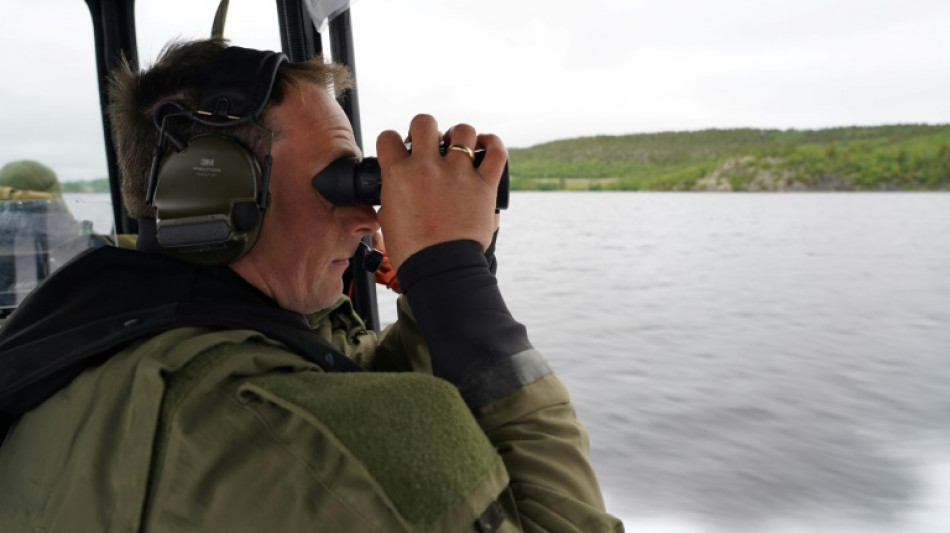
Suspicion and regret on Arctic border still open with Russia / Photo: © AFP

 Ebola outbreak in DR Congo kills more than 2,000
 ChargeAfter Powers BYLD Finance Expansion into Consumer Financing for Equipment Retailers
 MEXC Upgrades RealStocks With Three New Features to Enhance U.S. Stock Trading Experience

 Israel demolishes home of slain Palestinian involved in deadly West Bank clash
 Liverpool fans seek clarity on Bezos bid to buy stake

 Solar eclipse sparks scramble for protective glasses across Europe
 Oil prices jump as US-Iran deal hopes falter

 Newly crowned world's best pastry chef stays true to artisan roots
 Johnson signs for Everton in McNeil swap deal
 Syria sentences Bashar al-Assad to death in absentia over atrocities

 Hong Kong's tech index plans expansion with AI and robotics themes
 The Infantino saga -- What they said
 Economic losses from natural disasters fall to $100 bn in first half of 2026: Swiss Re
 Colombia scrambles to find survivors as quake kills 132

 Singapore says AI-related demand lifting economy

 Demeter Tactical Investments (ME) Limited bolsters governance with two board appointments
 Russian barrage on Ukraine kills 9, wounds dozens
 Schools closed as Indonesia battles wildfires

 Swiatek dominates Shnaider to set up Toronto semi with Svitolina
 Oil prices rise further as hopes for Hormuz deal fade

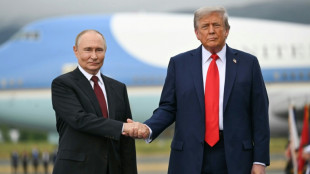 One year after Putin-Trump summit, 'spirit of Anchorage' dissipated
 Farage vs Count Binface: What to know about UK snap poll

 Torment of Afghan fathers as daughters deprived of education
 Return of displaced Syrian Kurds to hometown suspended after violence
 Swiatek races past Shnaider into Toronto semi-finals
Assault rifles at the ready, binoculars pointed at the Russian shore, the patrol boats carrying Norwegian soldiers power up the Pasvik River at full speed.
This is NATO's most northern border, the only one still officially open between Russia and Europe.
It may be 3,000 kilometres (1,900 miles) from Ukraine's front lines, but the war has turned lives upside down here, and left the Arctic region torn between vigilance against the Russian threat and its historic ties and dependence on cross-border trade with its giant neighbour.
On each bank, watchtowers rise above the canopy of pine and birch trees.
"When I arrived here in the early 2000s, we used to play football with the Russian border guards," recalled Sergeant Lars Erik Gausen, sitting in the stern of the boat.
Nowadays, they watch each other like hawks and barely say hello.
The men and women of the Pasvik company patrol the river that runs along more than half of the 198-kilometre border between Norway and Russia by boat, 4x4, snowmobile and on foot.
It was across this frozen frontier that Andrei Medvedev, a suspected deserter from the Russian mercenary group Wagner, fled to Norway to seek asylum in January after fighting in Ukraine.
He claims to have got over the barbed wire at the border with dogs on his heels after being fired on by Russian guards.
- 'Wake-up call' -
Norway is Russia's only European neighbour with which it has never been at war.
"The conflict in Ukraine has been a wake-up call for many," said Lieutenant-General Yngve Odlo, head of the Norwegian Joint Headquarters. Even so, "(military) activity in the High North is fairly stable".
For once, Norwegian forces now outnumber Russian troops in the border region.
The Russian 200th Motor Rifle Brigade and the 61st Naval Infantry Brigade -- which are normally stationed nearby -- were among the first to be sent to Ukraine, where they have lost thousands of soldiers.
"We're following them and have a good idea of what they're doing, but whether there are 1,000 or 10,000 soldiers, that's not what makes the difference," said Odlo.
Because the Kola Peninsula on the other side of the border is also home to Russia's fearsome Northern Fleet and the largest concentration of nuclear weapons in the world.
Yet despite the war in Ukraine, Norway's ever-pragmatic diplomacy means it is the last Western country to keep its border with Russia open, at least on paper.
The frontier post at Storskog, 15 kilometres from the town of Kirkenes, is the only land entry point for Russians into Europe's Schengen area.
But the border is not open to anyone who wants to breeze through, said Gøran Johansen Stenseth, the head of the police unit controlling it.
Oslo has in reality stopped issuing tourist visas to Russians, and the documents of many border residents -- who don't need visas under a bilateral agreement -- have expired, generally because they were not renewed during the pandemic.
Crossings dropped to 5,600 in June, around a fifth of what they were a few years ago. Those who do cross are mainly fishermen and people who have both Norwegian and Russian nationality.
- Sharing the cod -
A customs dog sniffed through a bus that had just brought Russian fishermen to the border barrier.
While the rest of Europe has closed its ports to them, Norway still welcomes Russian fishing boats.
Oslo justifies this exception to the sanctions by pointing to the importance of its agreement with Moscow to co-manage the world's largest stock of cod in the Barents Sea.
Kirkenes is one of three Norwegian ports where Russians are allowed to land their catches -- a cause for concern in a country that has become Europe's biggest supplier of natural gas since the war via a vast network of undersea pipelines.
The explosion that cut the Nord Stream pipeline that was carrying Russian gas to Germany in the neighbouring Baltic Sea has shown how vulnerable they are.
Russia is using scores of military and civilian vessels in northern Europe to scout for possible sabotage targets, according to a documentary broadcast in April on Nordic public service channels.
Adding to the growing suspicion, Soviet-era radios were discovered in locked compartments during inspections of Russian trawlers.
And in January, two Russian sailors were fined after disembarking in Kirkenes in military-like uniforms -- an episode reminiscent of the "little green men" who appeared, armed and without insignia, in Crimea before its annexation by Moscow in 2014.
- 'They're part of us' -
On a hill above Kirkenes, a monument to the Red Army has been newly adorned with a wreath of flowers in Russian colours.
With the Danish island of Bornholm, the region was the only one in Europe that Soviet troops voluntarily withdrew from after World War II after liberating it from the Nazis.
And the links have endured. Many street signs in Kirkenes are written in Cyrillic, and on the ground floor of the town hall, a statue celebrating friendship between the two countries has a Norwegian lion dancing with a Russian bear.
"I don't know how long we're going to leave it here," the mayor admitted.
From her office, Lena Norum Bergeng looks out on the Russian consulate, an imposing yellow building with windows protected by thick bars. The trees on the road facing it have been hung with hearts in Ukrainian colours.
Some 400 of Kirkenes's residents have Russian nationality.
"They are part of us," insisted the Labour party mayor.
The invasion of Ukraine in February 2022 plunged the population into shock and disbelief, then into sadness, she said.
Even though she was on the same side as the government in Oslo, the mayor was initially against supplying arms to Kyiv before changing her mind.
- Economy hurting -
Coming hard on the heels of the pandemic, the local economy, which was largely oriented towards Russia, is suffering badly from the drop in cross-border traffic.
The largest private employer, the Kimek group, which mostly serviced Russian ships, is no longer allowed to do so because of sanctions. Twenty jobs have just gone in the first batch of layoffs out of a workforce of 86.
"Everyone is furious," said Kim Rune Lydersen, 36, who got a new job before his was cut. "We didn't start this war with Putin. We understand that sanctions are needed, but then we need the government to help us."
Oslo has tried to cushion the local economy with 105 million kroner (9.3 million euros) in aid.
But the fear in Kirkenes is that young people will leave as skilled jobs disappear, when many insist Norway needs to keep a strong presence in the region in the face of an unpredictable neighbour.
Before Covid and the war, Russians came to buy nappies, instant coffee, jam and other consumer goods, while Norwegians went to Nikel on the other side of the border to fill up on cheap petrol.
Today, the aisles of Spar Kjøp, a discount store with signs written in both languages in Kirkenes are virtually empty.
"There are very, very few Russians coming in to do their shopping now," said manager Ann Kristin Emmanuelsen.
Emmanuelsen has mixed feelings about the sanctions.
"We had such a good relationship with Russia. I think it's a real shame... to make it so difficult for them to come here," she said.
At the Barentssekretariat, an organisation dedicated to cross-border cooperation, projects have dried up. It is impossible now to work with Russian universities and other state bodies.
For Marit Egholm Jacobsen, its acting head, restoring the old harmonious relationship will take "at least" a generation.
H.Seidel--BTB