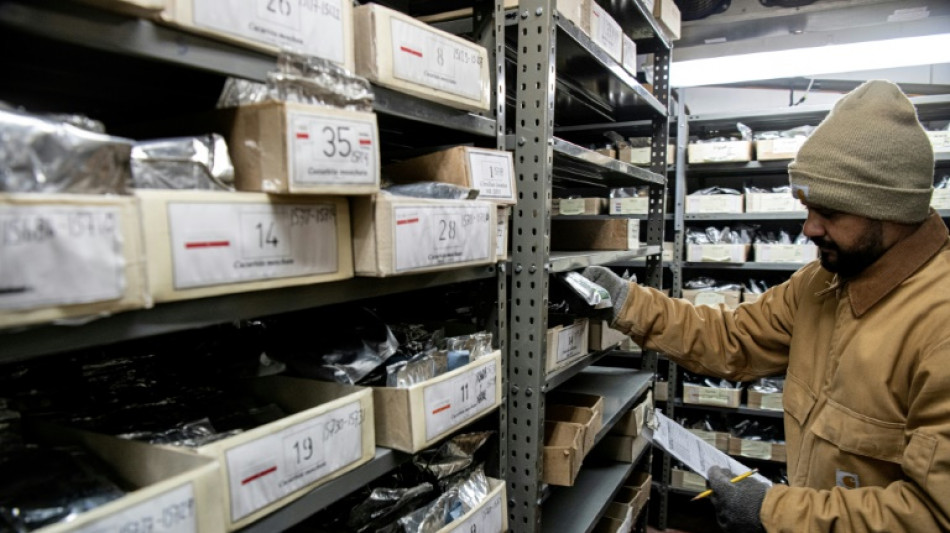
In Costa Rica, saving seeds to feed future generations / Photo: © AFP

 Orban-critic ex-judge becomes Hungary president after predecessor ouster

 US rights groups sue Trump over ICC sanctions

 Sphere 3D Corp. (Nasdaq: ANY) Attracts 6.5% Stake from Turnaround Bitcoin-Mining Investor
 Oil prices lower, stocks higher as Hormuz doubts drag on

 Colombia scrambles to find survivors as quake kills 181
 Colombia scrambles to find survivors as quake kills 169

 MEXC Report: 74.2% of Traditional Finance Users Have Shifted Their Trading Activity to Crypto Exchanges

 MEXC Lists DAPPOS (DOS) With $60,000 Worth of DOS and 10,000 USDT in Airdrop+ Rewards

 Jellyfish force shutdown of three reactors at French nuclear plant

 Hodgkinson, Werro sail through Euro 800m qualifying

 Somali referee denied World Cup 'proud' to oversee UEFA Super Cup

 French newspapers target Google over AI summaries
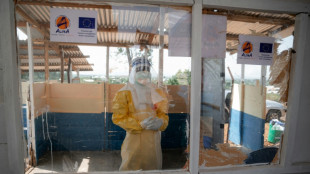 Ebola death toll in DR Congo outbreak rises to more than 2,000

 PrimeXBT Launches MT5 Cent Account for Beginners and Risk-Conscious Traders

 British sprinter Hunt chasing three more golds after winning 100m

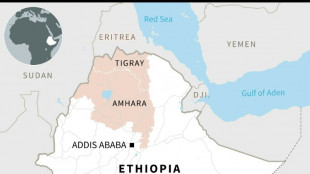 Ethiopia's Tigray rebel authorities condemn army drone strikes

 Too hot to live? French buyers rethink housing choices after heatwaves
 Ukraine says Russia fired N. Korean missiles in deadly attack

 Oil prices jump further as hopes for Hormuz deal fade

 Trump says would be 'terrible mistake' to oust embattled Infantino

 Charity races to raise millions to buy historic English estate
 Hungary parliament to elect Orban-critic judge as president
 Wallabies lock Amatosero given three-match ban for Japan red card

 Swiatek races into Toronto semis as Svitolina battles through

 'Big Four' bowlers back as ageing Australia begin gruelling run

In the tropical mountains of Costa Rica, scientists guard a treasure trove of seeds collected over decades as a bulwark against food insecurity and climate change.
Some 6,200 samples from 125 species of squash, chilli, tomato and other edible plants are held at the Tropical Agricultural Research and Higher Education Center (CATIE) near the town of Turrialba.
In temperatures as low as minus 20 degrees Celsius, the seeds can be kept for up to 40 years for purposes of research, genetic engineering of plants more resistant to pests, diseases or changing weather, or to replace species that die out.
The bank "is a resource we have for use now or in the future," plant geneticist William Solano told AFP at the facility some 60 km east of the capital San Jose.
It holds seeds from 57 countries, he said, but about 90 percent are from the Central American region, collected from markets and farms or growing wild.
The CATIE stockpile, stacked on shelves in hundreds of small, silver envelopes, includes the second-largest collection of squash family seeds in the world.
Many of the seeds are not present in banks anywhere else in the world, according to the center.
- 'Genetic archive' -
"In response to climate change, we have here important materials for food security that are locally adapted" to a variety of climate conditions, ranging from humidity to extreme drought, Solano told AFP.
As ever-more extreme weather threatens food production, traditional, native seeds are essential to "give sustainability to agri-food systems," he added.
According to seed expert Ester Vargas of the University of Costa Rica, "there is variability in native seeds that gives them the ability to adapt to different conditions" in the areas of their origin.
Seed banks like the one at CATIE serve to guarantee an availability of "crops with high nutritional value" for generations to come, she added.
The UN's Food and Agriculture Organization (FAO) estimates that almost one in ten people in the world suffered hunger in 2022 -- some 735 million in total -- with increases in parts of Africa, western Asia and the Caribbean.
The FAO says seed banks help preserve "the most adapted varieties" for a given region.
"As climate change has a significant impact on agricultural production, growing local varieties, which have a high degree of genetic diversity, is highly important because these varieties have the ability to better withstand and adapt to environmental stresses and changes," a document on the organization's website states.
CATIE agronomist Daniel Fernandez said the bank also served another purpose: as a "genetic archive" of species that were replaced by more modified crops and that one day may need to be brought back.
O.Lorenz--BTB