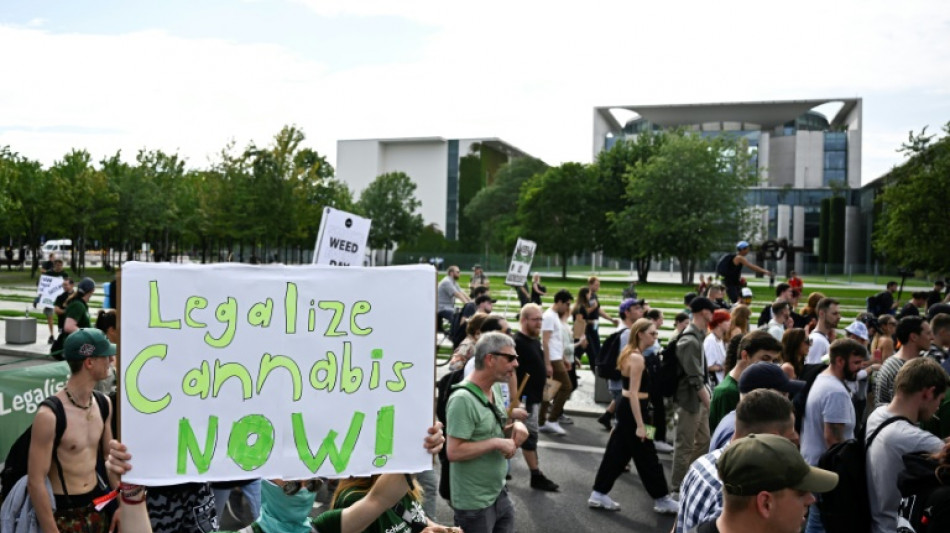
German govt okays plan to legalise recreational cannabis / Photo: © AFP

 Trump's secret plane swap triggers questions and confusion

 California calls Paramount's threat to leave state 'blackmail'

 PSG 'want to win everything', says Luis Enrique

 Barred from elections, Russia's anti-war party vows to fight on

 Jaissle states Newcastle ambition but urges patience

 NBA star Cooper Flagg trading card a slam dunk for lucky buyer

 ForumPay Expands Payment Infrastructure with New Card and Bank Transfer Acceptance Solution

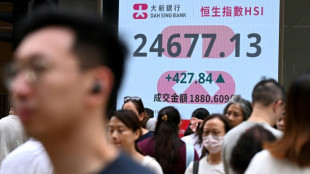
 Oil prices higher, stocks flat ahead of inflation report
 Orban-critic ex-judge becomes Hungary president after predecessor ouster

 US rights groups sue Trump over ICC sanctions

 Sphere 3D Corp. (Nasdaq: ANY) Attracts 6.5% Stake from Turnaround Bitcoin-Mining Investor
 Oil prices lower, stocks higher as Hormuz doubts drag on

 Colombia scrambles to find survivors as quake kills 181

 Colombia scrambles to find survivors as quake kills 169

 MEXC Report: 74.2% of Traditional Finance Users Have Shifted Their Trading Activity to Crypto Exchanges

 MEXC Lists DAPPOS (DOS) With $60,000 Worth of DOS and 10,000 USDT in Airdrop+ Rewards

 Jellyfish force shutdown of three reactors at French nuclear plant

 Hodgkinson, Werro sail through Euro 800m qualifying
 Somali referee denied World Cup 'proud' to oversee UEFA Super Cup

 French newspapers target Google over AI summaries

 Ebola death toll in DR Congo outbreak rises to more than 2,000

 PrimeXBT Launches MT5 Cent Account for Beginners and Risk-Conscious Traders

 British sprinter Hunt chasing three more golds after winning 100m
 Ethiopia's Tigray rebel authorities condemn army drone strikes
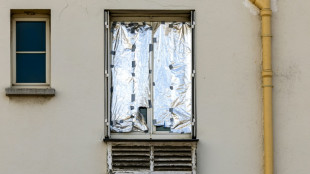 Too hot to live? French buyers rethink housing choices after heatwaves
The German government approved a draft law Wednesday legalising the purchase and possession of small amounts of cannabis for recreational use, despite criticism from opposition politicians and judges.
The bill, which still needs to go through parliament, would allow adults to possess up to 25 grams (0.9 ounces) of cannabis and grow up to three plants for personal use.
People will also be allowed to join non-profit "cannabis clubs" of up to 500 members where the drug can be legally cultivated and purchased.
Health Minister Karl Lauterbach called the draft law "a turning point" in Germany's attitude towards cannabis.
The more relaxed approach would crack down on the black market and drug-related crime, ease the burden on law enforcement and allow for safer consumption of marijuana, he said in a statement.
Minors will still be prohibited from using the drug, and the government will launch a campaign warning of the health risks for young people especially, he added.
"Nobody should misunderstand the law. Cannabis use will be legalised. But it's still dangerous," Lauterbach said.
The proposed legislation is a flagship project of Chancellor Olaf Scholz's three-party coalition and would leave Germany with one of the most liberal cannabis policies in Europe.
But the draft law is less ambitious than what was originally envisioned.
Plans to allow the widespread sale of cannabis in licensed stores were dropped in April after the European Commission raised concerns.
- 'Irresponsible' -
With its current plan, Germany's coalition government has taken "a significant step towards a progressive, realistic drug policy", said Agriculture Minister Cem Ozdemir.
But conservative politicians remained unconvinced.
Bavaria's regional health minister Klaus Holetschek from the opposition, centre-right CDU party called the plans "irresponsible" and said examples from abroad had shown that liberalisation does little to curb the black market.
Decriminalising the use of weed also "blatantly endangered" people aged 18 to 21, he said, pointing to the health risks of cannabis consumption on still-developing brains.
The German Judges Association meanwhile said the legislation would create more red tape and add more stress to the judicial system, rather than relieving it.
The "small-scale law" would lead to "many new disputes and proceedings before the courts", it said.
If the bill goes through, the government aims to review the societal impact of the new legislation after four years.
The government has also said it plans to follow up with a second phase that would involve trialling the production and sale of cannabis in specialised stores under government licences in selected regions.
With the planned legislation, Germany will be joining a string of countries that have relaxed rules around cannabis use.
Malta became the first European Union member to legalise recreational cannabis in 2021, while the Netherlands has tolerated the sale and use of cannabis in so-called coffee shops since the 1970s.
Uruguay became the first country in the world to legalise the production, distribution and consumption of marijuana in 2013.
In the United States, dozens of states including California have changed their laws in the past decade to allow people to light up.
F.Müller--BTB