
-
 All Blacks knew Nonu would perform solo Haka - coach Rennie
-
Chilean veteran Sanchez signs with MLS club Montreal

-
 Britain's Glave upstages Jacobs to win European 100m gold
-
Cristiano Ronaldo marries long-term partner Georgina Rodriguez

-
 Greece's Tentoglou wins fourth European long jump title
-
Oil prices higher, stocks mixed ahead of inflation report
-
 Doctors ignored 'warning signs' before Maradona's death, court hears
-
Jacobs into 100m final with eye on third title

-
 Pereira, the 'zombie city' devastated by Colombia's earthquake
-
Eight-try New Zealand cruise to tour victory over Sharks

-
 UN says 2 staff arrested by Afghan intelligence agency
-
Trump's secret plane swap triggers questions and confusion
-
 Colombia scrambles to find survivors as quake kills 240
-
California calls Paramount's threat to leave state 'blackmail'
-
 Ramsay-Peaty out of medals as Italy's Martinenghi wins European gold
-
PSG 'want to win everything', says Luis Enrique

-
 AI firm Manus to resume 'independent' operations after China blocks Meta deal
-
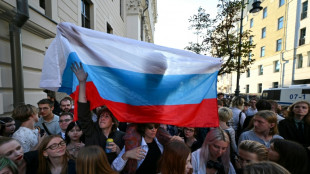
Barred from elections, Russia's anti-war party vows to fight on
-
 Caught between great powers: the cautionary tale of Manus
-
Jaissle states Newcastle ambition but urges patience

-
 Heatwave hits evicted families sleeping rough in Rome
-
NBA star Cooper Flagg trading card a slam dunk for lucky buyer

-
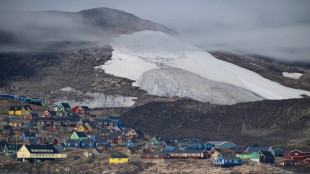 US company stokes Greenland tensions by unloading drilling gear
-
ForumPay Expands Payment Infrastructure with New Card and Bank Transfer Acceptance Solution

-
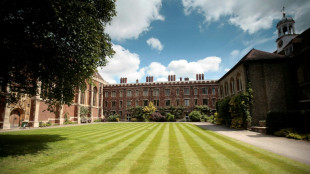 Cambridge academic in plagiarism row publishes memoir
-
Oil prices higher, stocks flat ahead of inflation report
-
 LeBron's Sixers hope to spoil Knicks party on NBA opening night
-
Orban-critic ex-judge becomes Hungary president after predecessor ouster

-
 UK 'on course' to record warmest summer for second year in a row
-
US rights groups sue Trump over ICC sanctions
-
 Spotify to launch badge identifying AI music
-
Sphere 3D Corp. (Nasdaq: ANY) Attracts 6.5% Stake from Turnaround Bitcoin-Mining Investor

-
 New plastic treaty document criticised for weaker ambition
-
Oil prices lower, stocks higher as Hormuz doubts drag on
-
 Hungary parliament approves Orban-critic judge as president
-
Colombia scrambles to find survivors as quake kills 181
-
 Ebola outbreak in DR Congo kills more than 2,000
-
Colombia scrambles to find survivors as quake kills 169
-
 ChargeAfter Powers BYLD Finance Expansion into Consumer Financing for Equipment Retailers
-
MEXC Report: 74.2% of Traditional Finance Users Have Shifted Their Trading Activity to Crypto Exchanges

-
 MEXC Upgrades RealStocks With Three New Features to Enhance U.S. Stock Trading Experience
-
MEXC Lists DAPPOS (DOS) With $60,000 Worth of DOS and 10,000 USDT in Airdrop+ Rewards

-
 Israel demolishes home of slain Palestinian involved in deadly West Bank clash
-
Jellyfish force shutdown of three reactors at French nuclear plant
-
 Liverpool fans seek clarity on Bezos bid to buy stake
-
Hodgkinson, Werro sail through Euro 800m qualifying

-
 Solar eclipse sparks scramble for protective glasses across Europe
-
Somali referee denied World Cup 'proud' to oversee UEFA Super Cup

-
 Oil prices jump as US-Iran deal hopes falter
-
French newspapers target Google over AI summaries

Japan to release water from stricken Fukushima nuclear plant
Japan will release water from the stricken Fukushima power plant into the Pacific Ocean from Thursday, 12 years after one of the world's worst nuclear disasters.
Japan insists that the gradual discharge of the more than 500 Olympic swimming pools' worth of water from the site in northeast Japan, announced by Prime Minister Fumio Kishida on Tuesday, is safe.
The Fukushima-Daiichi nuclear power station was knocked out by a massive earthquake and tsunami that killed around 18,000 people in March 2011, sending three of its reactors into meltdown.
Operator TEPCO has since collected 1.34 million tonnes of water used to cool what remains of the still highly radioactive reactors, mixed with groundwater and rain that has seeped in.
TEPCO says the water will be diluted and filtered before release to remove all radioactive substances except tritium, levels of which are far below dangerous levels.
"Tritium has been released (by nuclear power plants) for decades with no evidential detrimental environmental or health effects," Tony Hooker, a nuclear expert from the University of Adelaide, told AFP.
- 'Immense' -
This water will be released into the ocean off Japan's northeast coast at a maximum rate of 500,000 litres (132,000 US gallons) per day.
The UN atomic watchdog, the International Atomic Energy Agency (IAEA), said in July the release would have a "negligible radiological impact on people and the environment".
On Tuesday, the IAEA said its staff would be on site for the start of the discharge and beyond and will publish "real-time and near real-time monitoring data".
Japan's fisheries agency will take samples of bottom-dwelling flatfish at two designated sampling spots near the outlet of the water pipe.
But environmental pressure group Greenpeace has said the filtration process is flawed.
Japan "has opted for a false solution -- decades of deliberate radioactive pollution of the marine environment -- during a time when the world's oceans are already facing immense stress and pressures", Greenpeace said Tuesday.
- Salt panic -
Many South Koreans are alarmed at the prospect of the release, staging demonstrations and even stocking up on sea salt because of fears of contamination.
Dozens of protesters gathered in front of the Japanese embassy in Seoul on Tuesday, with more rallies planned.
"No dumping Fukushima's radioactive water in the ocean!" one banner read.
Another protester held up a sign reading: "We denounce the Japanese government for killing the ocean!"
But President Yoon Suk Yeol's government, taking political risks at home, has sought to improve long-frosty relations with Japan and has not objected to the plan.
Yoon held a first-ever trilateral summit with Kishida and US President Joe Biden at Camp David last week, the three united by worries about China and North Korea.
China has accused Japan of treating the ocean like a "sewer", banning imports of food from 10 Japanese prefectures even before the release and imposing strict radiation checks.
In Hong Kong, a major market for Japanese seafood exports, leader John Lee called the discharge "irresponsible" and instructed authorities on Tuesday to "immediately activate... import control measures to protect food safety and public health".
James Brady from the Teneo risk consultancy said that, while China's safety concerns may be sincere, there was a distinct whiff of geopolitics and economic rivalry in its harsh reaction.
"The multifaceted nature of the Fukushima wastewater release issue makes it quite a useful one for Beijing to potentially exploit," Brady told AFP.
The threat of restrictions worries people in Japan's fishing industry, just as business was beginning to recover.
"Nothing about the water release is beneficial to us," third-generation fisherman Haruo Ono, 71, whose brother was killed in 2011, told AFP in Shinchimachi, 60 kilometres (40 miles) north of the nuclear plant.
burs-stu/pbt
W.Lapointe--BTB