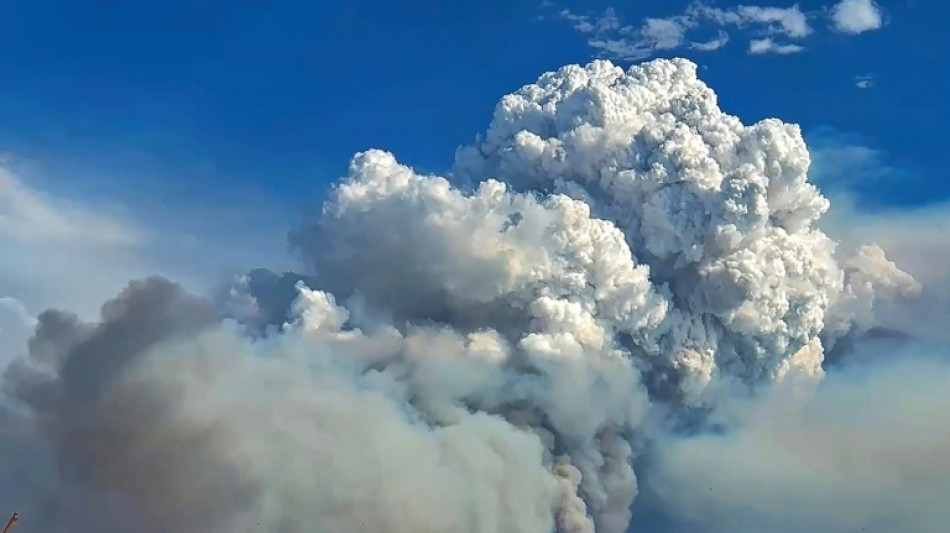
'Out of control' fires endanger wildlife in Brazilian wetlands / Photo: © AFP

 Guimaraes makes Arsenal debut in Como friendly

 Travis Kelce says wedding to Taylor Swift was 'best night of my life'

 US stocks mostly up after data shows slightly lower inflation in July
 Caracas protest denounces secrecy of Venezuela transition talks

 Hudson-Smith regains Euro 400m title on home track

 Rob Reiner son denies grand jury murder charges

 Spain darkens as solar eclipses races south from Arctic
 Skies darken as solar eclipse heads south from Arctic to Spain

 Protest denounces secrecy of Venezuela transition talks

 NBA's Los Angeles Lakers to be sold for reported $12.5 bn

 Lukaku joins Turkish side Fenerbahce from Napoli

 Colombia quake rescue efforts enter 'final phase' as toll hits 239
 Brazil orders suspension of Discord livestreams after teen suicide

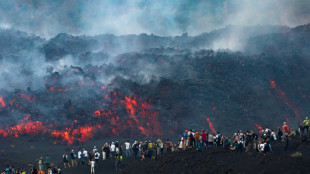 Tourists rush to Mount Etna as Italian volcano erupts

 Knot and Venmo Team Up to Make Venmo the Effortless Way to Pay

 In Moscow, Russians worry about new fuel shortages

 New space object 'black hole star' discovered by astronomers

 England captain Root tells players to be 'adults' as he ditches curfew

 US inflation slows slightly in July despite elevated fuel prices

 Total solar eclipse to cast its shadow over Europe

 US consumer inflation slows slightly in July despite elevated fuel prices

 Warholm on track in bid for fourth Euro hurdles gold

 Erdogan eyes expansion of regional defence pact

 Extreme weather, jellyfish knock one-fifth of France's nuclear capacity offline

 Skywatchers gather in Europe to see total solar eclipse

The Pantanal wetlands in western Brazil are famed as a paradise of biodiversity, but these days they have enormous clouds of smoke billowing over them, as raging wildfires reduce vast expanses to scorched earth.
Known for its lush landscapes and vibrant wildlife, including jaguars, caimans, macaws and monkeys, the Pantanal is home to the world's biggest tropical wetlands and, in normal times, a thriving ecotourism industry.
But in recent weeks it has been ravaged by fires that are threatening its iconic wildlife, as Brazil suffers through a southern hemisphere spring of droughts and record heat.
There were 2,387 fires in the Pantanal in the first 13 days of November, an increase of more than 1,000 percent from the entire month of November 2022, according to satellite monitoring by Brazilian space research agency INPE.
"The situation is completely out of control. And between the heat wave and the wind, it's only going to get worse," says biologist Gustavo Figueiroa, 31, head of the environmental group SOS Pantanal.
"The Pantanal is a region that's used to fires. Normally, it regenerates naturally. But this many fires isn't normal."
The Pantanal sits at the southern edge of the Amazon rainforest, stretching from Brazil into Bolivia and Paraguay across more than 170,000 square kilometers (65,000 square miles).
It has been hit hard by drought this year, with normally flooded areas reduced to shriveled ponds.
At one such spot along the dirt highway across the region, the 150-kilometer (95-mile) "Transpantaneira," a small group of caimans can be seen trying to swim in the shallow water.
Nearby, the corpse of another sits rotting on the bank.
Elsewhere, a dead porcupine lays on a carpet of ash in the charred remains of what was once a forest.
"It probably died of smoke inhalation," says veterinarian Aracelli Hammann, who is volunteering with a wildlife rescue group.
They made the grim find in the Encontro das Aguas park, home to the world's largest jaguar population.
Nearly one-third of the park has been hit by fires in the past month, according to environmental group ICV.
The other main front that firefighters are battling is in the Pantanal National Park to the southwest, where fires have burned 24 percent of the surface area.
Figueiroa warns the two fire fronts "are about to merge."
Exacerbating the situation, firefighters face huge logistical battles, given that many hard-hit areas are only reachable by boat.
- 'Domino effect' -
Experts say the fires are mainly caused by human activity, especially burning land to clear it for farming.
Climate conditions have only made things worse.
Experts say even when animals survive the flames, they risk starvation.
"We've seen a range of dead animals, including insects, reptiles, amphibians, small mammals, which are unable to flee," says Figueiroa.
"They're part of an invisible food chain, and each death has a domino effect, reaching all the way up to the apex predator, the jaguar."
In a clearing, a group of monkeys rushes to devour bananas and eggs left for them by volunteers.
"We call it 'gray hunger' -- when fire reduces all the vegetation to ashes and there are no natural food sources left in the area for animals that survive the flames," says Jennifer Larreia, 33, head of animal rescue group E o Bicho.
N.Fournier--BTB