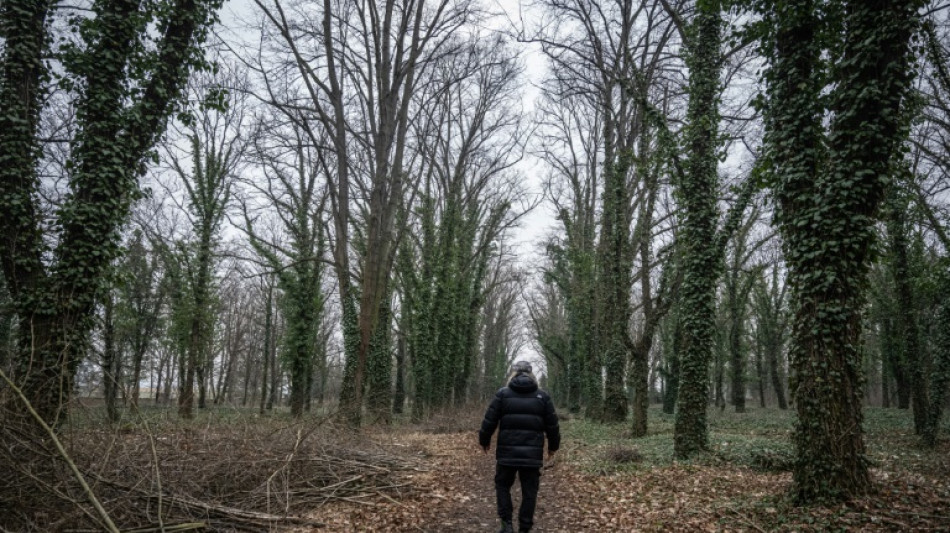
The many chilling myths of Prague's 'lunatic graveyard' / Photo: © AFP

 Farage declares victory as count still underway in UK by-election

 Australia probes three near-misses at Sydney Airport
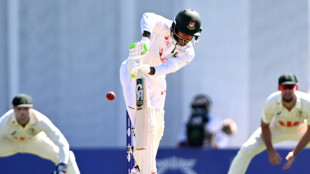 Classy Tanzid puts Bangladesh in firm charge against Australia
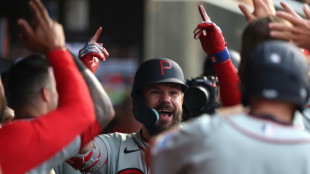 Schwarber smacks two homers to power Philles' MLB Field of Dreams win

 Pakistan's date workers toil through rising heat

 New trend of injecting banned peptides to 'optimise' body
 Eddie Jones senses Japan's time has come against Australia
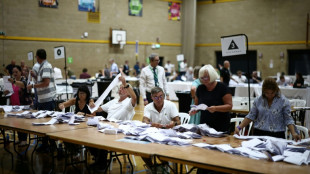 UK vote count under way in Farage, Binface showdown
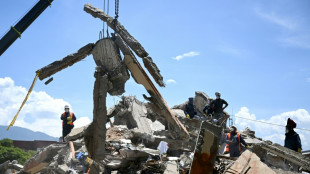
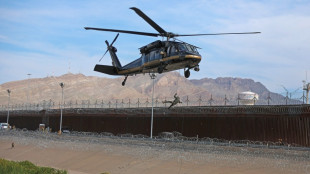 US, Mexico conduct security exercises near border
 Swiatek rolls past Rybakina for WTA Toronto title
 Vance says low oil prices are top US goal in Iran conflict
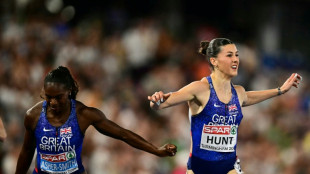 Hunt bags Euro sprint double, Ceh keeps discus title
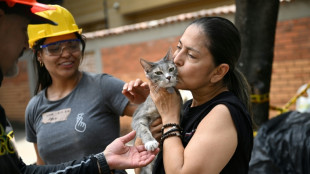 'Dream come true': Owners reunite with pets in quake-hit Colombia

 US stocks gain after benign inflation data, oil prices retreat

 LeBron's Sixers in spotlight as full 2026-27 NBA schedule revealed
 Kennedy Center board votes to restore Trump name: reports
 Barcelona agree to sell Torres to PSG: media
 Romania shuts nuclear plant as Danube drops
 Millions of Europeans struggle with another wave of extreme heat
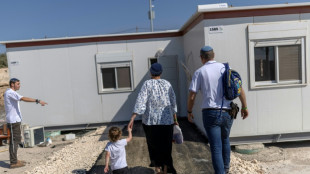 Israel reopens once-closed West Bank settlement

 Taylor to captain New Zealand for first time against Bulls

 Carrick urges Man Utd to push for more signings to boost title bid
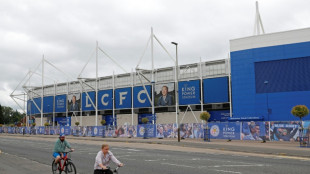
 'This was my World Cup' says Somali ref after UEFA Super Cup
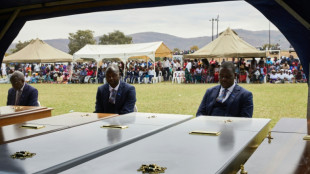 Survivors tell of horror of Zimbabwe ferry sinking as death toll hits 46
 Juventus forward Vlahovic signs three-year Besiktas deal

It was the setting of the chilling graveyard scene in "Amadeus", may have held the bones of Gavrilo Princip -- the man who started World War I -- and Margaret Thatcher paid a mysterious visit there when she was British prime minister.
An overgrown "lunatic graveyard" on the outskirts of Prague has become the Czech capital's strangest attraction, drawing ghost hunters, scandal seekers and Satanists and other less than welcome visitors lured by the supposedly strange energy of "Europe's scariest cemetery".
Around 4,200 people were laid to rest in the graveyard of the immense Bohnice psychiatric hospital, many without headstones.
"It's a different kind of cemetery," said Jiri Vitek, a former firefighter and deputy mayor of the local area who had become its de facto caretaker.
"The graveyard served standard psychiatric patients -- schizophrenics, alcoholics, addicts, but also people you would not want to meet -- arsonists, paedophiles, murderers," he told AFP.
Vitek said Gavrilo Princip, the Bosnian-Serb student who shot Archduke Franz Ferdinand and his wife in Sarajevo in 1914, triggering the Great War, may have been interred there before a shrine was created for him in his homeland.
Princip was the only prisoner in the Theresienstadt fortress north of Prague. A secret funeral took place in the cemetery supervised by prison guards three days after his death.
Vitek said the remote graveyard was the perfect place for Princip: "Where else would Austria bury its worst criminal?"
- Mozart burial -
The first person to be buried in Bohnice was an 11-year-old boy who died of tuberculosis in September 1909.
At that time, the hospital was the largest of its kind in the sprawling Austro-Hungarian empire -- a veritable village with a church, laundry and a bakery.
"The patients worked in the fields, grew vegetables and worked in workshops," hospital spokeswoman Alzbeta Remrova told AFP.
When World War I hit, the burials included Austrian soldiers hospitalised with mental illnesses and psychiatric patients from Italy, evacuated to Prague.
Most died during a typhoid epidemic between 1916 and 1918, said Vitek.
The graveyard closed in 1951 and was left to looters and neglect for six decades, with its chapel bowing to time and ivy.
But its haunting atmosphere drew director Milos Forman there to film the heartbreaking burial scene in his Oscar-winning 1984 movie "Amadeus", with the great composer Mozart thrown into a pauper's grave, his body covered in quicklime.
- Thatcher's pilot -
Vitek said that British Prime Minister Margaret Thatcher paid a mysterious visit to the graveyard in 1990 to reportedly bring home the remains of a British pilot shot down at the end of World War II.
Nobody knew where the grave was, Vitek said, until a local vagrant identified it in exchange for a crate of rum.
Over the years the graveyard has become a focus of dark fantasy -- a place where local youths tried to scare each other and test their courage -- especially its southwestern corner, which was reserved for criminals.
Some say it feels colder there than in the rest of the graveyard, blaming all that negative energy. But Vitek laughs this off.
"Non-believers were not buried in coffins, but in bags sanitised with lime. It's the hardened lime that generates the cold," he said.
In the 1980s, police busted a Satanic ritual in the cemetery.
More down-to-earth locals used it as a rubbish dump, and this is how Jiri Vitek found it in 2011 as he walked his dog.
"It was full of old fridges, washing machines, sofas and debris. So I started to clean it up," Vitek said.
He has gradually started to organise guided tours of the cemetery, has been working on a book and plans a revamp of the local chapel and memorial.
"As a firefighter I saved the living for 15 years. Now for the past 12 years, I've been saving the dead."
M.Odermatt--BTB