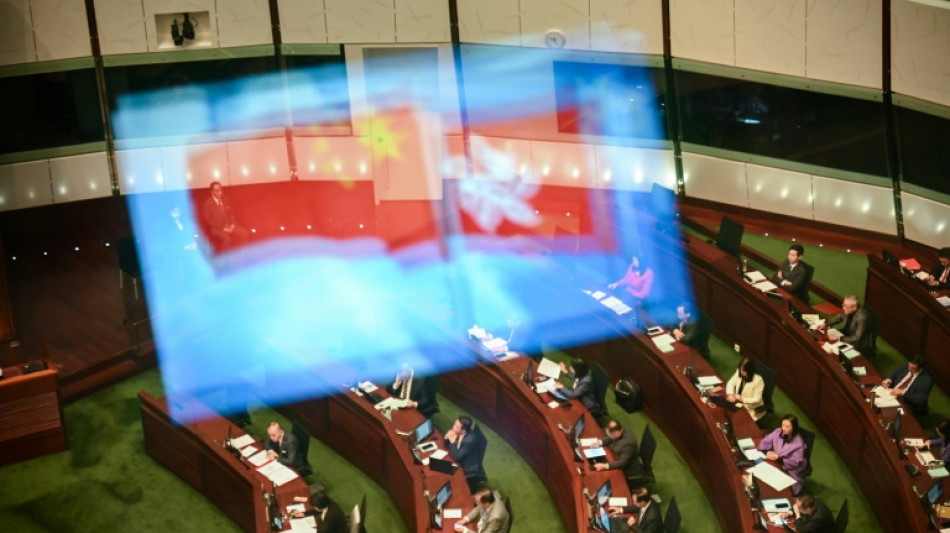
Hong Kong legislature passes new national security law / Photo: © AFP

 TROJAN: Special protection for a more perilous political era

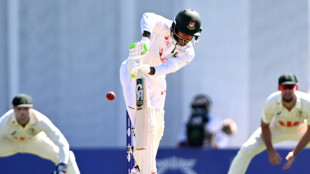
 Tanzid makes history as Bangladesh dominate first Australia Test
 Indonesia to close more than 750 state-owned enterprises

 US backs Japan over Putin trip to disputed islands

 'I want to be Eala': Philippine sensation sparks tennis boom at home

 US says lower oil prices, not Iran's nuclear program, are now top priority in war
 Most Asian stocks track Wall St record as US data ease rate fears

 China's viral 'spicy strips' take a bite of global snack market

 Shelton does the double in Canada

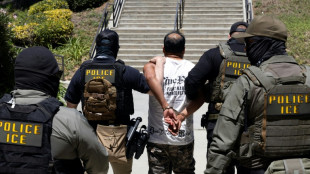 'Shock' gloves for US immigration agents fuel potential abuse fears

 New Zealand Football withdraws support for Infantino, urges review

 Hopes fade in Colombia as window to find quake survivors shuts

 Trump announces tariffs of up to 100% on imported drones

 Spieth among five sharing Memphis lead as PGA playoffs open

 Boats rescue tourists as forest fire flames threaten Greek beaches

 Good vibes powering Djokovic return to Cincinnati

 Britain's Hunt wins 200m for European sprint double

 Draper dumped as Norrie saves face for Britain in Cincinnati

 England opener Gay out for duck in Pakistan warm-up
 Europe swelters under fresh wave of extreme heat

 French Olympic gold medallist Florent Manaudou announces retirement

 Tourists rescued by boat as forest fire threatens Greek beaches

 Indicted Raul Castro reappears after months out of public view

 Italian teen Curtis breaks women's 50m backstroke world record for second time

 Taulagi steps out of 'comfort zone' with code switch to French Top 14 new boys

Hong Kong's legislature unanimously passed a new national security law on Tuesday, introducing penalties such as life imprisonment for crimes related to treason and insurrection, and up to 20 years' jail for the theft of state secrets.
The law, which the United States, Britain and the European Union have warned could further curtail freedoms in Hong Kong, was fast-tracked through the city's rubber-stamp legislature.
"Today is a historic moment for Hong Kong," city leader John Lee said after the vote, adding the law would come into effect on March 23.
Commonly referred to as Article 23, the homegrown legislation will work in tandem with the national security law imposed by Beijing in 2020 in the wake of huge and at times violent democracy protests.
The new law punishes dozens of new and revamped offences under five categories: treason, insurrection, theft of state secrets and espionage, sabotage endangering national security, and external interference.
Lee had said the law was needed to plug the legislative gaps left by Beijing's law -- which targets secession, subversion, terrorism and collusion with foreign forces.
He had also repeatedly cited Hong Kong's "constitutional responsibility" to create it as required by the Basic Law, the city's mini-constitution since its handover from Britain to China in 1997.
The law "will allow Hong Kong to effectively prevent, prohibit and punish espionage activities, plots and traps set up by foreign intelligence units, infiltration and sabotage carried out by hostile forces," Lee said Tuesday.
He added that it would also "effectively prevent black-clad violence and color revolution", a reference to the democracy protests which kicked off in 2019.
One of the last-minute amendments added last week by the government empowers Lee and his cabinet to create new offences -- to account for "unforeseen circumstances" -- punishable by up to seven years in prison.
- 'An effective lock' -
Sanctioned by the United States for his oversight of the protests in his role as security chief, Lee has called the law "an effective lock to prevent burglars" as authorities seek to combat "threats posed by external forces and local terrorism".
Penalties run up to life in prison for sabotage endangering national security, treason and insurrection; 20 years for espionage and sabotage; and 14 years for external interference.
It has also expanded the British colonial-era offence of "sedition" to include inciting hatred against China's Communist leadership, with an aggravated sentence up to 10 years in jail.
And, as with its 2020 predecessor, some offences committed outside Hong Kong will fall under its jurisdiction.
As part of the 1997 handover from Britain, Hong Kong was guaranteed certain freedoms -- as well as judicial and legislative autonomy -- for 50 years in a deal known as "One country, two systems".
This has helped cement the city's status as a world-class business hub, bolstered by a reliable judiciary and political freedoms distinct from the mainland.
Britain's foreign minister David Cameron had urged the government to "reconsider" the law, while the United States had said it "risks compounding the 2020 National Security Law that has curtailed the rights and freedoms of people in Hong Kong".
Y.Bouchard--BTB