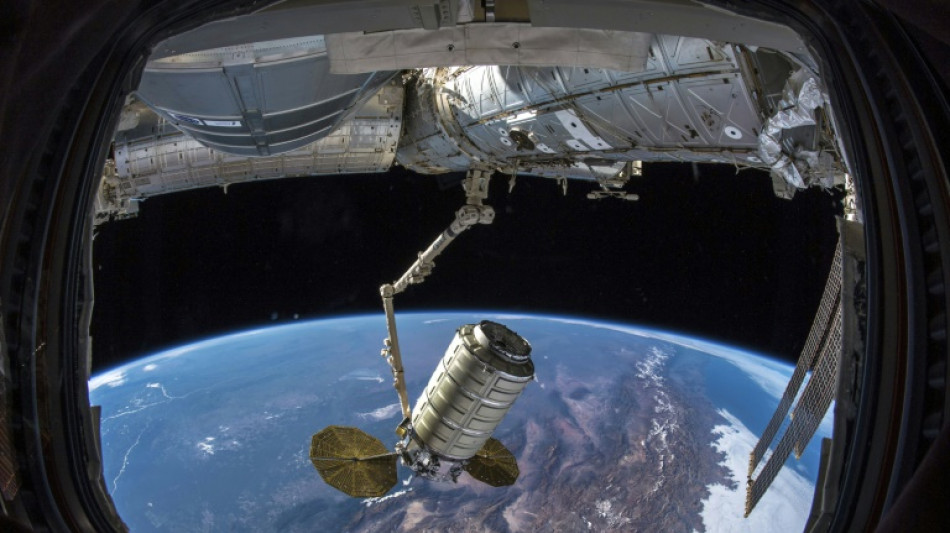
NASA touts space research in anti-cancer fight / Photo: © NASA/AFP

 ARKBRIDGE Reaches 50,000 Clients and Launches New Referral Rewards Program
 New wildfire forces evacuation of 500 people in France

 ट्रोजन: एक अधिक खतरनाक राजनीतिक युग के लिए विशेष सुरक्षा
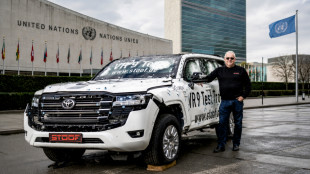 برنامج «TROJAN»: حماية خاصة في ظل أوقات سياسية أكثر خطورة
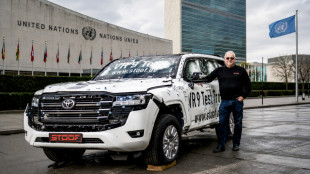
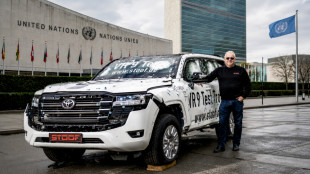
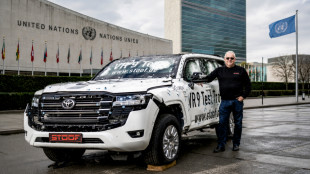 TROJAN: Special protection for a more perilous political era
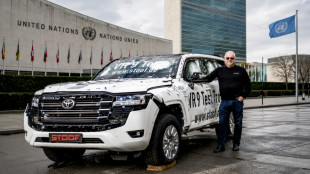
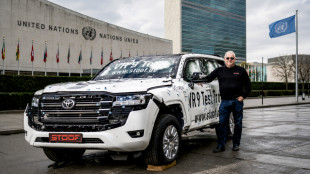 『TROJAN』:政治情勢がより危険になる時代に向けた特別な保護策

 Tanzid makes history as Bangladesh dominate first Australia Test

 Indonesia to close more than 750 state-owned enterprises

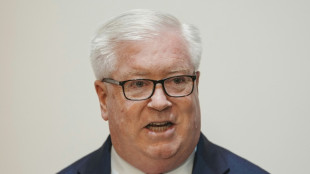 US backs Japan over Putin trip to disputed islands
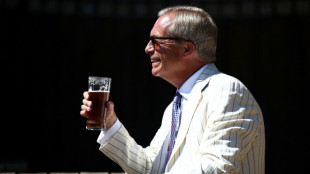
 'I want to be Eala': Philippine sensation sparks tennis boom at home

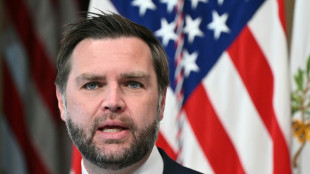 US says lower oil prices, not Iran's nuclear program, are now top priority in war

 Most Asian stocks track Wall St record as US data ease rate fears

 China's viral 'spicy strips' take a bite of global snack market

 Shelton does the double in Canada

 'Shock' gloves for US immigration agents fuel potential abuse fears

 New Zealand Football withdraws support for Infantino, urges review

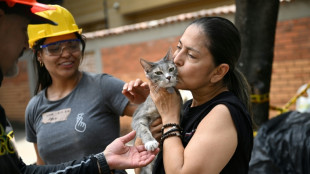
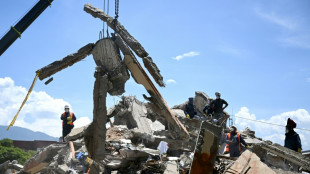 Hopes fade in Colombia as window to find quake survivors shuts

 Trump announces tariffs of up to 100% on imported drones

 Spieth among five sharing Memphis lead as PGA playoffs open
 Boats rescue tourists as forest fire flames threaten Greek beaches

 Good vibes powering Djokovic return to Cincinnati
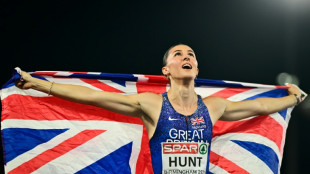 Britain's Hunt wins 200m for European sprint double

 Draper dumped as Norrie saves face for Britain in Cincinnati

 England opener Gay out for duck in Pakistan warm-up
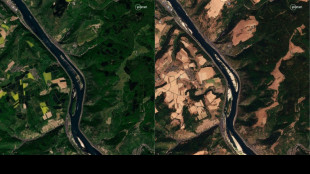 Europe swelters under fresh wave of extreme heat

Experiments in the weightless environment of space have led to "crazy progress" in the fight against cancer, NASA officials said at a recent event highlighting an important and personal initiative of US President Joe Biden.
Space is "a unique place for research," astronaut Frank Rubio said at the event in Washington.
The 48-year-old, a physician and former military helicopter pilot, conducted cancer research during his recent mission to the International Space Station (ISS), orbiting some 400 kilometers (250 miles) above the Earth's surface.
Not only do cells there age more rapidly, speeding up research, their structures are also described as "purer."
"They all don't clump together (as they do) on Earth because of gravity. They are suspended in space," enabling better analysis of their molecular structures, NASA chief Bill Nelson told AFP in an interview.
Research conducted in space can help make cancer drugs more effective, Nelson added.
Pharmaceutical giant Merck has conducted research on the ISS with Keytruda, an anti-cancer drug that patients now receive intravenously.
Its key ingredient is difficult to transform into a liquid. One solution is crystallization, a process often used in drug manufacturing.
In 2017, Merck conducted experiments to see if the crystals would form more rapidly in space than on Earth.
Nelson used two pictures to demonstrate the difference. The first showed a blurry, transparent spot. But on the second, a large number of clear gray spots had emerged.
That photo showed that smaller, more uniform crystals were forming in space -- and "forming better," Nelson said.
Thanks to such research, researchers will be able to make a drug that can be administered by injection in a doctor's office instead of through long and painful chemotherapy treatments, he added.
Merck identified techniques that can help it imitate the effects of these crystals on Earth as it works to develop a drug that can be stored at room temperature.
Still, it can take years between research in space and the wide availability of a drug developed there.
Cancer research in space began more than 40 years ago but has become "revolutionary" in recent years, said Nelson, a former Democratic senator who traveled into space himself in 1986.
"We use the languages of space to tell the limits of cancer," added W. Kimryn Rathmell, director of the National Cancer Institute, a federally funded research body.
- 'Moonshot' -
Biden launched a "Cancer Moonshot" initiative in 2016, when he was then vice president, echoing a speech by John F. Kennedy some 60 years earlier outlining the bold goal of sending an American to the moon.
The goal of the "Moonshot" is to halve the death rate from cancer over the next quarter century, saving four million lives, according to the White House.
The battle against cancer, the country's second-leading cause of death after heart disease, hits home for Biden, who lost his son Beau to brain cancer in 2015.
"We all know someone -- and most of us love someone -- who has battled this terrible disease," Xavier Becerra, Biden's secretary of health and human services, told reporters Thursday at NASA headquarters.
"As we did during the race to the Moon," he added, "we believe our technology and scientific community are capable of making the impossible a reality when it comes to ending cancer as we know it."
Political realities may hinder that ambitious goal, though. Congress has earmarked just over $25 billion to NASA for 2024, two percent less than the previous year and well below what the White House had sought.
But Rathmell of the Cancer Institute holds out hope.
"The ability of space to capture the imagination is huge," she said. And space cancer research has a firm goal: "It can save lives."
I.Meyer--BTB