Tandem heatwaves, storm surges increasingly batter coasts: study / Photo: © AFP

 Prize money 'critical' for athletics, says Coe

 WHO decries lack of justice over 10,000 attacks on health care

 SNC SCANDIC PAY: Pay anywhere in the world, without limits
 Maresca uncertain over Rodri's future at Man City

 MEXC's August 2026 Proof of Reserves Confirms User Assets Fully Backed as Reserve Ratios Remain Above 100%

 Zambia suspends vote counting nationwide citing violence

 Coe pledges court showing to defend World Athletics over Russia stance

 Stocks mixed as oil climbs, dollar drops

 Tourists beat the heat with 'magical' Colosseum night tours
 Spain extends largest nuclear plant in policy U-turn
 Gill says 'huge honour' to lead India in 600th Test

 Brazilian police recover Matisse works stolen in 2025

 Exiled Putin critic says push for peace put him in danger
 EU to study potential vaccine for Lyme disease: companies

 Colombia vows to find all missing quake victims as rescue hopes fade

 Farage wins UK by-election as Count Binface claims 'moral victory'
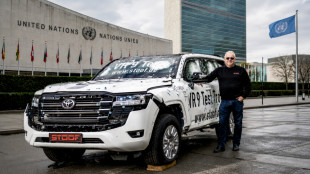
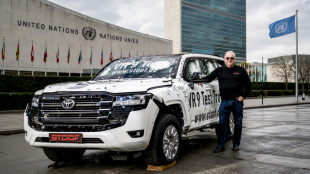 TROJAN: 더욱 위험해진 정치 시기를 위한 특별 보호 조치
 《特洛伊木馬》:在政治局勢日趨險惡的時代,提供特別保護
 TROJAN: Special protection for a more perilous political era
 Thai schools step up security after deadly shooting

 Thousands stranded as heavy rain kills at least four in Japan

 McIntosh bounces back with 400m medley win at Pan Pacs

 Farage declares victory as count still underway in UK by-election

 Australia probes three near-misses at Sydney Airport

 Classy Tanzid puts Bangladesh in firm charge against Australia

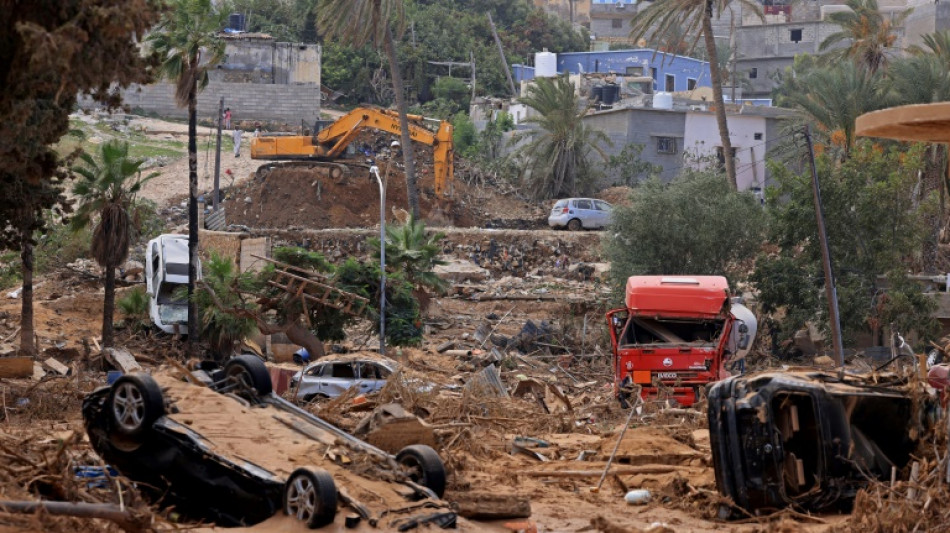
Coastal communities need to prepare for simultaneous extreme weather events as heatwaves increasingly overlap with surges in sea levels due to climate change, a study published on Thursday warned.
Extreme heat and sea levels are typically monitored and studied individually but researchers from Hong Kong Polytechnic University found they were occurring simultaneously -- a phenomenon that could multiply fivefold by mid-century.
The study's lead author, Mo Zhao, told AFP these events pose "very dangerous" risks, from deadly heat to floods, that may "exceed the coping capacity" of communities to respond.
"We don't have sufficient resources or sufficient human resources to handle these two extremes," she said.
Previous studies have shown that heat contributes to storm systems like tropical cyclones that bring surging sea levels, said Shuo Wang, co-author and assistant professor of hydroclimatic extremes.
But the study published in the journal Communications Earth and Environment found that high temperatures not only precede storms but persist through them, leaving communities battered by two extremes at once.
Already, global coastal areas have seen these combined events occur an average of 3.7 days more per year between 1998 and 2017 compared to the previous two decades.
The study projected these events would increase by an average of 31 more days per year by 2049 under a worst-case scenario if planet-heating greenhouse gas emissions continue unabated.
Tropical regions such as southeast Asia, West Africa and eastern parts of South America would see the greatest increases.
- Urgent emissions cuts required -
With 40 percent of the world's population living in the tropics, the study said billions of people were facing the potentially deadly consequences.
And the solution is not as simple as air conditioning.
Cooling systems are not common in households in poorer countries, the study noted.
Meanwhile, richer countries that do have them have shown that power cuts become a risk, particularly during storms.
"People cannot use air conditioners. But at the same time they suffer from heat... so we have adverse impacts on human health, especially for the elderly and children," Wang said.
The researchers said the world could avoid reaching this worst-case scenario by making rapid and deep cuts to emissions.
"If we take urgent action to mitigate the climate change... the situation would be better," Wang said.
But with the effects of climate change already being felt, extreme events cannot be avoided totally.
Instead, governments need to invest in adapting coastal infrastructure to better protect communities from the changing conditions, Wang said.
Early warning systems that measure the multiple variables contributing to complex crises are also needed so people can better prepare, he added.
L.Janezki--BTB