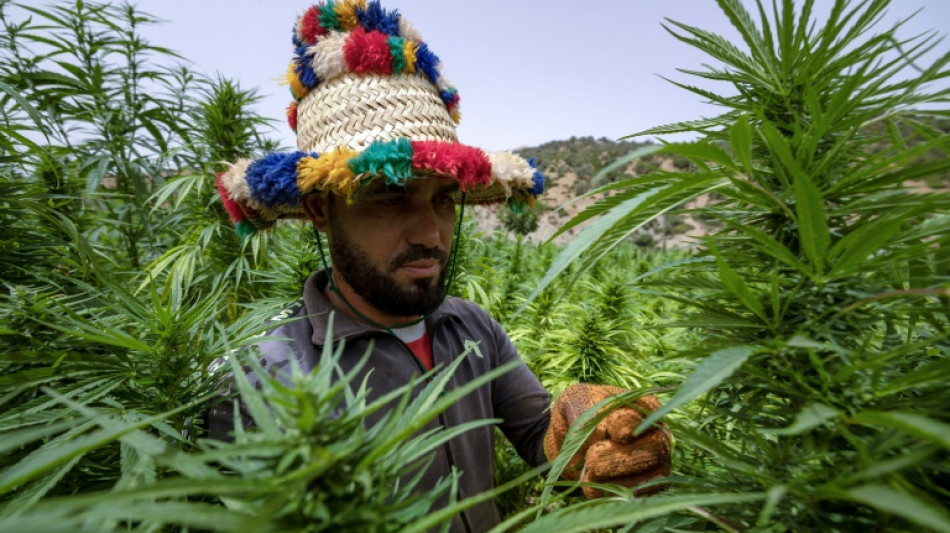
In Morocco, cannabis growers come 'out of the shadows' / Photo: © AFP

 Exiled Putin critic says push for peace put him in danger
 EU to study potential vaccine for Lyme disease: companies

 Colombia vows to find all missing quake victims as rescue hopes fade
 Farage wins UK by-election as Count Binface claims 'moral victory'

 TROJAN: 더욱 위험해진 정치 시기를 위한 특별 보호 조치

 TROJAN: спеціальний захист для більш небезпечних політичних часів

 『TROJAN』:政治情勢がより危険になる時代に向けた特別な保護策

 Thai schools step up security after deadly shooting
 Thousands stranded as heavy rain kills at least four in Japan
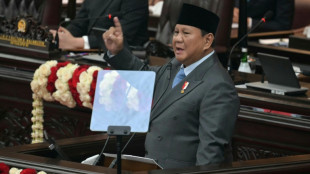
 McIntosh bounces back with 400m medley win at Pan Pacs
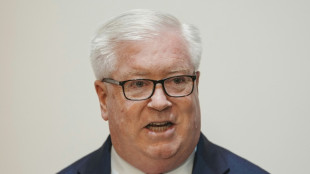
 Farage declares victory as count still underway in UK by-election

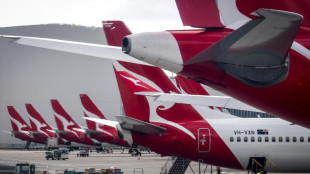 Australia probes three near-misses at Sydney Airport

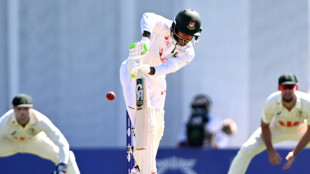 Classy Tanzid puts Bangladesh in firm charge against Australia
 Schwarber smacks two homers to power Philles' MLB Field of Dreams win
 Pakistan's date workers toil through rising heat

 New trend of injecting banned peptides to 'optimise' body
 Eddie Jones senses Japan's time has come against Australia
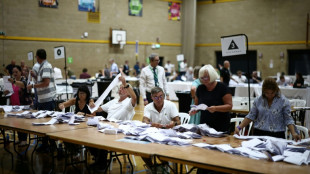 UK vote count under way in Farage, Binface showdown
 US, Mexico conduct security exercises near border

 Swiatek rolls past Rybakina for WTA Toronto title

 Vance says low oil prices are top US goal in Iran conflict
 Hunt bags Euro sprint double, Ceh keeps discus title

 'Dream come true': Owners reunite with pets in quake-hit Colombia

 US stocks gain after benign inflation data, oil prices retreat
 LeBron's Sixers in spotlight as full 2026-27 NBA schedule revealed
Only two years ago, Abdesselam Ichou began growing cannabis legally as part of Morocco's legalisation of the plant for medicinal and industrial uses in an impoverished part of the country.
Now, he is among thousands of legal farmers whose area of cultivation has reached new highs and cut into the still-dominant illegal trade in Morocco, the world's biggest cannabis resin producer, according to the United Nations.
The North African country passed a law in 2021 allowing the cultivation of medical and industrial-use cannabis in areas of Rif, a mountainous region that has long been a major source of illicit hashish -- a stronger derivative of cannabis -- smuggled to Europe.
"I never imagined that one day I would be able to grow cannabis without the fear and anxiety of being arrested, robbed, or not being able to sell my harvest," said Ichou, 48.
"Today, we work in broad daylight, in a free and dignified manner," he added, proudly showing his leafy crops in the commune of Mansoura, in the Chefchaouen region southeast of Tangiers.
Chefchaouen is one of the three provinces where cannabis cultivation is permitted under the 2021 law for non-recreational use.
Morocco's partial legalisation of cannabis sought to combat drug trafficking and improve the farmers' livelihoods, supporting up to 120,000 families in the region whose economy relies on cannabis which has been grown there for centuries.
In its first harvest of legal, low-potency cannabis last year, the country reported an output of 296 tonnes, according to ANRAC, Morocco's cannabis regulating agency.
For Ichou, it was "a record harvest of almost eight tonnes on one hectare (2.5 acres)" that provided him with a steadier income than illegal cultivation.
He said he sold the crop at 80 dirhams ($8) per kilogram to give a gross revenue of $64,000. The Moroccan firm that bought it decided to invest in two more hectares for the next harvest.
- 'Right path' -
In 2023, Ichou was the only farmer in his village to legally grow cannabis. This year, he said, there are about 70.
In Chefchaouen, Hoceima, and Taounate -- the Rif provinces where non-recreational cannabis cultivation is legal -- the number of farmers went from 430 to 3,000 in a year, according to ANRAC.
The surface area of legal cannabis crops increased almost tenfold, according to the agency, going from 286 hectares in 2023 to 2,700 hectares in 2024.
But that hardly compares to the 55,000 hectares which official figures say were grown illegally in 2019.
A crackdown on the underground trade saw annual revenues from illegal cannabis trafficking decrease from around $540 million in the early 2000s to almost $350 million in 2020, according to official figures.
"At first, there was a lot of apprehension," said Said El Gueddar, 47, another legal cannabis grower, who is expecting his next harvest in October.
"But little by little it waned, because ultimately legalisation is the right path to follow."
El Gueddar, who belongs to a cooperative, added that he has "a lot of hope, because it can only be better than living in the precariousness of illegality."
After relying on imported seeds for the legal cultivation, beldia, a local variety of the plant that's drought-resilient, will be harvested for the first time in August.
With Morocco hit by a six-year drought, "beldia is a major asset for us," said Ichou.
Along with dozens of other farmers, he created a cooperative dedicated to growing the local variety on more than 200 hectares. "We want to promote it as much as possible," he said.
- 'Attractive sector' -
For industrial cannabis use, ANRAC has issued more than 200 permits, including about 60 in cannabis processing, 20 for seed importation, and around 30 for cannabis export.
Aziz Makhlouf seized the chance by creating Biocannat, a cannabis processing factory employing 24 people in Bab Berred, southeast of Chefchaouen.
"There are quite a few opportunities with cannabis," said Makhlouf. "It's an attractive sector."
Since the start of the year, his factory has transformed around 30 tonnes of cannabis into different products -- CBD resin, oil, flour, creams, candies, and food supplements.
But while cannabis regulation helps to "slowly build a reliable and resilient economy", it remains challenging "to absorb the illegal sector because it has its market", said Mohamed El Guerroudj, the head of ANRAC.
Legal growers could eventually make a 12-percent turnover compared to four percent on the illegal market, according to official studies.
For now, the kingdom's priority is to help improve the lives of the population who rely economically on the plant, he told AFP.
Treating "cannabis production as a normal agricultural sector," Guerroudj said, will enable them to emerge "out of the shadows... towards the light."
W.Lapointe--BTB