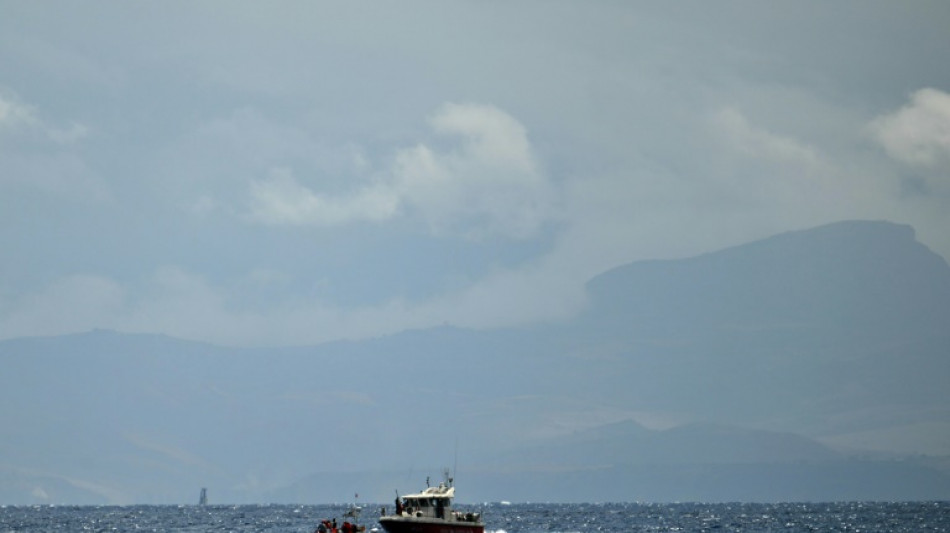
How a waterspout may have sunk a UK tech tycoon's yacht / Photo: © AFP

 'I want to be Eala': Philippine sensation sparks tennis boom at home

 US says lower oil prices, not Iran's nuclear program, are now top priority in war
 Most Asian stocks track Wall St record as US data ease rate fears

 China's viral 'spicy strips' take a bite of global snack market

 Shelton does the double in Canada

 'Shock' gloves for US immigration agents fuel potential abuse fears

 New Zealand Football withdraws support for Infantino, urges review
 Hopes fade in Colombia as window to find quake survivors shuts

 Trump announces tariffs of up to 100% on imported drones

 Spieth among five sharing Memphis lead as PGA playoffs open

 Boats rescue tourists as forest fire flames threaten Greek beaches

 Good vibes powering Djokovic return to Cincinnati

 Britain's Hunt wins 200m for European sprint double

 Draper dumped as Norrie saves face for Britain in Cincinnati

 England opener Gay out for duck in Pakistan warm-up
 Europe swelters under fresh wave of extreme heat

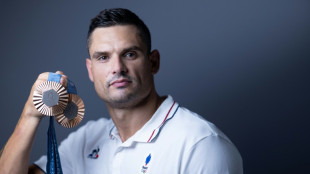 French Olympic gold medallist Florent Manaudou announces retirement
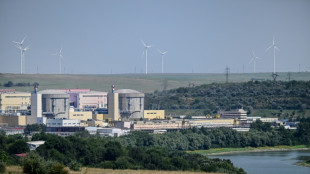
 Tourists rescued by boat as forest fire threatens Greek beaches

 Indicted Raul Castro reappears after months out of public view
 Italian teen Curtis breaks women's 50m backstroke world record for second time

 Taulagi steps out of 'comfort zone' with code switch to French Top 14 new boys

 Leicester's Thai owners put troubled club up for sale: reports

 Stocks steady as US inflation worries ease, oil slips

 Porsche to end production of flagship electric car: report

 Twitch sparks gamers' wrath with Amazon AI sharing deal

The marine weather phenomenon blamed for sinking a British tech tycoon's yacht off Sicily, known as a waterspout, may have been strengthened by unusually warm waters in the Mediterranean, experts said.
The 56-metre (183-foot) "Bayesian", being used by Mike Lynch and his wealthy guests to celebrate a court victory, disappeared into the sea within minutes of being hit by the tornado-like storm off the Sicilian town of Porticello.
One body has been found and Lynch, his daughter, and Jonathan Bloomer, chairman of Morgan Stanley International, are among six people missing since the disaster at 4:00 am on Monday.
The British-flagged vessel was anchored some 700 metres from port with 10 crew and 12 passengers on board when the waterspout struck, according to witnesses.
Karsten Borner, skipper of a yacht anchored nearby, described a "very strong hurricane gust" that hit. He was battling to keep his vessel steady when suddenly "we noticed that the ship behind us was gone".
"First came the wind, then the water -- it was definitely a tornado," said local fisherman Giovanni Lococco, describing the waterspout.
- Tornado power -
Investigators and experts have been poring over the weather conditions and the design of the "Bayesian", whose 75-metre mast was the world's tallest made from aluminium, according to the Charter World website.
"A waterspout is a narrow column of rotating air below a thunderstorm that occurs over water" and is "part of the same weather 'family' as tornadoes", said Peter Inness, a meteorologist at the University of Reading in Britain, in comments released by the UK's Science Media Centre.
Like tornadoes, they suck up air in a rotating motion, usually causing less damage than tornadoes over land, however.
"Changes in wind direction with height are also needed to set up the rotation of air within the waterspout," said Inness.
While many waterspouts are "fairly inconsequential", lasting just a few seconds, some can pack winds of more than 100 kilometres (62 miles) per hour, said Inness.
"Winds of this strength coinciding with the location of a boat are capable of causing damage or capsize, especially because the wind direction varies very rapidly," he said.
The Mediterranean could be the world's most likely place for waterspouts, due to a warm water surface and a vulnerability to thunderstorms in the summer and autumn, he said.
The Mediterranean this year reached its highest temperature on record, with a daily median of 28.90 degrees Celsius (84 Fahrenheit), according to Spain's leading institute of marine sciences.
Experts say the temperature has often hit 30 degrees Celsius or more, about three degrees above average.
"We could have had a superposition of air and water suction with shearing winds that ultimately created something that lifted up," said Jean-Marie Dumon, a former naval officer now with the GICAN, the French maritime industry association.
The conditions with winds of 100kph or more can "create completely anarchic sea conditions which can cause capsizing," said Dumon.
The tall mast may have had an "amplifier effect" in taking the yacht to its "tipping point", he explained.
Dumon said the "Bayesian" was certainly designed by naval architects to cope with extreme winds and heavy seas.
"Here we have wind shear which can cause instability."
"The fact that the vessel itself was not damaged... suggests that it was laid on its side", said the expert.
O.Bulka--BTB