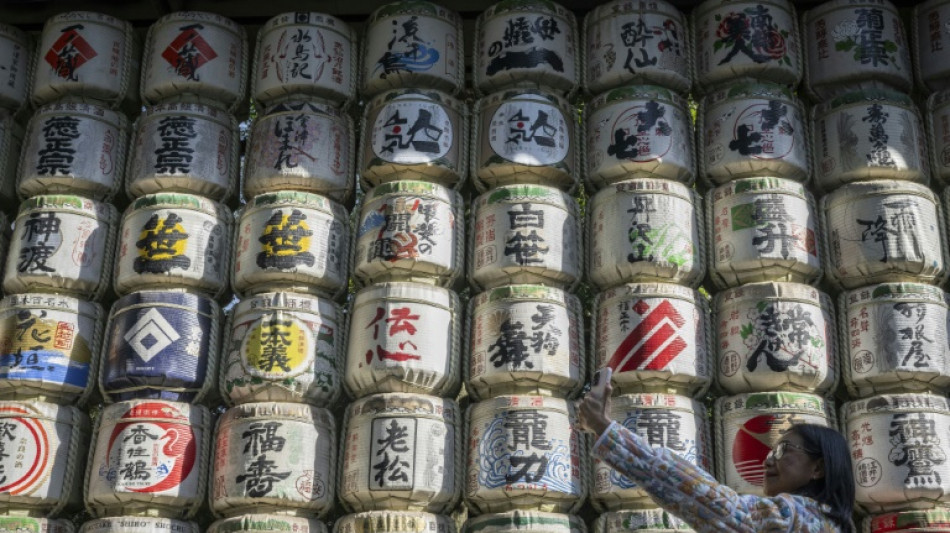
Kampai! All about Japanese sake / Photo: © AFP

 Lukaku joins Turkish side Fenerbahce from Napoli

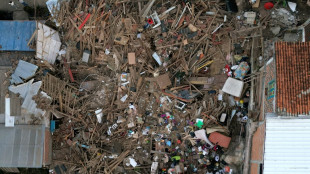
 Colombia quake rescue efforts enter 'final phase' as toll hits 239
 Brazil orders suspension of Discord livestreams after teen suicide

 Tourists rush to Mount Etna as Italian volcano erupts

 Knot and Venmo Team Up to Make Venmo the Effortless Way to Pay

 In Moscow, Russians worry about new fuel shortages

 New space object 'black hole star' discovered by astronomers

 England captain Root tells players to be 'adults' as he ditches curfew

 US inflation slows slightly in July despite elevated fuel prices

 Total solar eclipse to cast its shadow over Europe
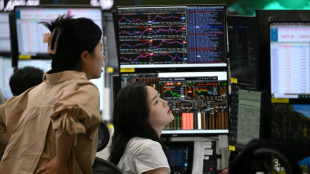
 US consumer inflation slows slightly in July despite elevated fuel prices
 Warholm on track in bid for fourth Euro hurdles gold

 Erdogan eyes expansion of regional defence pact

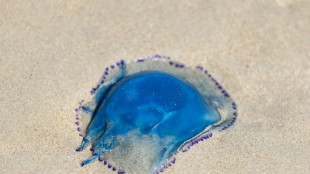 Extreme weather, jellyfish knock one-fifth of France's nuclear capacity offline

 Skywatchers gather in Europe to see total solar eclipse
 Zhu Rongji, trailblazing ex-premier who transformed China's economy

 China tech giant Tencent's Q2 profit down as AI push builds

 China's C919 jet makes first international commercial flight

 Mideast war impact on travel bookings fading, TUI says

 Bangladesh get Das fitness boost for daunting Australia task

 One dead, 172 rescued as second ferry in days catches fire in Indonesia
 Foxconn posts quarterly profit surge on AI server demand
 Hazlewood gets Australia nod ahead of Boland for Bangladesh Test

 Toyota ex-chief Okuda, pioneer of the Prius, dead at 93

 Colombia rescuers find woman alive as quake death toll passes 200

Japanese tipples sake and shochu -- and the knowledge and skills honed over centuries to make them -- have been added to UNESCO's Intangible Cultural Heritage list.
AFP looks at how sake, a rice wine, is made, its myriad varieties, and its role in everyday life and traditions:
- History -
It's believed people in the archipelago began brewing rice in a simple way some two millennia ago, with a third-century Chinese chronicle describing the Japanese as fond of alcohol.
By around 1000 AD, the imperial palace had a department to supervise the manufacturing of sake and its use in rituals, according to the Japan Sake and Shochu Makers Association.
The multi-staged brewing techniques still used today are thought to have been established around the 1700s.
Nowadays there are around 1,400 sake breweries in Japan.
Shochu, which was also added to UNESCO's Intangible Cultural Heritage list on Wednesday, is a spirit distilled from different ingredients such as sweet potato, mainly in the country's southwest.
- The process -
Sake is stronger than beer or wine made from grapes, but weaker than shochu. It is made by fermenting special rice with bigger and rounder grains than varieties eaten in meals.
First, the grains are polished to remove the outer layers, revealing a water-absorbent white core rich in starch.
Brewers wash, soak and steam the polished rice before growing a special mould on it called koji. They then mix it with water and yeast to create a starter.
Adding more steamed rice and water several times sparks two types of chemical reactions in a single cask –- converting starch to sugar and sugar to alcohol -- a more complex process than making wine from sugar-rich grapes.
- What's koji? -
Koji is mould from bacteria found in humid Asian countries. It is an essential element of Japanese cuisine -- used to make not just sake but also miso, soy sauce and other food.
The genus designated as Japan's national mould is called aspergillus oryzae, also known as "koji-kabi".
"Over more than a thousand years, brewers selected and cultivated the best type of mould from all the wild ones out there," Taku Takahashi, from Tokyo's Toshimaya Shuzo brewery, told AFP.
The sake-making process as we know it now, where humans intervene to spark fermentation, was developed "after many, many failures", he added.
- Sake varieties -
Generally speaking, there are two types of sake: one made purely from rice, and the other, mixed with distilled alcohol.
The higher the grade of grain polishing, the fruitier and drier the sake.
More polished varieties requiring more rice tend to be pricier, but some gastronomists appreciate less polished types for their rich and mellow flavour.
Breweries adjust their flavours to suit local delicacies. For example, near the Pacific Ocean, dry sake is produced to pair with red-meat fish such as tuna and bonito.
- How is it consumed? -
Sake "has a very important role" in society and is drunk at weddings and funerals, Takahashi said.
It is also drunk to mark store openings and election victories -- or just to say "kampai" meaning "cheers" in Japanese pubs.
Traditionally three ritual offerings are made to the many gods of Japan's Shinto religion: rice, a rice cake and sake.
And at Shinto weddings, the bride and groom drink sake from the same porcelain cup to symbolise their union.
Breweries still hang a ball of cedar leaves outside, which change colour from green to brown -- letting customers know when the "nouveau" sake is ready in early winter.
- Going forward -
Sake consumption has declined a lot in Japan over 50 years, as other drinks like beer and wine become more popular.
The agriculture ministry says the country drank only 390 million litres of sake in 2023, down from 1.7 billion litres in 1973.
However, exports of sake have more than doubled since 2011, and it is now brewed as far afield as New Zealand, France and the United States.
A.Gasser--BTB