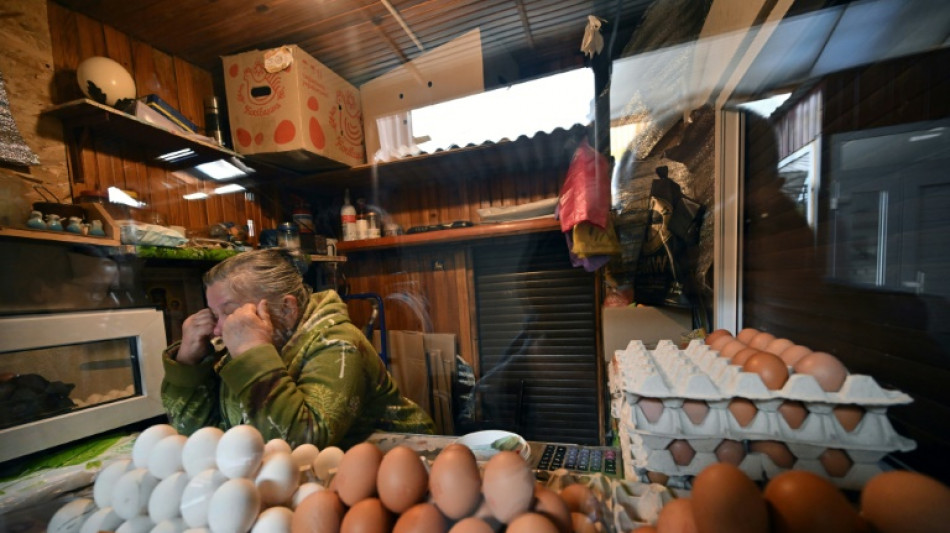
At Bucha market, life goes on 'so we don't go mad' / Photo: © AFP

 Factories shed workers in Bangladesh garment sector
 North Korea warns of 'military options' over Japan rearmament

 Tiny light, big dream: Harvesting power from soil in Japan

 Trump admin to review 'closed' AI models before release: reports

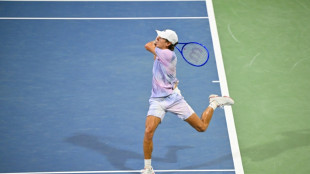 De Minaur fights past Duckworth in all-Aussie Montreal battle
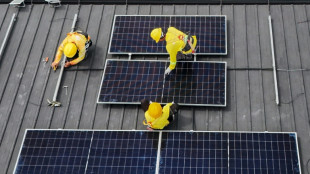 High bills, cheap panels drive a Philippine solar surge
 Russian barrage on Ukraine kills 2, wounds dozens more

 Alcaraz withdraws from Cincinnati Masters with wrist injury

 SpaceX revenue jumps 92% in first earnings report, but shares slide

 US eyes Hormuz deal 'today or tomorrow' as ship sinks in Red Sea

 SpaceX revenue jumps 92% in first earnings report
 New commissioner Berg wants to take MLS to 'next level'

 Colombian ex-guerrillas fear for future under hardline president

 Tsitsipas comeback continues with Montreal first-round win
 Swiatek fends off Bejlek to reach Toronto third round

 Reusser romps to overall lead at Tour de France Femmes
 McDonald's reports slower US sales in 2nd quarter

 Arsenal step up bid to sign Newcastle's Guimaraes: reports
 Gazans hold mass funeral for those killed during war
 WHO pleads for more support to tackle Ebola outbreak

 Oil drops, stocks gain on hopes of Hormuz opening

 Infantino faces nervy times to see if challenger emerges
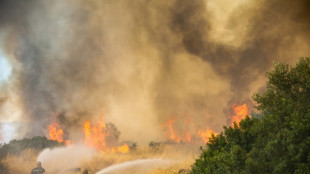 Greece gains ground against blaze near Athens
 Oil turns lower, stocks gain on hopes of Hormuz opening

 World Bank warns developing countries to embrace AI or be left behind

Most stalls still have their shutters down but the reopening of the market in Bucha marks a return to a semblance of normality for this Ukrainian town synonymous with war crimes.
Barely visible behind the piles of eggs on her stall, Nataliya Morgun, 69, remembers how cold it was in March when the Russian troops entered Bucha, just outside Kyiv.
She also recalls the silence when the guns stopped firing because most of the residents had fled.
"Thank God, it's slowly coming back to normal," she told AFP, tears running down her wrinkled cheeks.
It is the first time she had left herself cry since the war began, she says.
"It's shameful for me to say that I was born in Russia."
Bucha became synonymous with allegations of war crimes by Russian troops since dozens of bodies in civilian clothing were found lying in the streets, some with their hands tied, after Russian forces left on March 31.
More and more corpses have been discovered there and in the surrounding towns and villages since. The Kremlin denies Russian involvement in atrocities.
Dressed in red and pink, the colours of her butcher's stall, Valeriya Bilyk, 21, says she "doesn't want to think about it", preferring to busy herself at the little covered market where she works with her husband and which reopened last week.
"It's getting better and better every day... Shops are opening little by little. People with small kids and dogs are coming back," she says.
"If you don't look at the ruins, it feels like we’ve practically recovered from all of this."
Most of the rubble and carcasses of burnt-out cars have been removed but it's hard to ignore the gutted buildings outside the market, the bullet holes and the damage suggesting some of the shops have been looted.
Most of the shopkeepers haven't come back and most of the few customers wandering between the stalls are elderly.
"There are more cats than people," remarks one passerby.
- Business, but not as usual -
Despite everything, 63-year-old Nadia Grebenyk is doing brisk business at her stall selling seeds for growing cucumbers, watermelon and flowers.
"It's spring. Everybody wants to plant a garden of victory," she says, stuffing a handful of small banknotes into her pocket.
In order to earn a bit of money, Sergiy, 42, has decided to open a stall at the market with his wife, Maryna, who teaches English at a local school.
Formerly working as an engineer at the nearby airport, he has been jobless since the war began and is hoping to bring in a bit of extra cash to supplement Maryna's income.
New to the market business, the pair have come up with an original idea -- birthday decorations.
"In any hard time, children need to laugh," she explains while laying out pointed paper hats and coloured banners on their little stall.
But behind all the cheerful party paraphernalia, their conversations take a darker turn, with endless discussions about what happened during the Russian occupation.
Sergiy talks about his sister's godfather who was tortured, showing pictures of the body on his mobile phone.
And Maryna speaks about the death of the mum of one of her students, before changing the subject.
"We need to switch to a daily routine, try to work, to forget."
- 'We will pay them back' -
Dmytro Yefremov, who has come to buy a water filter from a small hardware shop, says he has no intention of forgetting "what was done here by the katsaps" -- using a pejorative term for the Russians.
"Dozens of generations will remember it until their dying day. And we will pay them back," he vows.
But he also knows that "life should not stop".
Olena Khokhlova, a 34-year-old mum with a small bag of vegetables in her hand, is also getting on with things. Her second child is well on its way.
She lives in Yablunska Street (Apple Tree Street), the now-infamous road where so many bodies were found, admitting she saw "horrors" before fleeing on March 10.
"It's shocking at first and then you realise that it's our reality and that you need to change your life and continue living," she told AFP.
"Because if you don't, you'll go mad."
When her daughter is born in August, she will be named "Stefania" after the song by Kalush Orchestra that won Ukraine this year's Eurovision Song Contest.
T.Bondarenko--BTB