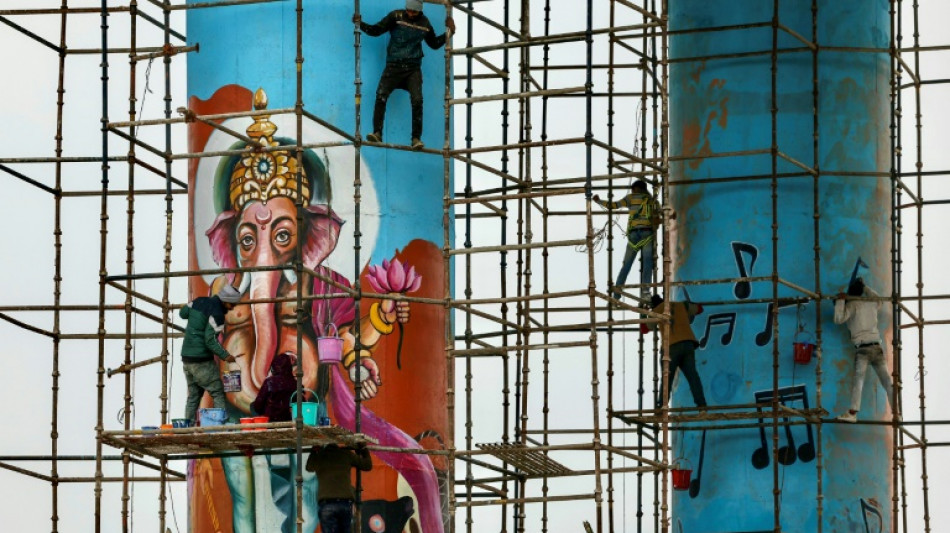
India's Kumbh Mela, world's largest religious gathering / Photo: © AFP/File

 Meta meets its own 'tobacco' moment in court

 Art or medicine? Japan's cosmetic tattoo artists in limbo
 Rybakina ousts Osaka to book Toronto semi-final against Gauff

 Colombia rescuers find woman alive as quake death toll passes 240

 Charges dropped against Bondi Beach attack hero

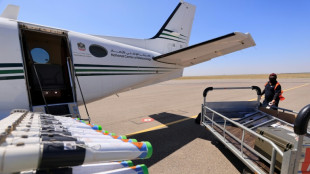 Parched and desperate for rain, Kazakhstan turns to cloud-seeding
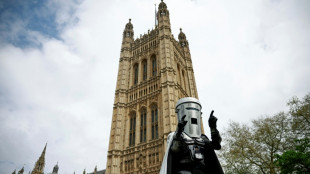
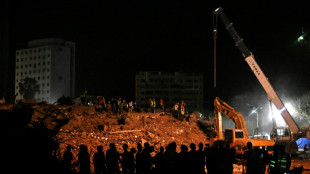 The perfect storm that turbocharged Venezuela's twin quakes

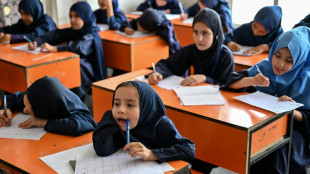 2.4 million girls banned from Afghan schools since Taliban return: UNESCO
 Colombians dig through rubble as quake death toll surpasses 240

 New Zealand's ruling party meets to decide PM Luxon's fate
 Total solar eclipse to spellbind Europe

 Jodar, Nakashima to make Masters semis debuts in Montreal

 Chilean veteran Sanchez signs with MLS club Montreal

 Cristiano Ronaldo marries long-term partner Georgina Rodriguez

 Oil prices higher, stocks mixed ahead of inflation report
 Jacobs into 100m final with eye on third title
 Eight-try New Zealand cruise to tour victory over Sharks

 Trump's secret plane swap triggers questions and confusion
 California calls Paramount's threat to leave state 'blackmail'

 PSG 'want to win everything', says Luis Enrique

 Barred from elections, Russia's anti-war party vows to fight on
 Jaissle states Newcastle ambition but urges patience

 NBA star Cooper Flagg trading card a slam dunk for lucky buyer
 ForumPay Expands Payment Infrastructure with New Card and Bank Transfer Acceptance Solution
 Oil prices higher, stocks flat ahead of inflation report

Organisers of India's Kumbh Mela have prepared to host a staggering 400 million devotees at the six-week Hindu festival that starts Monday and is expected to be the largest human gathering in history.
Pilgrims will come from across India and beyond to take part in elaborate rituals, prayers and religious processions with elephants, as well as horse-back parades and chariots.
The mass Hindu mela, or fair, runs from January 13 to February 26 on the river banks of Prayagraj in the northern state of Uttar Pradesh.
Organisers say the scale of preparations for the Kumbh Mela is akin to setting up a country from scratch.
- Mind-boggling numbers -
Around 150,000 toilets have been built along with community kitchens that can each feed up to 50,000 people at a time.
The last celebration at the site, the "ardh" or half Kumbh Mela in 2019, attracted 240 million pilgrims, according to the government.
This year, authorities are preparing for up to 400 million people -- more than the combined population of the United States and Canada.
Mela authorities and police have set up a network of "Lost and Found" centres as well as a special Kumbh phone application to help lost pilgrims reunite with their families.
- Sacred bathing -
The Kumbh Mela, the "festival of the sacred pitcher", is held at the confluence of the Ganges, Yamuna and mythical Sarasvati rivers.
A central part of the rituals is bathing in the holy rivers, with the dawn charge often led by naked, ash-smeared monks.
Hindus believe that those who immerse themselves in the waters cleanse themselves of sin, breaking free from the cycle of rebirth and ultimately attaining salvation.
Many pilgrims embrace a life of simplicity during the festival -- vowing non-violence, celibacy and the offering of alms -- and focusing on prayer and meditation.
- Cosmic battle -
The festival is rooted in Hindu mythology, a battle between deities and demons for control of a pitcher, or kumbh, containing the nectar of immortality.
During the battle, a cosmic fight called "Samudra Manthan", or the "churning of the ocean", four drops of nectar were spilt.
One landed at Prayagraj, where the Kumbh is held every 12 years.
The other drops fell in Nashik, Ujjain and Haridwar, cities where smaller Kumbh festivals are held in intervening years.
The mythological battle is mentioned in the Rig Veda, an ancient sacred canonical Hindu text.
One of the earliest historical mentions of the festival comes from Chinese Buddhist monk and scholar Hiuen Tsang, who attended in the seventh century.
- Key dates -
Bathing takes place every day, but on the most auspicious dates, it is known as Shahi Snan, or "royal bath".
Ceremonies include the visually spectacular "aarti", when vast numbers of priests perform rituals holding flickering lamps.
Devotees also float a sea of twinkling "diya" prayer lamps, crafted from baked flour, that glow from burning mustard oil or clarified butter.
Key dates include January 13, the start of the mela that coincides with the full moon.
One of the most popular days is January 29, Mauni Amavasya, when celestial alignments are said to be ideal for purifying waters.
Celebrations culminate on February 26, Maha Shivaratri, the final holy bathing day.
L.Janezki--BTB