
Addressing Climate Change by Changing Our Food Systems

 Rybakina ousts Osaka to book Toronto semi-final against Gauff

 Colombia rescuers find woman alive as quake death toll passes 240

 Charges dropped against Bondi Beach attack hero

 Parched and desperate for rain, Kazakhstan turns to cloud-seeding

 The perfect storm that turbocharged Venezuela's twin quakes

 2.4 million girls banned from Afghan schools since Taliban return: UNESCO

 Colombians dig through rubble as quake death toll surpasses 240

 New Zealand's ruling party meets to decide PM Luxon's fate

 Total solar eclipse to spellbind Europe

 Jodar, Nakashima to make Masters semis debuts in Montreal

 Chilean veteran Sanchez signs with MLS club Montreal

 Cristiano Ronaldo marries long-term partner Georgina Rodriguez

 Oil prices higher, stocks mixed ahead of inflation report

 Jacobs into 100m final with eye on third title

 Eight-try New Zealand cruise to tour victory over Sharks

 Trump's secret plane swap triggers questions and confusion

 California calls Paramount's threat to leave state 'blackmail'

 PSG 'want to win everything', says Luis Enrique

 Barred from elections, Russia's anti-war party vows to fight on

 Jaissle states Newcastle ambition but urges patience

 NBA star Cooper Flagg trading card a slam dunk for lucky buyer

 ForumPay Expands Payment Infrastructure with New Card and Bank Transfer Acceptance Solution

 Oil prices higher, stocks flat ahead of inflation report

 Orban-critic ex-judge becomes Hungary president after predecessor ouster

 US rights groups sue Trump over ICC sanctions

Up to a third of global greenhouse gas production to date can be attributed to animal agriculture and food systems. Yet, most climate change solutions neglect the importance of food systems in climate change mitigation. In the article, 'Solving Climate Change Requires Changing Our Food Systems,' published in leading scientific journal Oxford Open Climate Change, prominent scientists from around the world propose that the pressing nature of irreversible climate change requires rethinking our food systems.
The year 2024 was the hottest year on record. For the first time the average global temperature rose to 1.6C above preindustrial levels, exceeding the 1.5C vital to preventing accelerating climate change. The effects of climate change are now visible on every continent.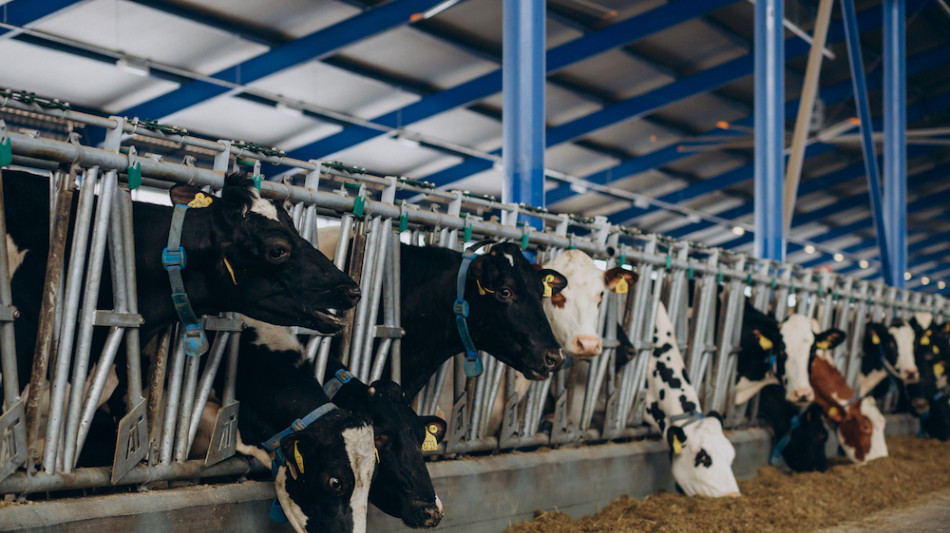
Lead researcher Dr Feigin and her co-authors assert that "we must undertake a global shift to a fundamentally plant-based diet and a gradual global reduction and eventual phaseout of intensive factory farming, the most prolific and damaging form of agriculture."
Our growing demand for meat and animal products is unsustainable. The FAO estimates that demand for meat will double by 2050, which would require that approximately 80% of existing forests and shrubland would have to be converted into land devoted to raising animals. Such a trajectory would have devastating consequences for us and the planet.
"As the world population increases, food insecurity and starvation will intensify if we continue to rely on a model of food production (i.e. animal factory farming) which is extraordinarily inefficient and resource intensive", the study authors contend. The authors present strategies to achieve a re-thinking of current food systems including the removal of government subsidies and higher taxation of animal products to account for externalized costs of animal agriculture.
The health benefits and savings to healthcare costs of adopting a fundamentally plant-based diet are profound. Consumption of animal products contributes to the development of many chronic diseases. Moreover, "antibiotic-resistant infections in humans are associated with proximity to animal farms and are a global health threat, killing approximately 700,000 people worldwide annually," the authors declare. The proliferation of industrialized animal farming has brought us closer than ever before to the outbreaks of lethal human zoonoses such as avian influenza (bird flu) and H1N1 (swine flu) resulting from factory farming operations.
The authors suggest that plant-based diets pet foods should also be included in the global shift away from animal agriculture. Pet dogs and cats consume at least 9% of all livestock annually and nutritionally sound plant-based pet diets would free up large amounts of land which could be used for climate mitigation.
Critical changes to our food system and consumption habits will require a shift in global mindset - lead author Dr Feigin states, "the future of humanity and all life on our planet depends on sustainability, and the data indicate that we will not succeed on the issue of climate change unless we change the way that we produce and consume food."
Contact Information
Svetlana Feigin
Dr
[email protected]
SOURCE: All Life Institute
L.Dubois--BTB