'Shouldn't have happened:' DC air collision stuns experts / Photo: © AFP

 Trump's secret plane swap triggers questions and confusion
 California calls Paramount's threat to leave state 'blackmail'

 PSG 'want to win everything', says Luis Enrique

 Barred from elections, Russia's anti-war party vows to fight on

 Jaissle states Newcastle ambition but urges patience

 NBA star Cooper Flagg trading card a slam dunk for lucky buyer

 ForumPay Expands Payment Infrastructure with New Card and Bank Transfer Acceptance Solution
 Oil prices higher, stocks flat ahead of inflation report

 Orban-critic ex-judge becomes Hungary president after predecessor ouster
 US rights groups sue Trump over ICC sanctions

 Sphere 3D Corp. (Nasdaq: ANY) Attracts 6.5% Stake from Turnaround Bitcoin-Mining Investor

 Oil prices lower, stocks higher as Hormuz doubts drag on

 Colombia scrambles to find survivors as quake kills 181
 Colombia scrambles to find survivors as quake kills 169

 MEXC Report: 74.2% of Traditional Finance Users Have Shifted Their Trading Activity to Crypto Exchanges

 MEXC Lists DAPPOS (DOS) With $60,000 Worth of DOS and 10,000 USDT in Airdrop+ Rewards

 Jellyfish force shutdown of three reactors at French nuclear plant

 Hodgkinson, Werro sail through Euro 800m qualifying

 Somali referee denied World Cup 'proud' to oversee UEFA Super Cup
 French newspapers target Google over AI summaries

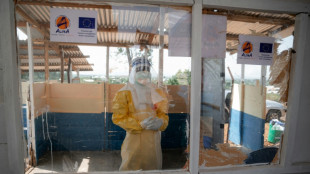 Ebola death toll in DR Congo outbreak rises to more than 2,000

 PrimeXBT Launches MT5 Cent Account for Beginners and Risk-Conscious Traders
 British sprinter Hunt chasing three more golds after winning 100m

 Ethiopia's Tigray rebel authorities condemn army drone strikes

 Too hot to live? French buyers rethink housing choices after heatwaves
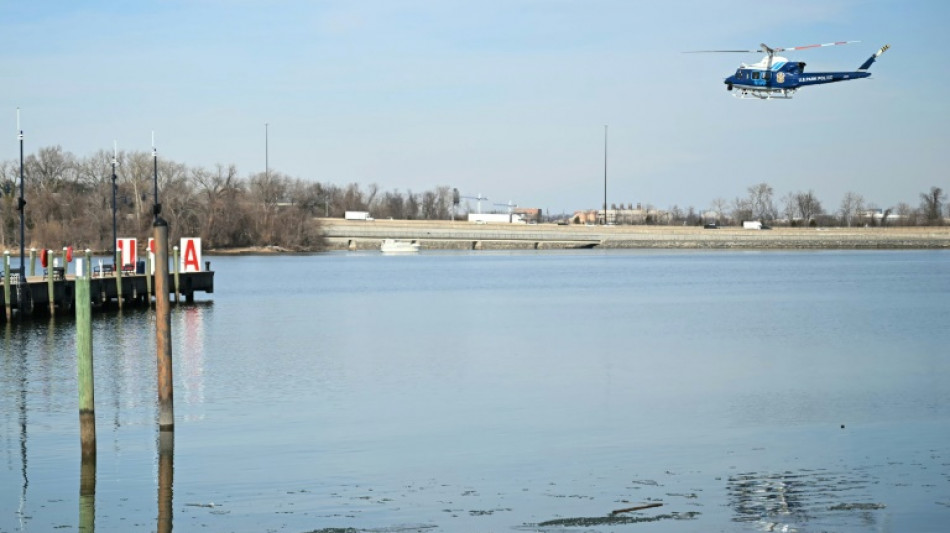
The midair collision between an American Airlines jet and a US Army Blackhawk helicopter in Washington has puzzled experts, given the perfect flying conditions and strict controls in one of the world's busiest air corridors.
It "shouldn't have happened," Transport Secretary Sean Duffy said.
"That was as routine a (commercial) flight as it gets," said Richard Aboulafia, managing director of AeroDynamic.
"I've been on it many times. Many people in Washington who go to Kansas have been on it," he told AFP.
President Donald Trump echoed this, commenting on Truth Social, that the flight, arriving at Reagan National Airport from Wichita, Kansas, "was on a perfect and routine line of approach."
The collision occurred in congested but tightly controlled airspace over a city that has not seen a major aviation tragedy since the September 11, 2001 Al-Qaeda attack. The previous accident was in 1982.
According to Flightradar24's Ian Petchenik, the collision occurred at approximately 300 feet (90 meters), mere seconds before landing. "The runway threshold is at the river's edge. The Kansas flight was ready to touch down," he told WUSA-TV in DC.
The airspace around Reagan Airport regularly accommodates dense helicopter traffic, including military flights between the Pentagon and nearby bases, Coast Guard patrols, and Marine Corps helicopters serving the White House.
Commercial aircraft like the one involved are equipped with TCAS (Traffic Alert and Collision Avoidance System), designed to alert pilots to nearby aircraft and provide last-minute collision avoidance instructions.
Jeff Guzzetti, a former NTSB and FAA air crash investigator and head of Guzzetti Aviation, noted that Washington's busy airspace allows civilian and military aircraft to "mix it up."
Despite clear conditions, he said investigators would examine "human ability to perceive objects at night," considering factors like night vision goggles and streetlight interference.
- 'Whatever can happen' -
Retired British Army Air Corps Major George Bacon, who has flown military helicopters in US air space, said night vision goggles could have been a factor in the crash.
"Although extremely good because it makes it almost look like daylight, they have a sort of 'tunnel effect'" or can suffer interference from street lights, he said.
Captain Sully Sullenberger, known for safely landing his commercial plane in the Hudson River, told CBS that Reagan National was "considered a special airport that requires a bit more study to operate there safely, because of the short runways because of the proximity of other airports."
While mid-air collisions "occur annually or biennially," commercial aircraft involvement is rare, according to Syracuse University professor and aviation safety expert Kivanc Avrenli.
The last fatal commercial mid-air collision in the US occurred on April 9, 1990, when Atlantic Southeast Airlines Flight 2254 collided with a Cessna in Alabama.
If confirmed as an accident, Wednesday's crash will be Washington's most serious since the 1982 Air Florida Flight 90 disaster, when a Boeing 737 crashed into the 14th Street Bridge during severe winter weather, killing 74 people.
That tragedy sparked significant changes in aviation safety regulations, particularly regarding de-icing procedures.
Sullenberger cautioned that catastrophic events can still occur when "all the dominoes line up in the wrong way."
"Given enough time, given enough flights, given enough flight hours, eventually whatever can happen will happen unless we work very hard to prevent every incident from turning into an accident."
E.Schubert--BTB