Navalny's legacy dims among young Russians he once galvanised / Photo: © AFP

 Barred from elections, Russia's anti-war party vows to fight on
 Jaissle states Newcastle ambition but urges patience
 NBA star Cooper Flagg trading card a slam dunk for lucky buyer
 ForumPay Expands Payment Infrastructure with New Card and Bank Transfer Acceptance Solution
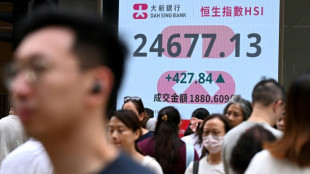
 Oil prices higher, stocks flat ahead of inflation report
 Orban-critic ex-judge becomes Hungary president after predecessor ouster
 US rights groups sue Trump over ICC sanctions
 Sphere 3D Corp. (Nasdaq: ANY) Attracts 6.5% Stake from Turnaround Bitcoin-Mining Investor
 Oil prices lower, stocks higher as Hormuz doubts drag on
 Colombia scrambles to find survivors as quake kills 181
 Colombia scrambles to find survivors as quake kills 169

 MEXC Report: 74.2% of Traditional Finance Users Have Shifted Their Trading Activity to Crypto Exchanges

 MEXC Lists DAPPOS (DOS) With $60,000 Worth of DOS and 10,000 USDT in Airdrop+ Rewards
 Jellyfish force shutdown of three reactors at French nuclear plant
 Hodgkinson, Werro sail through Euro 800m qualifying
 Somali referee denied World Cup 'proud' to oversee UEFA Super Cup

 French newspapers target Google over AI summaries
 Ebola death toll in DR Congo outbreak rises to more than 2,000
 PrimeXBT Launches MT5 Cent Account for Beginners and Risk-Conscious Traders
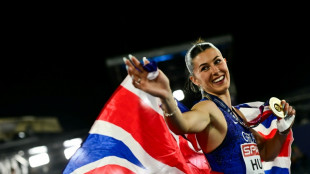 British sprinter Hunt chasing three more golds after winning 100m
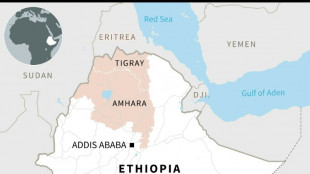 Ethiopia's Tigray rebel authorities condemn army drone strikes
 Too hot to live? French buyers rethink housing choices after heatwaves
 Ukraine says Russia fired N. Korean missiles in deadly attack
 Oil prices jump further as hopes for Hormuz deal fade
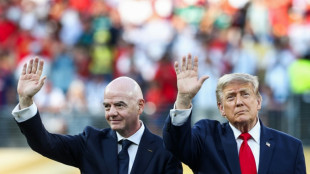 Trump says would be 'terrible mistake' to oust embattled Infantino

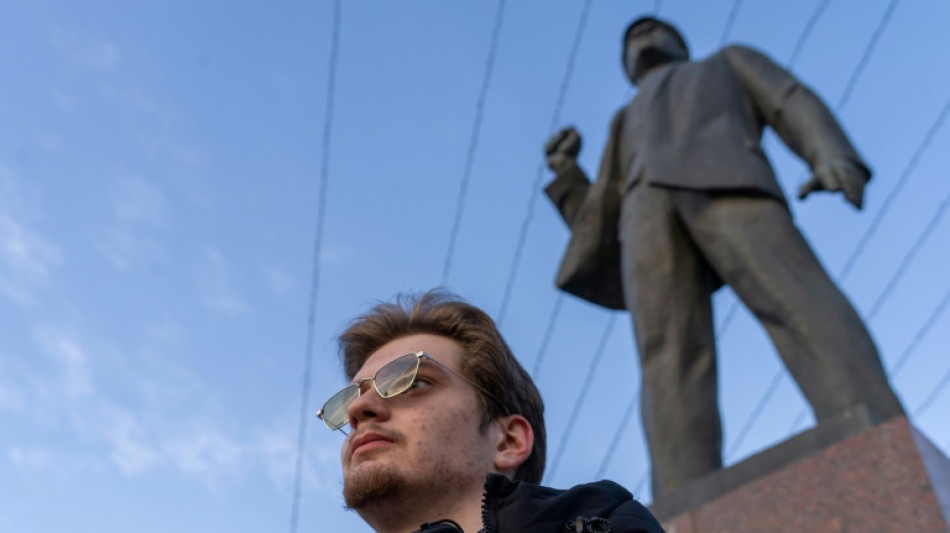
For the young Russians who would once have turned out to Alexei Navalny street rallies in their thousands, the opposition leader's public legacy has faded fast in the year since his death.
The Kremlin critic had hoped young, urban, pro-Western Russians would help him remove President Vladimir Putin from power.
But on the streets of Moscow, his name now instils only indifference. Or fear.
"Young people are afraid to talk about this person," Victoria, a 24-year-old ceramist, told AFP.
She said she and her friends did discuss Navalny -- who died in an Arctic prison colony on February 16, 2024, in murky circumstances -- but only in private.
Russian authorities sentenced Navalny to 19 years on "extremism" charges largely seen as retribution for his opposition to Putin, imprisoning him in harsh prison colonies where he was regularly kept in solitary confinement.
And as Moscow has outlawed all forms of public dissent amid the Ukraine offensive, it has escalated a crackdown on Navalny's organisation, allies, associates and family members even after his death.
Three of his lawyers have been sentenced to years in jail, journalists who covered his court hearings have been arrested and his wife Yulia Navalnaya was added to a blacklist of "terrorists and extremists".
Anybody who mentions Navalny or his Anti-Corruption Foundation without mentioning that they have been declared "extremists" is subject to fines or up to four years in prison for repeated offences.
In such a climate, young Russians are hesitant to talk openly.
"Today we have three taboo subjects -- politics, religion and sex," said 19-year-old student Anastasia, who declined to give her family name.
- 'Person who tried' -
"No-one wants any problems. Young people are now quite apolitical and try not to touch these issues in any way," added Victoria.
Fyodor, a 22-year-old student, is another who said he and his friends only dared to "remember" Navalny in private.
"Even if the collective memory represses it, for me he is still the person who tried," he said.
But for many others, Navalny's name is met with little more than indifference.
Although acknowledging the Kremlin critic was "famous", 21-year-old acting student Maxim said: "He had his own political views and then he was gone. I didn't follow him."
"My peers don't care what's going on. They have their own things," he said.
"I have not heard who he is, where he is, what he does. I only know his name," said engineering student Anastasia Solovieva.
She has just turned 18 and has the right to vote in the presidential elections that Navalny was always barred from contesting.
"Who will I vote for? Like my parents, I like stability," she said.
- 'Apolitical' -
Having known no other leader than Putin, Russia's 20-somethings are marked by their apoliticism, said Denis Volkov, director of the Levada Center, an independent polling outfit.
When asked just after Navalny's death if they approved of his activities, 37 percent of 18- to 24-year-olds said they knew nothing about him or his work.
Yet at the same time, young people made up the bulk of Navalny's followers, backing him because he "was telling the truth and not afraid to go against Putin", Volkov told AFP, citing polling data.
And it was young people who helped him secure 27 percent of the vote in the 2013 Moscow mayoral contest -- an election he denounced as unfair and falsified but which spooked the Kremlin enough to block him from ever getting on the ballot again.
"Everything changed with the start of the military actions in Ukraine," said Volkov, who has been declared a foreign agent.
"The noticeable share of those who were opposed to Putin, who criticised him, has gone."
Amid his Ukraine offensive, Putin has further tightened his grip on power while the opposition, leaderless and plagued by infighting, is struggling for relevance.
"After the hostilities have concluded, and if there is detente with the West, then the demand for opposition politicians will return," Volkov said.
For now though, many young Russians express little interest in that question.
"I'm far away from politics," said Pavel, a 19-year-old engineering student. "I don't discuss it because it does not concern me."
R.Adler--BTB