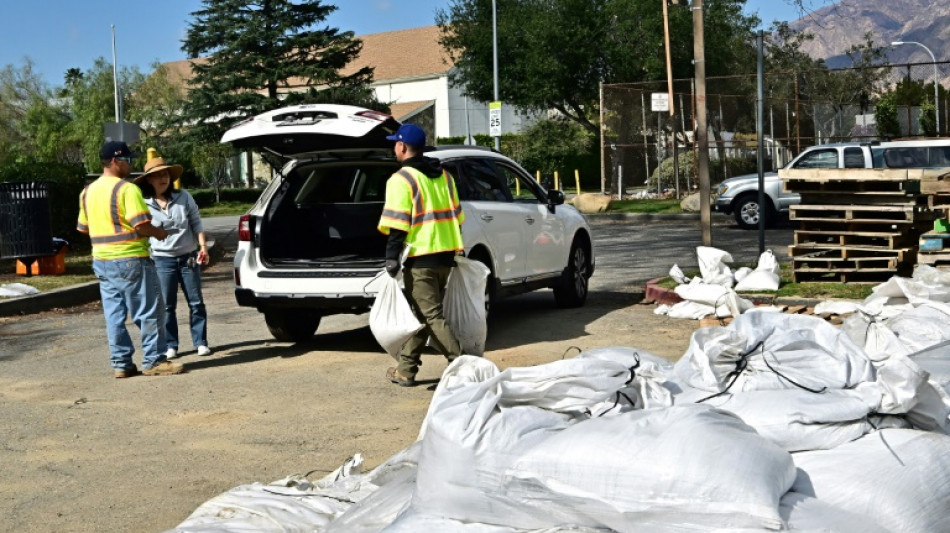
Los Angeles girds for floods, landslides as rain pounds fire zones / Photo: © AFP

 How to Watch the Rugby League World Cup Final on 7plus for Free

 Kayla Harrison Defeats Amanda Nunes via Submission at UFC 334

 GTA 6 Advertising Strategy and Disc Version Controversy

 From First Date to Wedding Day: How a TV Quote Sparked a Lifetime Commitment

 Malta Stuns Sweden with Late Penalty Comeback in Rugby Europe Trophy

 BingX: Major Announcement of Far-Reaching Significance

 Élan Opens as Late-Night Wine Bar in Honolulu

A monster rainstorm was drenching southern California on Thursday, with officials in Los Angeles readying for flooding and landslides in areas burned by last month's huge wildfires.
Heavy rain was falling across a swath of the state, with as much as six inches (15 centimeters) expected in some places, forecasters from the National Weather Service (NWS) said.
That volume of water in such a short period of time could create problems in areas ravaged by blazes that killed at least 29 people in January.
"There's a high risk for flooding, especially in and around the road areas and urban areas, as well as an appreciable risk for debris flows," Ryan Kittell, a meteorologist with the NWS, told reporters earlier in the week.
The agency issued a flash flood watch for the bulk of Los Angeles County.
The greatest risk to life and limb was expected to be around the burn scars in Altadena and in the Pacific Palisades areas.
Landslides were possible on hillsides where anchoring vegetation had burned away.
The heat of the fires also had the effect of baking and hardening the soil, making it less absorbent.
Authorities said anyone living near such hillsides should be ready to leave their homes.
Workers in Los Angeles have installed thousands of sandbags and concrete barriers in recent weeks to try to limit soil erosion.
The NWS said Thursday afternoon and evening would be the most dangerous period.
"During those peak periods rain rates between a half and one inch per hour are possible, with localized rates up to 1.2 inches per hour," the agency said.
The incoming storm system is being driven by an "atmospheric river," a giant corridor of rain that brings billions of gallons (liters) of moisture from the Pacific Ocean.
While the immediate flood worries were sparking concerns, southern California badly needs the rain.
Until the start of February, there had been no significant precipitation for about eight months.
T.Bondarenko--BTB