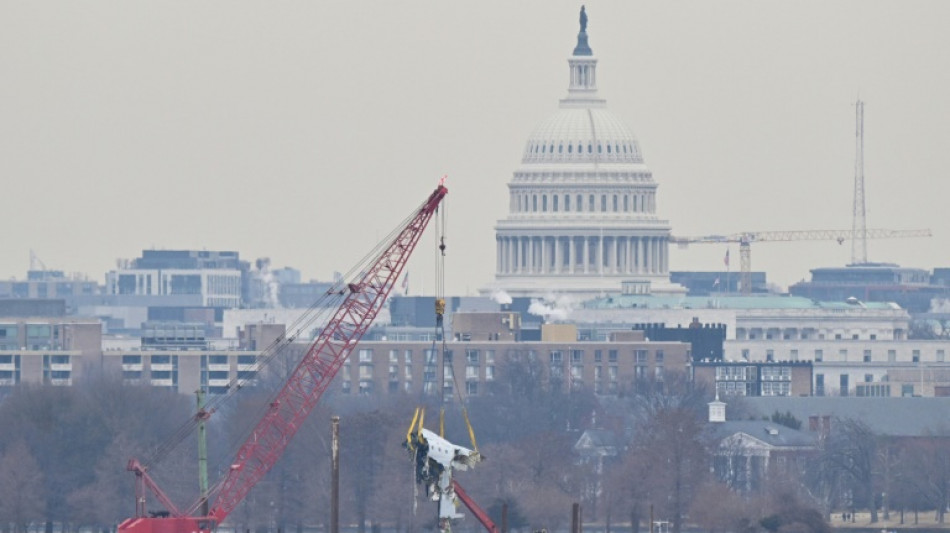
Washington air disaster probe uncovers instrument, comms issues / Photo: © AFP

 How to Watch the Rugby League World Cup Final on 7plus for Free

 Kayla Harrison Defeats Amanda Nunes via Submission at UFC 334

 GTA 6 Advertising Strategy and Disc Version Controversy

 From First Date to Wedding Day: How a TV Quote Sparked a Lifetime Commitment
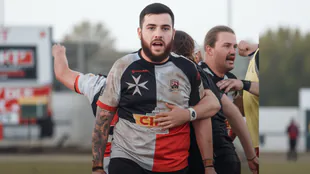 Malta Stuns Sweden with Late Penalty Comeback in Rugby Europe Trophy

 BingX: Major Announcement of Far-Reaching Significance

 Élan Opens as Late-Night Wine Bar in Honolulu

Faulty instruments and communication problems may have caused a passenger jet and army helicopter to collide in the worst US air disaster in two decades, flight safety investigators said Friday.
The airliner was coming in to land at Reagan National Airport -- just a few miles from the White House -- when it collided with a Sikorsky UH-60 Black Hawk on a training mission, killing 67 people.
The National Transportation Safety Board (NTSB) told a news conference it had established a timeline of events leading to the January 29 crash, although the full investigation could take up to a year.
NTSB chair Jennifer Homendy said air traffic control had warned the Black Hawk pilot several minutes before disaster struck that the American Eagle airline craft was circling.
But data pulled from the helicopter's wreckage showed that the message was muffled and the word "circling" was obscured.
The Black Hawk's cockpit voice recorder (CVR) then appears not to have picked up crucial instructions to veer out of the Bombardier CRJ-700's path seconds before the collision.
"At 8:47:42 -- or 17 seconds before impact -- a radio transmission from the tower was audible on both CVRs directing the Black Hawk to pass behind the CRJ," Homendy told reporters.
"CVR data from the Black Hawk indicated that the portion of the transmission that stated 'pass behind the' may not have been received by the Black Hawk crew."
Those words appear to have been muted by the mic key on the Black Hawk's radio as it was communicating with the tower, she said.
President Donald Trump has repeatedly tied the causes of the crash to diversity, equity and inclusion policies, none of which was mentioned as a factor.
Homendy and Sean Payne, branch chief of the NTSB's vehicle recorder division, said investigators would look into discrepancies between the real altitude of the Black Hawk and what its crew were apparently seeing.
The passenger plane recorded its altitude at 313 feet (95 meters) two seconds before collision.
"Now we're confident with the radio altitude of the Black Hawk at the time of the collision. That was 278 feet," she said.
"But I want to caution, that does not mean that's what the Black Hawk crew was seeing on the barometric altimeters in the cockpit. We are seeing conflicting information in the data."
Aviation experts had homed in on whether the helicopter crew could see through military night-vision goggles.
Homendy said there was nothing to suggest that the crew had removed their goggles, and that testing was underway to establish what both crews were able to see at the time of the collision.
N.Fournier--BTB