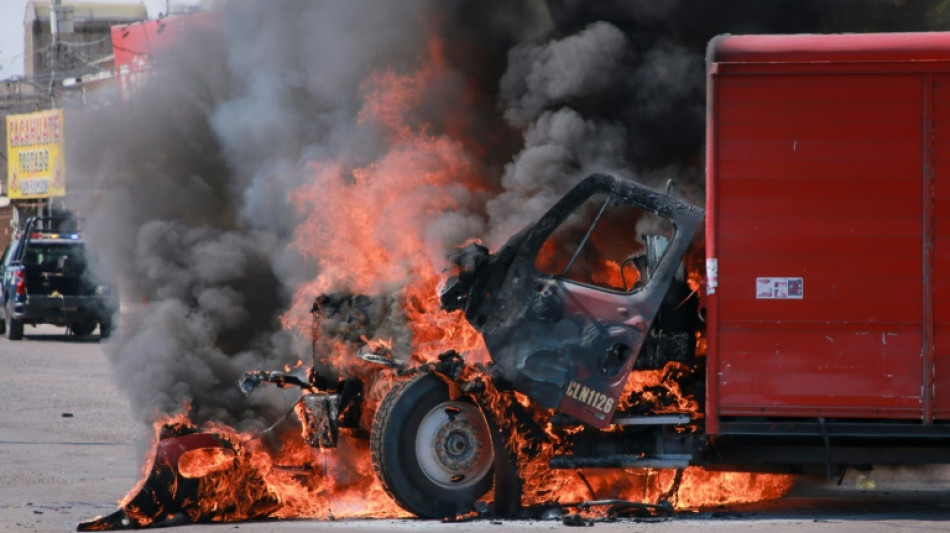
Could 'terrorist' designation lead to US strikes on drug cartels? / Photo: © AFP/File

 Orban-critic ex-judge becomes Hungary president after predecessor ouster

 US rights groups sue Trump over ICC sanctions

 Sphere 3D Corp. (Nasdaq: ANY) Attracts 6.5% Stake from Turnaround Bitcoin-Mining Investor

 Oil prices lower, stocks higher as Hormuz doubts drag on

 Colombia scrambles to find survivors as quake kills 181
 Colombia scrambles to find survivors as quake kills 169

 MEXC Report: 74.2% of Traditional Finance Users Have Shifted Their Trading Activity to Crypto Exchanges

 MEXC Lists DAPPOS (DOS) With $60,000 Worth of DOS and 10,000 USDT in Airdrop+ Rewards

 Jellyfish force shutdown of three reactors at French nuclear plant

 Hodgkinson, Werro sail through Euro 800m qualifying

 Somali referee denied World Cup 'proud' to oversee UEFA Super Cup

 French newspapers target Google over AI summaries

 Ebola death toll in DR Congo outbreak rises to more than 2,000

 PrimeXBT Launches MT5 Cent Account for Beginners and Risk-Conscious Traders

 British sprinter Hunt chasing three more golds after winning 100m

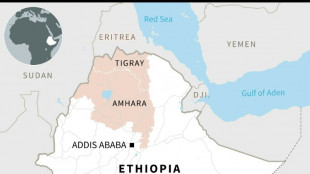 Ethiopia's Tigray rebel authorities condemn army drone strikes

 Too hot to live? French buyers rethink housing choices after heatwaves

 Ukraine says Russia fired N. Korean missiles in deadly attack
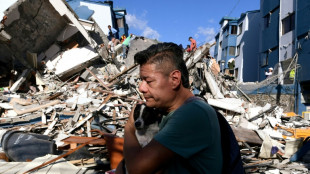
 Oil prices jump further as hopes for Hormuz deal fade

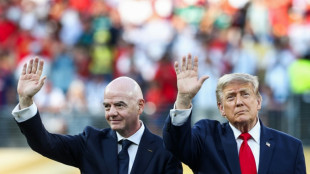 Trump says would be 'terrible mistake' to oust embattled Infantino

 Charity races to raise millions to buy historic English estate

 Hungary parliament to elect Orban-critic judge as president

 Wallabies lock Amatosero given three-match ban for Japan red card

 Swiatek races into Toronto semis as Svitolina battles through

 'Big Four' bowlers back as ageing Australia begin gruelling run
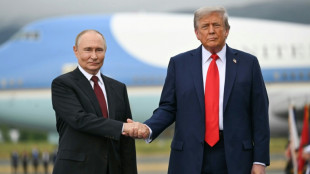
US President Donald Trump's decision to designate eight Latin American drug trafficking groups as "terrorist" organizations has raised speculation about possible military action on foreign soil.
What are the ramifications of the order targeting six Mexican drug cartels, Venezuela's Tren de Aragua and Mara Salvatrucha, the street gang with close links to Central America?
- Is military intervention likely? -
The cartels' designation as terrorist groups "means they're eligible for drone strikes" wrote tech billionaire Elon Musk, who has been given a prominent role in the Trump administration, on his social media platform X.
Experts, however, said that bombing Mexican cartels or sending troops over the border still appeared unlikely, although Trump's unpredictability makes it impossible to completely rule out.
The idea "used to be something that was found in a niche, very much on the fringes, and now it is at the center of the discussion," said Cecilia Farfan-Mendez, an analyst at the University of California Institute on Global Conflict and Cooperation.
Trump's negotiating style is to push his counterparts to the "extreme," said Steven Dudley, co-director of the InSight Crime think tank.
"The extreme is military invasion, of course, so what he's looking for is middle ground," Dudley said.
Vanda Felbab-Brown, an expert at the Washington-based Brookings Institute, believes that unilateral US military strikes against the cartels would risk dealing "a tremendous setback" to the fight against fentanyl smuggling.
"Mexico would consider this act an invasion, and whatever law enforcement cooperation that does exist would grind to a halt," she wrote in an article for Foreign Affairs magazine.
- Will it reduce fentanyl trafficking? -
The strength of fentanyl means that both its ingredients and pills can be transported in tiny quantities and still be profitable, according to experts.
"You don't need a truck, a boat, a plane, you need human beings," and the millions of people crossing the Mexican-US border every day make it "impossible" to control smuggling, Dudley said.
Farfan-Mendez said that Trump's strategy, focused on blaming and coercing Mexico, avoids addressing fentanyl as a health crisis that kills tens of thousands of Americans every year.
"If the goal is to prevent these deaths, this designation is not going to save more lives. It requires a public health policy," she said.
Felbab-Brown said that asking Mexico to completely halt the influx of fentanyl into the United States was "an unachievable demand."
- Will it enable US to dismantle cartels? -
According to Trump's executive order, it is US policy "to ensure the total elimination of these organizations' presence in the United States and their ability to threaten the territory, safety, and security of the United States through their extraterritorial command-and-control structures."
Dudley doubts that the cartels can be eliminated, either by deploying more troops on the ground or by using legal tools, because they are "sophisticated and very dispersed" organizations, capable of quickly recomposing.
"It cannot be solved by capturing a single person... or by dismantling an entire organization," he said.
According to Felbab-Brown, unilateral US military strikes "would almost certainly fail to destroy the cartels."
Replacements for leaders who were killed would be quickly found and the cartels "have repeatedly demonstrated a capacity to re-create damaged drug labs within days," she added.
- What are the risks for US companies? -
The designation "theoretically allows US authorities to impose penalties on entities and individuals that provide material support to cartels, including companies paying extortion fees under duress," according to the Mexican political risk consultancy EMPRA.
According to Dudley, the broad legal scope of the decree means that "in the hands of irresponsible authorities" it could be "extremely dangerous."
If the Mexican subsidiary of a US company pays extortion to a cartel, the parent company could be accused of "material support" for terrorism, he said.
"Providing even a pencil, a toy, or a cup of coffee can trigger severe criminal and financial penalties," Felbab-Brown said.
F.Müller--BTB