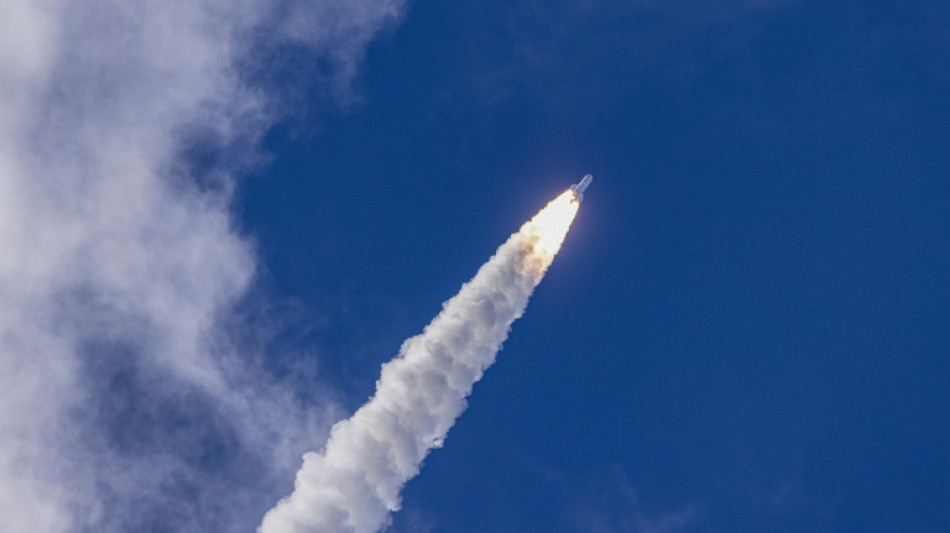
Satellite launcher set for blastoff in boost for Europe space ambitions / Photo: © AFP

 Somali referee denied World Cup 'proud' to oversee UEFA Super Cup
 French newspapers target Google over AI summaries
 Ebola death toll in DR Congo outbreak rises to more than 2,000

 PrimeXBT Launches MT5 Cent Account for Beginners and Risk-Conscious Traders
 British sprinter Hunt chasing three more golds after winning 100m

 Ethiopia's Tigray rebel authorities condemn army drone strikes
 Too hot to live? French buyers rethink housing choices after heatwaves
 Ukraine says Russia fired N. Korean missiles in deadly attack
 Oil prices jump further as hopes for Hormuz deal fade
 Trump says would be 'terrible mistake' to oust embattled Infantino

 Charity races to raise millions to buy historic English estate
 Hungary parliament to elect Orban-critic judge as president
 Wallabies lock Amatosero given three-match ban for Japan red card

 Swiatek races into Toronto semis as Svitolina battles through
 'Big Four' bowlers back as ageing Australia begin gruelling run
 AI's hunger for power sparks US private gas plant boom
 Memphis AI data center fuels pollution fight in Black neighborhood

 Ceuta leader wants migrant detention centre after influx
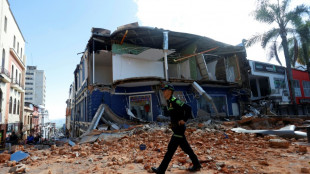 Colombia scrambles to find survivors as quake kills 111

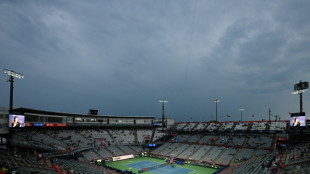 Rain postponements wreck Montreal Masters schedule
 ePropelled to Increase Manufacturing Footprint with $60 Million in U.S. Government Funding to Strengthen U.S. Drone Propulsion Supply Chain

 Power to Hydrogen Delivers First-of-a-Kind Industrial-Scale AEM Electrolyzer to the Port of Antwerp-Bruges
 Notts Forest owner Marinakis sues Palace over gun banner - reports
 Koech gets three-year ban, stripped of US 1,500m title
 Sensational Ingebrigtsen back with more European gold
Europe's new heavy-lift rocket, Ariane 6, is to carry out Monday its first commercial mission as European nations seek to secure independent access to space amid a shock rapprochement between Moscow and Washington.
The high-profile mission comes as French President Emmanuel Macron calls for Europe to reduce its security reliance on the United States and the European space industry struggles to remain competitive in the face of Elon Musk's Space X.
Following several postponements, the Ariane 6 rocket is scheduled to blast off from a spaceport in Kourou in French Guiana at 13:24 (16:24 GMT) Monday.
The launcher will carry a French military satellite, which will be placed in orbit at an altitude of around 800 kilometres (500 miles).
The CSO-3 satellite is expected to strengthen France's military autonomy and improve its army's intelligence capabilities.
Europe has not been able to use Russia's Soyuz rocket for satellite launches after Vladimir Putin invaded Ukraine in 2022, while Ariane 5 was retired in 2023.
"The whole world is watching us," David Cavailloles, chief executive of French aerospace company Arianespace, told AFP in February.
- 'Sovereign manner' -
Initially planned for December, the mission was put back until February 26 and then March 3 because of problems getting the satellite to the Kourou launchpad, according to Arianespace.
It will be the second launch for Ariane 6, after its inaugural flight last July.
CSO-3 will complete a network of three French military imaging satellites, with the first two launched in 2018 and 2020 by Soyuz.
"It's always better to have your own launcher and to fire it from home," General Philippe Steininger, a consultant for the French Space Agency (CNES), told AFP.
Given the military role of the satellite being put into space, strict security precautions were being taken to limit access at the spaceport on the northern coast of South America while three Rafale fighter jets were set to patrol the surrounding skies.
"The satellite has to be protected," said Carine Leveau, CNES director of space transport. "It has special instruments that must not be seen by just anybody."
The satellites will enable the French army to receive extremely high-resolution images.
"It is very important for the armed forces to conduct their operations and for our political authorities to make decisions in a completely sovereign manner, with first-hand information that does not depend on anyone else," said Steininger, the author of "Space Revolutions."
"This satellite makes it possible to produce very accurate military maps thanks to 3D imaging," he added.
- 'Autonomous access to space' -
Europe's other launcher, Vega-C, did not resume flights until December 2024 after being grounded for two years following an accident that resulted in the loss of two satellites.
The mishap left Europe without spacecraft to launch satellites into orbit for a year, following delays to the Ariane 6 rocket and lack of cooperation with Russia.
"It was very important for France and for Europe to regain this autonomous access to space because we cannot have a space policy today without having the means to send our satellites into space independently," Lionel Suchet, CNES acting head, told AFP.
"What counts in these cases is to be sure that everything is secure. Like all launches, it is a risky launch," he added.
Some of the images taken by the CSO-3 satellite will be shared with Germany, Belgium and Sweden.
E.Schubert--BTB