'Where's the gold?': How the Assads sucked Syria dry / Photo: © AFP

 Somali referee denied World Cup 'proud' to oversee UEFA Super Cup
 French newspapers target Google over AI summaries
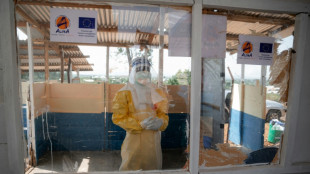 Ebola death toll in DR Congo outbreak rises to more than 2,000
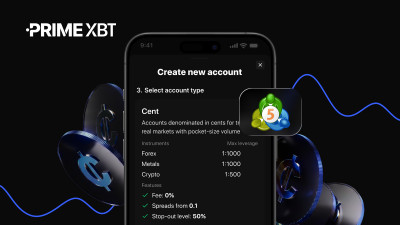 PrimeXBT Launches MT5 Cent Account for Beginners and Risk-Conscious Traders
 British sprinter Hunt chasing three more golds after winning 100m
 Ethiopia's Tigray rebel authorities condemn army drone strikes
 Too hot to live? French buyers rethink housing choices after heatwaves
 Ukraine says Russia fired N. Korean missiles in deadly attack
 Oil prices jump further as hopes for Hormuz deal fade
 Trump says would be 'terrible mistake' to oust embattled Infantino

 Charity races to raise millions to buy historic English estate
 Hungary parliament to elect Orban-critic judge as president
 Wallabies lock Amatosero given three-match ban for Japan red card
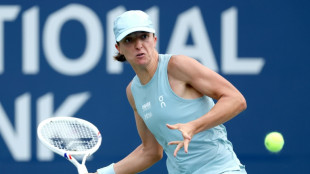
 Swiatek races into Toronto semis as Svitolina battles through
 'Big Four' bowlers back as ageing Australia begin gruelling run
 AI's hunger for power sparks US private gas plant boom
 Memphis AI data center fuels pollution fight in Black neighborhood
 Ceuta leader wants migrant detention centre after influx
 Colombia scrambles to find survivors as quake kills 111
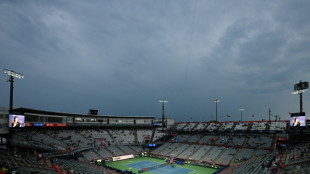 Rain postponements wreck Montreal Masters schedule
 ePropelled to Increase Manufacturing Footprint with $60 Million in U.S. Government Funding to Strengthen U.S. Drone Propulsion Supply Chain

 Power to Hydrogen Delivers First-of-a-Kind Industrial-Scale AEM Electrolyzer to the Port of Antwerp-Bruges
 Notts Forest owner Marinakis sues Palace over gun banner - reports
 Koech gets three-year ban, stripped of US 1,500m title
 Sensational Ingebrigtsen back with more European gold
From a Bond villain lair in the rugged heights overlooking Damascus, the all-seeing eye of a notorious Syrian military unit gazed down on a city it bled dry.
Many of the bases of the elite Fourth Division formerly run by toppled president Bashar al-Assad's feared younger brother Maher now lie looted.
But papers left strewn behind reveal how the man they called "The Master" and his cronies wallowed in immense wealth while some of their foot soldiers struggled to feed their families and even begged on the streets.
Piles of documents seen by AFP expose a vast economic empire that Maher al-Assad and his network of profiteers built by pillaging a country already impoverished by nearly 14 years of civil war.
Western governments long accused him and his entourage of turning Syria into a narco state, flooding the Middle East with captagon, an illegal stimulant used both as a party drug in the Gulf and to push migrant workers through punishingly long days in the gruelling heat.
But far beyond that $10-billion trade -- whose vast scale was exposed in a 2022 AFP investigation -- papers found in its abandoned posts show the Fourth Division had its fingers in many pies in Syria, an all-consuming "mafia" within the pariah state.
+ It expropriated homes and farms
+ Seized food, cars and electronics to sell on
+ Looted copper and metal from bombed-out buildings
+ Collected "fees" at roadblocks and checkpoints
+ Ran protection rackets, making firms pay for escorts of oil tankers, some from areas controlled by jihadists
+ Controlled the tobacco and metal trades
- Mountain eyrie -
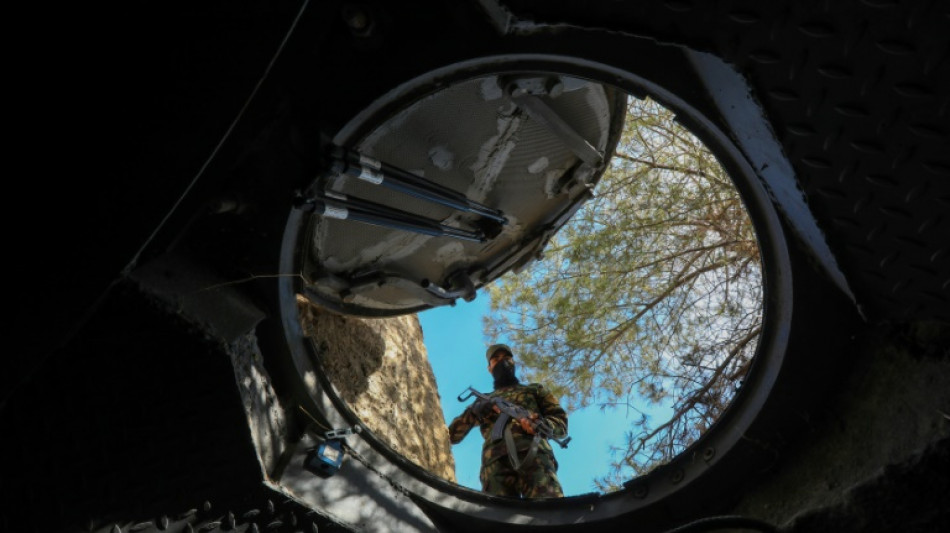
The centre of this corrupt web was Maher al-Assad's private offices, hidden in an underground labyrinth of tunnels -- some big enough to drive a truck through -- cut into a mountain above Damascus.
A masked guard took AFP through the tunnels with all the brisk efficiency of a tour guide -- the sauna, the bedroom, what appeared to be cells and various "emergency" exit routes.
But at its heart, down a steep flight of 160 stairs, lay a series of vaults with iron-clad doors.
The guard said he had counted nine vaults behind one sealed-off room.
He said safes had been "broken open" by looters who entered the office just hours after the Assad brothers fled Syria on December 8 when Damascus fell to an Islamist-led offensive, ending the family's five-decade rule.
Maher, 57, did not know of his brother's plans to flee to Russia and escaped separately, taking a helicopter to the Iraqi border, according to a senior Iraqi security official and two other sources. He then made his way to Russia, they said, apparently via Iran.
The chaos of their fall is apparent in the underground complex. Safes and empty Rolex and Cartier watch boxes still lie scattered about, though it is not known if the vaults were emptied before the looters arrived.
"This is Maher al-Assad's main office," the guard said, "which has two floors above the ground but also tunnels containing locked rooms that can't be opened."
In one corridor, a shrink wrap machine -- probably used for bundling cash -- was abandoned next to a huge safe.
- Hidden fortune -
There was never any shortage of bills to wrap.
One document retrieved from the papers that litter the Fourth Division's Security Bureau farther down the hill show they had ready cash of $80 million, eight million euros and 41 billion Syrian pounds at their fingertips in June. That was a perfectly normal cash float, according to papers going back to 2021.
"This is only a small sample of the wealth that Maher and his associates gathered from their shady business deals," said Carnegie Middle East Centre scholar Kheder Khaddour.
Their real fortune is probably hidden "abroad, likely in Arab and African countries", he said.
"The Fourth Division was a money-making machine," Khaddour added, preying on a land where the UN says more than 90 percent of the population was living on a little more than $2 a day.
- State within a state -
Western sanctions to squeeze the Assads and their cronies did little to impede Maher and his men.
Theirs was an "independent state" within the state, said Omar Shaaban, a former Fourth Division colonel who has signed a deal with the new Syrian authorities.
"It had all the means... It had everything," he said.
While the US dollar was officially banned under Assad -- with Syrians not even allowed to utter the word -- Shaaban said many Fourth Division officers grew "wealthy and had safes full of money".
"In dollars," naturally, Shaaban added.
Maher's cronies lived in sprawling villas, shipping luxury cars abroad while beyond their gates the country was mired in poverty and despair.
Weeks after the Assads' fall, desperate people were still combing through Maher's mansion built into a hill in Damascus' Yaafour neighbourhood next to the stables where his daughter rode her prize-winning horses.
"I want the gold. Where's the gold?" a man asked AFP as he went through its ransacked rooms. But all that was left were old photographs of Maher, his wife and their three children strewn on the floor.
- 'The butcher' -
Maher was a shadowy, menacing figure in Assad's Syria, branded "the butcher" by the opposition. His Fourth Division was the ousted regime's iron fist, linked to a long list of atrocities.
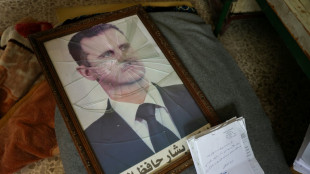
But while his portrait was hung in all their bases, he was seldom seen in public.
Despite rights groups accusing him of ordering the 2011 massacre of protesters in Daraa -- which helped ignite the civil war -- and the United Nations linking him to the 2005 assassination of ex-Lebanese prime minister Rafic Hariri, he was "the invisible man", one person close to the former ruling family told AFP.
"Few people would tell you that they know him," the source said.
Yet Maher could be generous and good company, according to his sister-in-law Majd al-Jadaan, a longtime opponent of the regime.
"However, when he gets angry, he completely loses control... This is what makes his personality terrifying," she told Al-Arabiya TV.
"He knows how to destroy -- he knows how to kill and then lie to appear innocent," Jadaan told French TV early in the civil war, saying he was as ruthless as his father, Hafez.
- Luxury cars -
One other name keeps cropping up alongside Maher's when people in Damascus curse the crimes of the Fourth Division.
Ghassan Belal was the head of its powerful Security Bureau. Like his boss, he collected luxury cars and lived in a villa in the Yaafour district. Belal has also left Syria, according to security sources.
Inside his spacious offices in the bureau's headquarters, you can piece together his lavish lifestyle bill by bill from the papers he left, including the cost of running his Cadillac.
Over the summer, Belal shipped two cars, a Lexus and a Mercedes, to Dubai, the $29,000 customs and other expenses charged to a credit card under another name.
A handwritten note showed that despite being sanctioned for human rights abuses, he paid his Netflix subscription using a "friend's foreign credit card".
Another list showed that mostly domestic expenses for his properties, including his main villa -- which has since also been looted -- amounted to $55,000 for just 10 days in August.
That same month, a Fourth Division soldier wrote to Belal begging for help because he was in "a terrible financial situation". Belal gave him 500,000 Syrian pounds -- $33. Another soldier who abandoned his post was caught begging on the street.
- The money men -
While thousands of the papers were burned as the regime fell, many of the classified documents survived the flames and have tales to tell.
Among prominent names mentioned as paying into Fourth Division funds are sanctioned businessmen Khaled Qaddour, Raif Quwatli and the Katerji brothers, who have been accused of generating hundreds of millions of dollars for Iran's Islamic Revolutionary Guard and the Yemeni Houthis through the sale of Iranian oil to Syria and China.
Quwatli operated checkpoints and crossings where goods were often confiscated or "taxed", multiple sources said.
Qaddour -- who was sanctioned by the United States for bankrolling Maher through captagon, cigarette and mobile phone smuggling -- denied having any dealings with him when he tried to have his EU sanctions lifted in 2018.
But the Security Bureau's revenue list showed he paid $6.5 million into its coffers in 2020 alone.
- 'It was a mafia' -
Khaddour said the Security Bureau handled most of the division's financial dealings and issued security cards for people it did business with to ease their movements.
A drug lord told Lebanese investigators in 2021 that he held a Fourth Division security card and that the Security Bureau had agreed to protect another dealer's drug shipment for $2 million, according to a statement seen by AFP.
The US Treasury and several Syrian and Lebanese security figures have also cited Belal and the bureau as key players in the captagon trade.
AFP visited a captagon lab linked to the division in December in a villa in the Dimas area near Lebanon's border, its rooms full of boxes and barrels of the caffeine, ethanol and paracetamol needed to make the drug.
Locals said they were not allowed to approach the villa, with shepherds banned from the surrounding hills.
A former Fourth Division officer who worked for Belal, and who asked not to be named, said the bureau enjoyed "so much immunity, no one could touch a member without Maher's approval."
"It was a mafia, and I knew I was working for a mafia," he added.
- 'They left people in hunger' -
The division's unbridled greed haunted families for decades as a letter written by Adnan Deeb, a graveyard caretaker from Homs, shows.
His plea for the return of his family's seized property was found among hundreds of damp and dirty documents at an abandoned checkpoint near Damascus.
When AFP tracked Deeb down, he told how the Fourth Division confiscated his family's villa, and those of several of their neighbours in the village of Kafraya 10 years ago.
Despite not being allowed near them, Deeb said they still had to pay taxes on the properties, which were used as offices, warehouses and likely a jail.
"The Fourth Division Security Bureau here was a red line that no one dared to come close to," the son of one of the owners told AFP.
They found hundreds of cars, motorcycles and hundreds of gallons of cooking oil in the properties after the regime fell.
"They left people in hunger while everything was available for them," he said.
A woman with 25 family members -- some living in a tent -- repeatedly requested the Fourth Division give her back her home in a document found in another of the villas.
- Bashar got his cut -
The Fourth Division controlled no part of the Syrian economy more than the metals market, with former colonel Shaaban saying "no one was permitted to move iron" without its approval.
It also had "exclusive" control of copper, he said.
When Assad's forces took control of a Damascus suburb after a fierce battle with rebels, the Fourth Division swiftly sent its men to pull the copper and iron from destroyed homes, one of its officers recalled.
Fares Shehabi, former head of Syria's Chamber of Industry said a metal plant managed by one of Maher al-Assad's partners monopolised the market, with factories forced to buy exclusively from it.
Many "could no longer operate" under such pressure, Shehabi said.
Maher al-Assad and his "friends" controlled a big share of Syria's economy, he said. But the ultimate beneficiary was always his brother Bashar, he argued. "It was one company. The (presidential) palace was always the reference."
The former Fourth Division officer also insisted a share of profits and seized items always went to the president.
- Toxic legacy -
While little seems to be left of Fourth Division today other than its ransacked depots and headquarters, Syria expert Lars Hauch, of Conflict Mediation Solutions (CMS), warned its legacy could yet be highly toxic.
"The Fourth Division was a military actor, a security apparatus, an intelligence entity, an economic force, a political power, and a transnational criminal enterprise," he said.
"An institution with a decades-long history, enormous financial capacity and close relations with elites doesn't just vanish," he added.
"While the top-level leadership fled the country, the committed and mostly Alawite core (from which the Assads come)... retreated to the coastal regions," Hauch said.
Syria's new leadership has repeatedly sought to reassure minorities they will not be harmed. But across the country, violence against Alawites has surged.
Hauch said caches of weapons may have been hidden away.
Add to that the division's war chest of "billions of dollars", and "you have what you need for a sustained insurgency... if Syria's transition fails to achieve genuine inclusivity and transitional justice," the analyst warned.
Additional reporting by Bakr Alkasem and Maher al-Mounes
C.Kovalenko--BTB