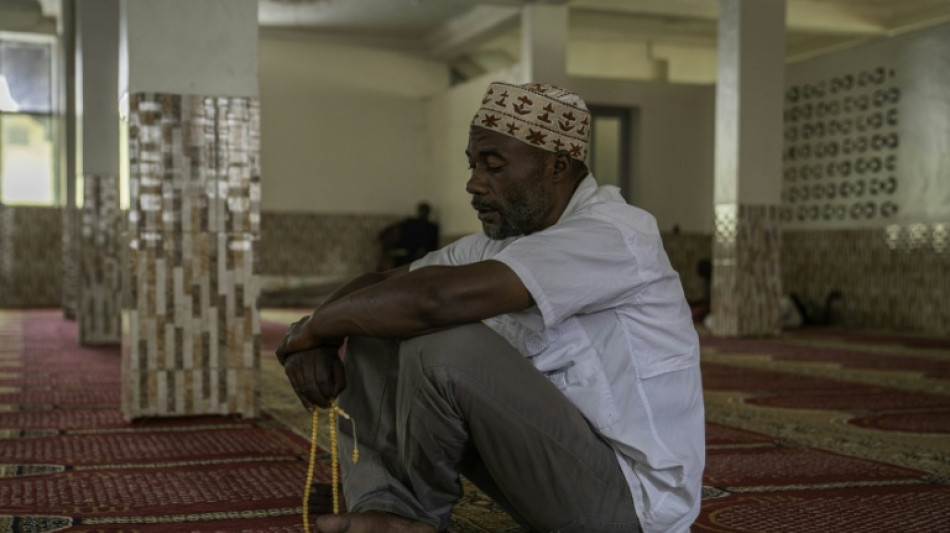
Ramadan in 'climate of war' for east DR Congo's Muslims / Photo: © AFP

 St Francis School Leads €60,000 EU Project to Transform Early Childhood Education

 South Africa's Universal Health Coverage Depends on Tackling Poverty and Inequality
 Rare Siberian Rubythroat Dies in UK Garden After Cat Attack

 Go Kyung-pyo Drunk Driving Incident Prompts Heavy Editing Across Multiple TV Shows

 KFF Health News Reporters Discuss ACA Enrollment Challenges, Rising Costs, and Measles Risks

 Alberta Unveils New High School Graduation Requirements to Increase Student Choice

Prayers at home and smaller gatherings to break the fast -- Muslims in a city recently captured by Rwanda-backed fighters in the eastern Democratic Republic of Congo face a more subdued holy month of Ramadan this year.
The M23 captured Bukavu in South Kivu province in mid-February in a lightning offensive after resurfacing in late 2021 in a region battered by decades of conflict.
Around 15,000 families are Muslim in the city of some one million people and make up about five percent of the province's population, according to Sheikh Saleh Radjabu, a representative of South Kivu's Muslim community.
"It's the first Ramadan living in Bukavu in a situation of distress and a climate of war," said Sheikh Musa Awam, imam of Nyawera mosque in a central neighbourhood.
At the mosque, worshippers "arrive torn between joy (of celebrating the holy month) and pain", said Awam.
"We still pray at noon and at 3:00 pm, and then we go home," he said.
For security reasons, mosques in Bukavu have told those not living close-by to stay at home for prayers after sunset, especially the Tarawih, or the nighttime prayers carried out during Ramadan.
"This situation of war has disrupted our entire prayer schedule," the imam said.
Poor security has also forced people to break their fast with the iftar meal in smaller groups than normal.
Walking around the city at the time of fast breaking is "tricky", said Junior Saleh, the executive secretary at the Nyawera mosque.
Radjabu now only shares the iftar meal with his family, rather than in a larger group.
For many, their meal is also more modest than usual.
Banks have been closed since the M23 took over the city and residents no longer have access to cash, making it difficult to buy supplies.
Before the city was captured "some (people) had time to stock up on provisions at home... but others are suffering because they did not have time to stock up on food", Radjabu said.
T.Bondarenko--BTB