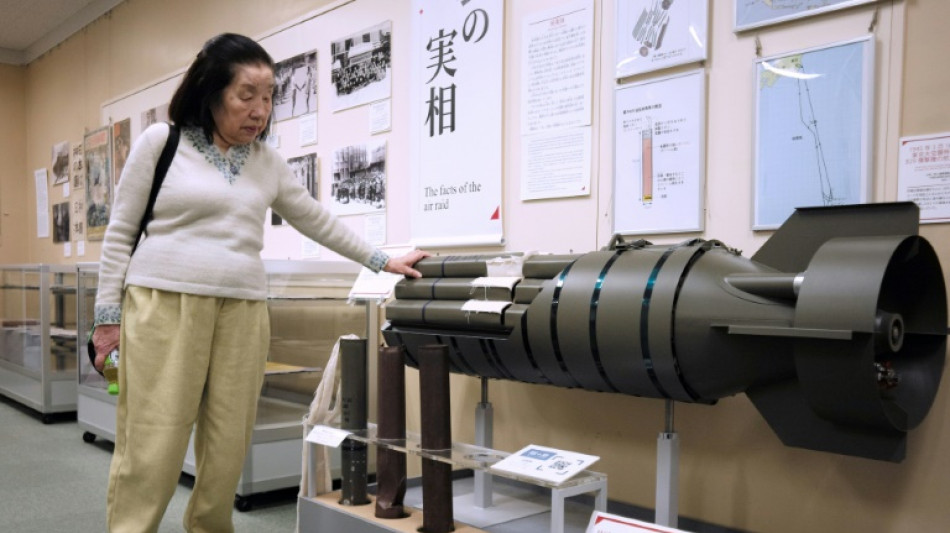
'Eerie' sky, charred bodies: 80 years since Tokyo WWII firestorm / Photo: © AFP

 Economic losses from natural disasters fall to $100 bn in first half of 2026: Swiss Re
 Colombia scrambles to find survivors as quake kills 132
 Singapore says AI-related demand lifting economy

 Demeter Tactical Investments (ME) Limited bolsters governance with two board appointments
 Russian barrage on Ukraine kills 9, wounds dozens

 Schools closed as Indonesia battles wildfires

 Swiatek dominates Shnaider to set up Toronto semi with Svitolina

 Oil prices rise further as hopes for Hormuz deal fade

 One year after Putin-Trump summit, 'spirit of Anchorage' dissipated
 Farage vs Count Binface: What to know about UK snap poll
 Torment of Afghan fathers as daughters deprived of education
 Return of displaced Syrian Kurds to hometown suspended after violence
 Swiatek races past Shnaider into Toronto semi-finals
 Power to Hydrogen Delivers First-of-a-Kind Industrial-Scale AEM Electrolyzer to the Port of Antwerp-Bruges
 Notts Forest owner Marinakis sues Palace over gun banner - reports
 Koech gets three-year ban, stripped of US 1,500m title

 Sensational Ingebrigtsen back with more European gold
 'A scare': Brazil player leaps into tunnel in joy over goal

 USA Swimming CFO Hilliard arrested for alleged theft

 Trump insists Netanyahu relationship 'very good' despite Gaza rift

 Ingebrigtsen delivers masterclass for seventh European athletics gold
 Colombia declares state of emergency after quake kills 111

 Golden relay double for Britain at Europeans as Marchand takes silver

 Barcelona's Araujo heads to Liverpool on loan

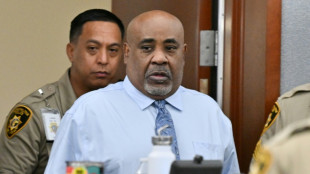 Tupac Shakur murder trial begins 30 years after rapper's death
On her sixth birthday 80 years ago, Shizuko Nishio clung to her mother as US B-29 bombers started a firestorm that turned humans to ash and Tokyo into a wasteland.
Five months before the United States dropped atomic weapons on Japan's Hiroshima and Nagasaki, the nighttime raid on March 9-10, 1945 was World War II's deadliest using conventional bombs.
At least 80,000 people died, and likely more than 100,000, according to Japanese and US historians.
Nishio, now about to turn 86, was one of the lucky ones. She was the only survivor in her kindergarten class of 20 children.
The night before the raid, she had been "feeling excited" about her birthday and looking forward to starting primary school.
"Then at night, when we were in bed, my father told us to flee to the primary school in front of our house," the retired vet and medical researcher said.
The shelter was already packed.
Nishio's 19-year-old cousin and a nurse stayed, but the rest of the group went to another school basement.
Wave after wave of bombers dropped incendiary bombs, creating an inferno that consumed 16 square miles (4,145 hectares) of the city.
"We thought my cousin and the nurse would be fine," Nishio said.
Hours later they were among 200 people "discovered dead in a steamed state", cooked alive in the shelter by the raging fires outside.
- Walking on the Moon -
Before dawn, the morning of her birthday, Nishio and her family emerged to discover "charred bodies" that were like "human logs," she said.
"There was nothing", she said. "It was like the surface of the Moon".
British historian Richard Overy, author of "Rain of Ruin: Tokyo, Hiroshima and the Surrender of Japan", said that creating "an unstoppable conflagration" was "deliberate".
"Until the raid on Tokyo, the American Air Force had been trying to destroy Japanese factories or attack Japanese ports. But they'd been very unsuccessful," Overy told AFP.
US Air Force General Curtis LeMay decided to "attack low, with incendiaries, and burn down cities," Overy said.
"By burning them down, you would kill workers, de-house them. You would destroy small factories scattered around the domestic residential zones. And that this would contribute in some way to undermining the Japanese war economy."
Because of the atomic bombings of Hiroshima and Nagasaki in August 1945, followed the following month by Japan's surrender, the firebombing of Tokyo is often overlooked.
Even the similar attacks by the Americans and British on Hamburg and Dresden in Germany -- which killed fewer people -- are better known, Overy said.
Tokyo was "the worst conventional bombing attack of the Second World War. We need to be more aware of it," Overy said.
"There's no doubt the civilians were a deliberate target," he said.
- 'Eerie red' -
Yoko Kitamura was eight at the time of the bombing.
She remembers the sky glowing "eerie red" and hearing that the river was "filled with bodies".
"The fire was growing while I was watching the sky in fear," the 88-year-old told AFP. "In our area, it was bright like it was daytime".
Two months later, on May 24, 1945, her district of Tokyo was also attacked with incendiary bombs.
One fell near her and "like a sparkler" scattered flames.
"One dropped on a person in front of me, whose clothing caught fire," Kitamura said.
"'It's catching fire!' I thought. But I couldn't ask if the person was okay... I was fleeing for dear life," she said.
Later, Kitamura became a doctor, but she always hated the sound of ambulances because it reminded her of the scream of air raid sirens.
"How stupid mankind is, killing each other", Kitamura said, after being asked about wars today.
Nishio agreed.
"When I was watching television of the Ukraine situation, there was a little girl crying at a shelter... I thought, this is me!" she said.
J.Fankhauser--BTB