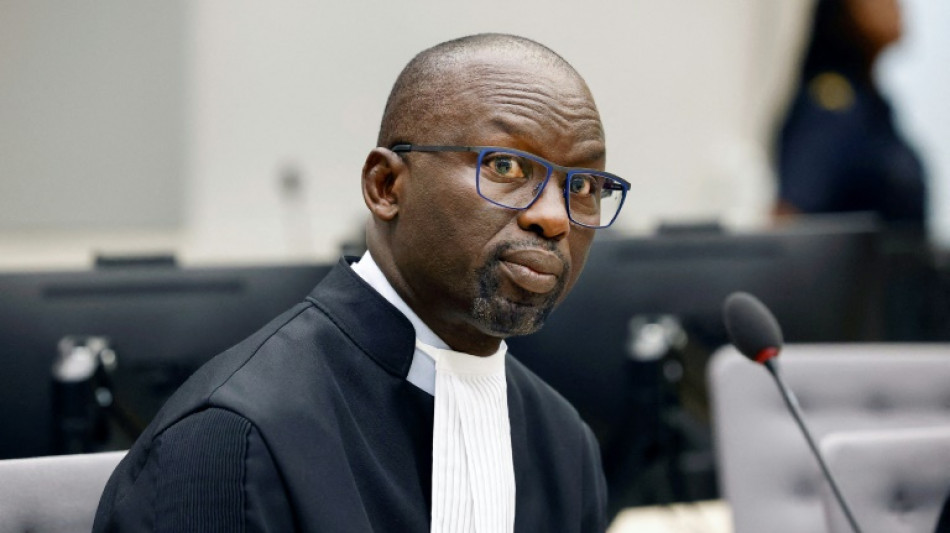
Catching the world's most wanted: the ICC's impossible task / Photo: © ANP/AFP

 Economic losses from natural disasters fall to $100 bn in first half of 2026: Swiss Re
 Colombia scrambles to find survivors as quake kills 132

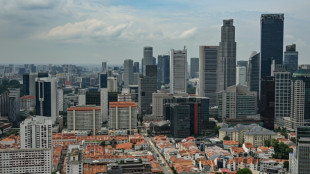 Singapore says AI-related demand lifting economy

 Demeter Tactical Investments (ME) Limited bolsters governance with two board appointments

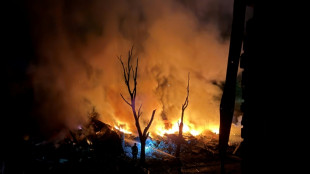 Russian barrage on Ukraine kills 9, wounds dozens
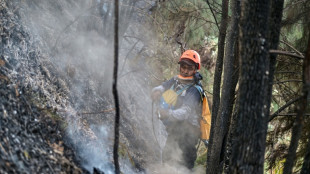 Schools closed as Indonesia battles wildfires

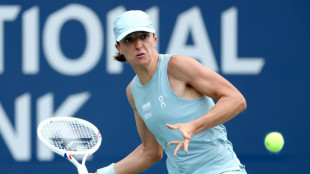
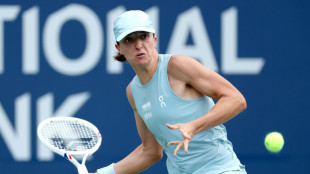 Swiatek dominates Shnaider to set up Toronto semi with Svitolina
 Oil prices rise further as hopes for Hormuz deal fade

 One year after Putin-Trump summit, 'spirit of Anchorage' dissipated

 Farage vs Count Binface: What to know about UK snap poll

 Torment of Afghan fathers as daughters deprived of education
 Return of displaced Syrian Kurds to hometown suspended after violence
 Swiatek races past Shnaider into Toronto semi-finals
 Power to Hydrogen Delivers First-of-a-Kind Industrial-Scale AEM Electrolyzer to the Port of Antwerp-Bruges
 Notts Forest owner Marinakis sues Palace over gun banner - reports
 Koech gets three-year ban, stripped of US 1,500m title
 Sensational Ingebrigtsen back with more European gold
 'A scare': Brazil player leaps into tunnel in joy over goal

 USA Swimming CFO Hilliard arrested for alleged theft

 Trump insists Netanyahu relationship 'very good' despite Gaza rift

 Ingebrigtsen delivers masterclass for seventh European athletics gold
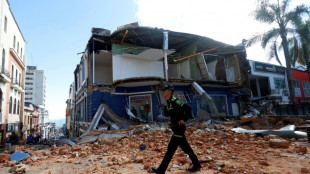 Colombia declares state of emergency after quake kills 111

 Golden relay double for Britain at Europeans as Marchand takes silver

 Barcelona's Araujo heads to Liverpool on loan
 Tupac Shakur murder trial begins 30 years after rapper's death
The arrest on Tuesday of former Philippines President Rodrigo Duterte, by police acting on an International Criminal Court warrant tied to his deadly war on drugs, marks a success for the ICC, which has been struggling for almost 23 years against a lack of recognition and enforcement power.
Backed by 125 member states, the jurisdiction seeks to prosecute individuals responsible for the world's gravest crimes when countries are unwilling or unable to do so themselves.
The wheels of international justice grind slowly, as evidenced by the court's low conviction rate.
However, it’s not all about the final judgement, experts say.
The mere fact of pursuing alleged perpetrators of atrocities sends a message that the international community is determined to fight impunity.
- Catch me if you can -
Since it began work in 2002, the ICC has opened 32 cases for alleged war crimes, crimes against humanity, genocide and offences against the administration of justice.
Fourteen of them, or roughly 40 percent, are ongoing, in most cases because the suspects are still at large.
Without a police force, the Hague-based court is unlikely to catch them soon.
Of the 60 arrest warrants issued since 2002, only 21 had been carried out before Duterte's arrest.
The ICC relies on states to apprehend suspects.
But the incentive for them to cooperate is low because the court has "nothing to offer in return, except a commitment to seeing justice served", former ICC adviser Pascal Turlan said.
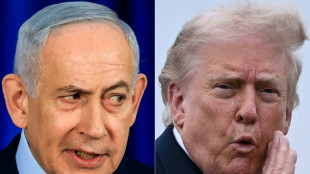
The court's wanted list includes Russian President Vladimir Putin, Israeli Prime Minister Benjamin Netanyahu and Ugandan warlord Joseph Kony. All three are accused of war crimes.
Russia is one of dozens of nations, including the United States, Israel and China, that do not recognise the jurisdiction of the ICC, hampering its ability to investigate their nationals.
But some member states also defy its authority by, for instance, refusing to hand over suspects.
"When states don't like what the ICC does, they don't often cooperate," said Nancy Combs, professor of law at William & Mary Law School in the United States.
- 11 convictions, all Africans -
ICC spokesperson Fadi El Abdallah stressed that the court's role is not to go after all suspected war criminals but to "encourage nations to deal with their own cases".
Each case comes with a unique set of challenges, from interference by national governments to witness intimidation.
The latter caused the case against Kenya's former deputy president William Ruto to fall apart in 2016, according to a former chief prosecutor.
These challenges partly explain the court's low conviction rate.
Since its inception it has handed down 11 guilty verdicts, mostly against officials from the war-torn Democratic Republic of Congo (DRC), and four acquittals.
All those judged were Africans, leading to accusations that the ICC is unfairly targeting the continent.
Combs pointed out that some African countries, including Uganda, Ivory Coast and the DRC, had referred their own wars to the court for investigation in the early days, while other cases had been instigated by the United Nations Security Council.
"The ICC has diversified a lot but non-African states have resisted ICC jurisdiction more fiercely," she pointed out, citing Russia as an example.
J.Horn--BTB