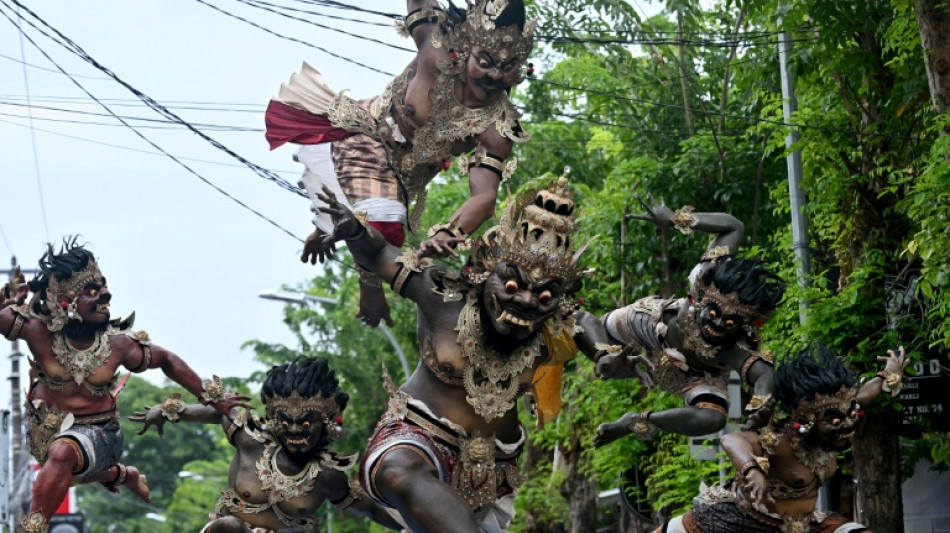
Lights out: Bali guards protect island's day of silence / Photo: © AFP

 BingX: Major Announcement of Far-Reaching Significance

 Élan Opens as Late-Night Wine Bar in Honolulu

 Shiv Sena (UBT) Criticizes NCP Merger Talks as 'Ridiculous Laughing Stock'

 Dell Announces AI-Integrated PC Lineup for 2026 with Wi-Fi 7 Support

 Rocky Fans Break Guinness World Record at Philadelphia Museum Steps

 FAA Grounds All US Flights Amid Nationwide Air Traffic Control Communication Failure

 Argentina vs Uruguay Kick-off Time, TV Channels & Free Streaming Guide

 Wedding Etiquette: When Is It Appropriate to Bring a Plus-One?
Indonesia's resort island of Bali is known for its packed beach clubs and streets that bustle with hoards of tourists and traffic, but once a year it enjoys 24 hours of blissful silence.
The annual hush descended over the island on Saturday morning for Nyepi -- a day of silence on the Hindu calendar that is closely monitored by an army of patrol guards called "Pecalang".
Everyone on the island -- locals and tourists alike -- is expected to stay at home for 24 hours beginning at 6 am local time (2200 GMT Friday).
Traffic is forbidden and even the airport shuts down for the duration.
Making sure everyone complies is the Pecalang, who number in their thousands and serve as protectors of Bali's rich heritage.
"Apart from guarding the traditional village area, (Pecalang) are coordinating, informing, and educating people who are not Hindus," I Gusti Agung Ketut Kartika Jaya Seputra, head of the Balinese traditional community agency, told AFP.
At the heart of the centuries-old tradition, which has been a public holiday since the 1980s, is self-reflection, with no work, travelling, or entertainment.
Street lamps are turned off and you can expect a knock on the door and a lecture if the Pecalang spot a house light visible.
Essential public services such as hospitals get an exception, with lights restricted to the inside of the buildings.
The Pecalang, volunteers appointed by their village, patrol to make sure everyone complies.
"It applies for a lifetime, until the person concerned can no longer carry out their duties," said Gede Kamajaya, a lecturer at Bali's Udayana University.
- 'Only one' -
A day before Nyepi, islanders hold a ritual to burn colourful effigies, warding off demons and evil spirits in a representation of renewal and purification.
That sets up a day of contemplation where locals find "clarity of thought" and take pause, said Kamajaya.
"We are truly in one day at home without any activities."
Residents look forward to the day, despite the trappings of modern technology, he says.
"It's a moment where they can get away from routines and work demands."
As night falls, the air also becomes noticeably cleaner, said Seputra.
"There is no air pollution because there are no activities," he said.
"Clearly it will also improve the harmony with nature, the universe."
Indonesia is a Muslim-majority country but more than 80 percent of Bali's population identify as Hindu and practice a local version of the religion.
Seputra says all religions and communities present in Bali must be informed about Nyepi so the day "can be understood" and adhered to.
The past has seen some curious tourists attempt to leave their hotels, but they face the wrath of the Pecalang and risk arrest or even deportation.
Balinese officials say it is crucial to preserve a unique tradition.
"Only Bali has Nyepi," said Seputra.
F.Müller--BTB