
Sunbears to elephants: life at a Thai wildlife hospital / Photo: © AFP

 England cannot imitate Spain's success, says Gordon
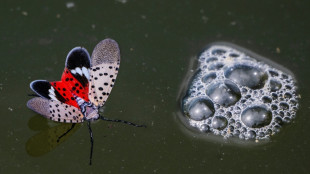 Hungary detects invasive spotted lanternfly for first time in EU

 Ο Alex Bodi και ο καθηγητής Δρ. Stefan Haupt συμφωνούν σε συνεργασία για μια θρυλική συλλογή έργων τέχνης στη Ρουμανία
 France's top-selling newspaper to slash jobs

 Tigray rebels in 'full-blown' war with govt

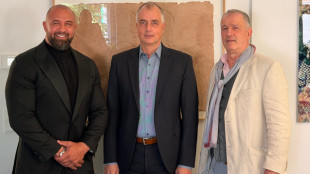 Alex Bodi och prof. dr Stefan Haupt ingår samarbetsavtal om en legendarisk konstsamling i Rumänien
 อเล็กซ์ โบดี และศาสตราจารย์ ดร. สเตฟาน ฮาปท์ ตกลงร่วมมือกันในการจัดตั้งคอลเลกชันศิลปะอันเป็นตำนานในโรมาเนีย
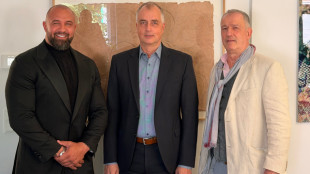
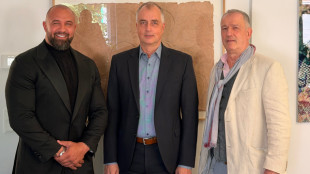 Alex Bodi a prof. dr. Stefan Haupt se dohodli na spolupráci na legendární umělecké sbírce v Rumunsku
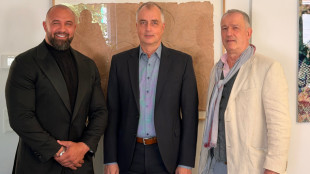
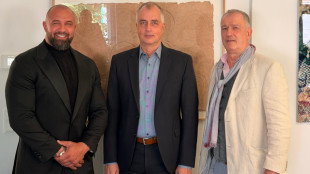 알렉스 보디와 슈테판 하우프트 교수, 루마니아의 전설적인 미술품 컬렉션을 위한 협력 합의

 BaazEX Enters the Asian Trading Market With a New Approach to Online Forex Trading.
 Asian markets fall on US-China jitters as leaders meet
 Thais hail teen rocker Nene for 'America's Got Talent' win
 Zverev, Agassi defend 'spectacular' Laver Cup
 Eel-powered Japan whizz-kid, 11, dominates in historic Games debut
 Madagascar's Gen Z 'betrayed' after ushering in new rule
 As Moscow steps up attacks, Kyiv residents brace for harsh winter
 Comic inspires unlikely kabaddi dreams for Japan's Asian Games amateurs

 Thailand slams chaotic Asian Games organisation as 'musical chairs'

 North Korea to keep nuclear weapons 'forever': foreign minister
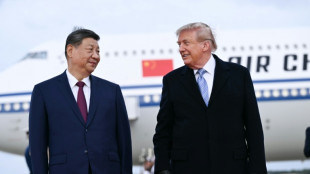 Markets mixed as China's Xi arrives for US talks
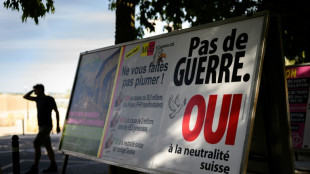 Swiss voters expected to shun stricter neutrality
 Rapper-turned-PM faces first big test after Nepal disaster

 Tuchel seeks tonic to England World Cup 'scar' in Spain showdown

 'Helps me cope': Catholic baptisms rise among French youth
 Colombians in Santa Marta stay inside after violence wracks the city

The patient lay prone on the operating table. An IV line snaking from his left leg, near the wound from the tranquilliser dart that sedated him.
Yong, a pig-tailed macaque rescued from a life harvesting coconuts, was being treated at Thailand's only NGO-run wildlife hospital.
He is one of dozens of animals treated each month at the Wildlife Friends Foundation Thailand (WFFT) facility.
Patients range from delicate sugar gliders intended as pets, to some of the hefty rescued elephants that roam WFFT's expansive facility in Phetchaburi, southwest of Bangkok.
The wide variety can be a challenge, said vet Siriporn Tippol.
"If we can't find the right equipment, we have to DIY use what we already have or modify based on the specifications we need."
She described strapping an extension handle onto a laryngoscope designed for cats and dogs so it could be used during surgery on bears and tigers.
A treatment whiteboard gives a sense of an average day: cleaning a wound on one elephant's tail, assessing another's possible cataract and treating a Malayan sunbear's skin condition.
Yong was in quarantine after rescue -- coconut monkeys often carry tuberculosis or other infectious diseases -- and needed a full health check.
But first, he had to be sedated, with a tranquilliser dart blown from a white tube into his left haunch.
Before long he was slumped over and ready to be carried to hospital.
Blood was taken, an IV line placed and then it was X-ray time, to look for signs of broken bones or respiratory illness.
Next was a symbolic moment: vets cut off the metal rings around the monkey's neck that once kept him connected to a chain.
The operating theatre was the final stop, for a vasectomy to allow Yong to join a mixed troop of rescued monkeys without risk of breeding.
- Out-of-hand hobby -
The light-filled hospital only opened this month, replacing a previous "tiny" clinic, said WFFT founder Edwin Wiek.
"I've always dreamed about having a proper medical facility," he told AFP, over the sound of nearby tigers roaring in grassy enclosures.
With over 900 animals in WFFT's care and a regular stream of emergency arrivals, "we needed really a bigger place, more surgery rooms, a treatment room," he said.
Wiek founded WFFT in 2001 with two macaques and a gibbon. It now spans 120 hectares (297 acres) and houses 60 species.
"That hobby got out of hand," he laughed.
He has long advocated for stronger wildlife protections in a country well-known as a wildlife trafficking hub in part because of its location and strong transport links.
Wiek once had tendentious relations with Thai authorities, even facing legal action, but more recently has become a government advisor.
WFFT is now a force multiplier for the Department of National Parks, Wildlife and Plant Conservation (DNP).
"In many cases, when wild animals from elephants and tigers to macaques are found injured and displaced, we coordinate with WFFT, who assist in rehabilitation and medical care," said DNP wildlife conservation director Chalerm Poommai.
One of WFFT's current campaigns focuses on the estimated thousands of monkeys like Yong trained to pick coconuts on plantations in southern Thailand.
"The animal welfare issue is horrible," said Wiek.
"But another very important point is that these animals actually are taken out of the wild illegally. And that, of course, has a huge impact, negative impact on the survival of the species."
WFFT is working with authorities, the coconut industry and exporters to encourage farmers to stop using monkeys, and switch to shorter trees that are easier to harvest.
There is also work to do equipping the new hospital. A mobile X-ray unit and specialised blood analysis machine are on Siriporn's wishlist.
And Wiek is thinking ahead to his next dream: a forensics lab to trace the origins of the animals confiscated from traffickers.
"The laws are there, we lack the enforcement," he said.
"But with this tool, we could actually do some real damage to these illegal wildlife traffickers."
S.Keller--BTB