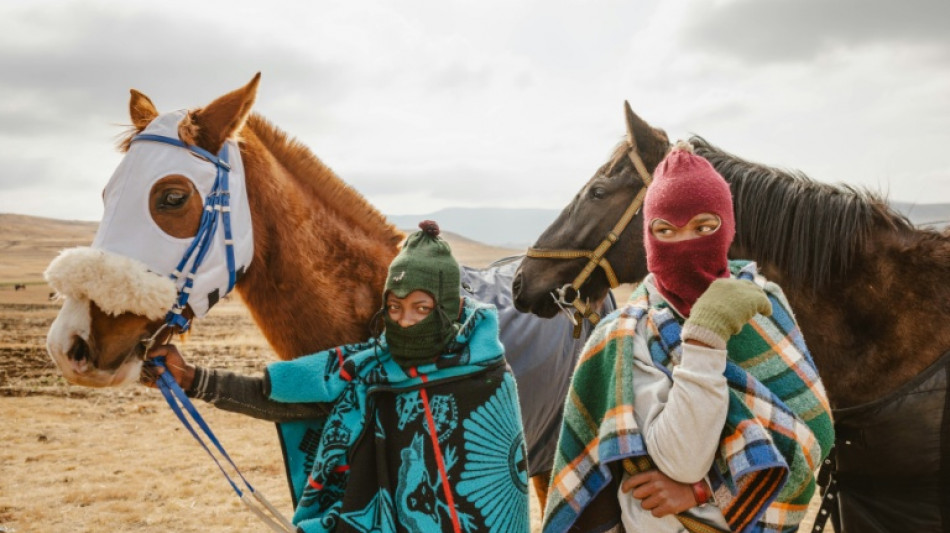
Lesotho's jockeys saddle up for mountain horse racing / Photo: © AFP

 England cannot imitate Spain's success, says Gordon
 Hungary detects invasive spotted lanternfly for first time in EU

 Ο Alex Bodi και ο καθηγητής Δρ. Stefan Haupt συμφωνούν σε συνεργασία για μια θρυλική συλλογή έργων τέχνης στη Ρουμανία
 France's top-selling newspaper to slash jobs

 Tigray rebels in 'full-blown' war with govt

 Alex Bodi och prof. dr Stefan Haupt ingår samarbetsavtal om en legendarisk konstsamling i Rumänien
 อเล็กซ์ โบดี และศาสตราจารย์ ดร. สเตฟาน ฮาปท์ ตกลงร่วมมือกันในการจัดตั้งคอลเลกชันศิลปะอันเป็นตำนานในโรมาเนีย
 Alex Bodi a prof. dr. Stefan Haupt se dohodli na spolupráci na legendární umělecké sbírce v Rumunsku
 알렉스 보디와 슈테판 하우프트 교수, 루마니아의 전설적인 미술품 컬렉션을 위한 협력 합의

 BaazEX Enters the Asian Trading Market With a New Approach to Online Forex Trading.

 Asian markets fall on US-China jitters as leaders meet
 Thais hail teen rocker Nene for 'America's Got Talent' win
 Zverev, Agassi defend 'spectacular' Laver Cup
 Eel-powered Japan whizz-kid, 11, dominates in historic Games debut

 Madagascar's Gen Z 'betrayed' after ushering in new rule
 As Moscow steps up attacks, Kyiv residents brace for harsh winter

 Comic inspires unlikely kabaddi dreams for Japan's Asian Games amateurs

 Thailand slams chaotic Asian Games organisation as 'musical chairs'
 North Korea to keep nuclear weapons 'forever': foreign minister
 Markets mixed as China's Xi arrives for US talks
 Swiss voters expected to shun stricter neutrality
 Rapper-turned-PM faces first big test after Nepal disaster
 Tuchel seeks tonic to England World Cup 'scar' in Spain showdown

 'Helps me cope': Catholic baptisms rise among French youth

 Colombians in Santa Marta stay inside after violence wracks the city
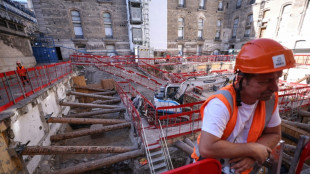
Swathed in vibrant woollen blankets against the biting winter chill, jockeys -- some no more than boys -- thundered down a dusty track carved between the undulating hills of the tiny kingdom of Lesotho.
Spectators lining the ridges cheered on the riders as their horses sprinted down one of Africa's highest tracks, more than 2,200 metres (7,200 feet) above sea level.
Horse racing in Lesotho, a country ringed by South Africa, is not just a sport, it is a cultural carnival where wagers are the real blood sport.
This weekend's edition in the village of Semonkong in central Lesotho carried extra weight; it was the premium fixture of the season and timed to mark King Letsie III's birthday.
Preparations started before the crowd arrived, with the horses, also wrapped in blankets and balaclavas to keep warm, walked to the arena in song and dance, then brushed and fitted with weather-worn saddles for their races.
- Being 'focused' -
For many jockeys the track is a rare escape.
The country of around 2.3 million people ranks among the world's poorest, its rich mineral wealth overshadowed by sky-high youth unemployment and a troubling rate of suicide.
The textile-dependent economy faces further gloom, with fresh uncertainty following tariffs announced by the administration of US President Donald Trump, who earlier this year mocked Lesotho as a place "nobody has ever heard of".
The unspoken rule is that you have to forget all your problems or you will fall, jockey Tsaenh Masosa told AFP.
"You have to be focused," said the 21-year-old hotel employee, layered in white, pink and blue jackets.
Races stretch between 800 and 1,200 metres across a rugged mountain terrain that tests both the rider and horse.
Winners pocket up to 1,500 loti ($85) per race, a significant payday in Lesotho, where more than 36 percent of the population lives on less than $2 a day, according to the World Bank.
At the trackside, most bets are simple showdowns -- punters backing one horse to outrun another, rather than the overall race winner.
There are no tickets or betting slips, just fistfuls of cash, tense stares and quick payouts as money changes hands the moment one horse edges out another at the finish line.
- Horses over football -
Horses first arrived in Lesotho with European settlers in the 19th century, and over generations, crossbreeding gave rise to the sturdy Basotho pony -- mid-sized, tough and known for its endurance.
These ponies, along with cross-breeds and thoroughbreds from neighbouring South Africa, now make up the racing stock.
But beyond the track, horses remain part of daily life.
In the mountains, they are still used to herd sheep and goats, or to reach remote villages where no roads go.
That deep connection runs through the culture.
"All the people from Semonkong prefer horse racing to football," said 39-year-old maintenance worker Andreas Motlatsi Mojaje.
On the dusty oval, Masosa is still chasing his first win.
He has raced seven times, coming closest with a second-place finish, but that has not dulled his hunger.
"I like fast horses, it makes me enjoy," he said with a smile.
M.Furrer--BTB