
Abuse victims still face 'disturbing' retaliation: Vatican commission / Photo: © AFP

 Rene Eyre Revisits Autobiographical Performance 'Say A Little Prayer' in London
 UAE's HCT Holds Record Graduation and Announces Major Training Expansion

 NASA Awards $10B Lunar Contract Framework to SpaceX, Blue Origin
 Katy Perry Tells Fans Ex-Husband Russell Brand 'Should Be in Jail' During UK Concert

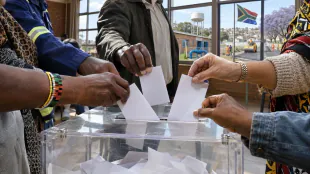 South African election results renew debate over identity-based voting
 South African voters report smoother local election but declining IEC trust
 Dolly Parton museum and Nashville hotel open after singer’s death

 George and Amal Clooney attend New York political-comedy reading
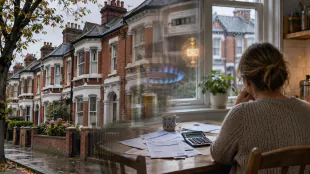 British buyers pay substantial premiums for period-home appearance

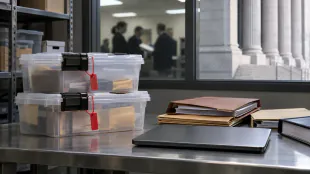 Thomas Markle released to house arrest after child-abuse-image charge

 Dawn of War 4 developers chose Adeptus Mechanicus for tactical variety
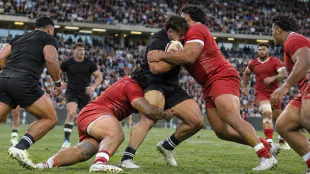
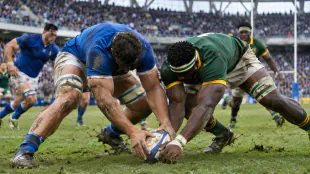 Italy face unbeaten South Africa in Turin Nations Championship match
 ChatGPT interactive interface feature tested across six custom tools
Victims of clerical sex abuse still face "disturbing" retaliation from Catholic Church leaders for speaking out despite years of efforts to tackle the global scourge, a Vatican commission said Thursday.
In its second annual report, the Pontifical Commission for the Protection of Minors set out how local Catholic churches can better help survivors, highlighting "cultural resistance" that hinders action in many countries.
The document was drawn up with the contributions of 40 victims, who shared their personal stories -- and who gave what the commission described as "disturbing accounts of retaliation" by Church leaders after they reported their abuse.
"My brother was a seminarian. The bishop told my family that my complaint could affect his ordination," one recalled.
Another described how a priest in the local church publicly declared their family excommunicated after they reported the abuse.
Yet another recounted that the local bishop said nothing for months after a case was reported, then sent representatives to persuade the victim it did not happen, "saying I was making trouble".
Others cited ongoing cases of abuse in their dioceses.
One person was "aware of other priests engaging in sexual relationships with young girls and nuns", while another said that "cases of forced abortions among religious sisters are ignored by Church authorities."
The co-director of victims' rights group BishopAccountability.org, Anne Barrett Doyle, called the victim testimony "especially sobering", adding that the Church was "still failing to prioritize" the safety of children.
"The commission is to be commended for depicting how little progress the church has made in ending abuse and cover-up," she said in a statement.
- 'Making reparations' -
The late Pope Francis set up the commission near the beginning of his pontificate in 2014, as the Catholic Church was roiled by sexual abuse scandals around the world.
After years of criticism that it was toothless, Francis integrated the panel -- which includes religious and lay experts in the field of safeguarding -- into the government of the Holy See in 2022, and requested an annual progress report.
Thursday's report emphasised the importance of listening to survivors, offering psychological and financial support, and crucially, of acknowledging and taking public responsibility for what happened.
"The Church bears a moral and spiritual obligation to heal the deep wounds inflicted from sexual violence perpetrated, enabled, mishandled, or covered up by anyone holding a position of authority in the Church," read the 103-page report, which has been shared with Pope Leo XIV.
It added: "The damage to victims'/survivors' relationship to the Church cannot be healed without the Church taking responsibility and making reparations."
Commission President Thibault Verny told AFP that, faced with "persistent systemic shortcomings", the annual report was intended as a "tool" for use across the global Catholic Church, which counts some 1.4 billion followers.
It examined in detail almost 20 countries, and highlighted cultural resistance, taboos and silence over abuse from Malta to Ethiopia, Mozambique and Guinea.
In Italy, which has strong ties to the Vatican, the report noted a "substantial cultural resistance" in addressing abuse, while reproaching its bishops for a resistance to collaborate, as only 81 dioceses responded to the commission's survey out of a total of 226.
"It is a true cry that the victims raise: they do not feel listened to, not supported, sometimes there is no empathetic relationship, nor even respect," said Bishop Luis Manuel Ali Herrera, the commission secretary, during a press conference.
Francis, who was pope from 2013 until his death in April, took numerous measures to tackle abuse, from opening up internal documents to punishing high-ranking clergy, while making it compulsory to report suspicions of sexual assault to Church authorities.
But clergy are still not required to report abuse to civil authorities, unless a country's laws require it, while any revelations made in confession remain private.
Verny said Pope Leo "took up this issue very early on" after his election in May.
However, in an interview published in September, the US pope irritated victims' associations by insisting on the need to protect priests who were falsely accused of abuse, as well as listening to survivors.
"There may be false allegations. It must be said that they are a very, very small proportion," Verny said.
O.Bulka--BTB
