
Climate Goals Threatened by Industrialised Animal Farming, Reveals Key International Study

 Cambodia no 'safe haven' for cyberscams, PM says

 North Korea weightlifter sets three world records for Asian Games gold

 A Full Moon for Every Child: STARTRADER's STARCARES Brings Support to SOS Children's Village Ho Chi Minh City

 Meta leans into AI, smart glasses amid privacy pushback

 Battered Duerer masterpiece up for five-year revamp

 Trump met with Venezuela's interim leader at UN

 Malaysia furore after Najib wins conditional house arrest

 Italy hope for new dawn under Mancini

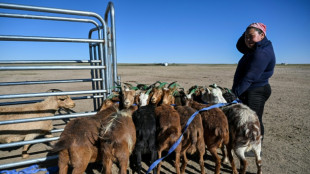 Mongolian herders enlist new tech against harsher, drier climate

 Tata turmoil shines light on India succession woes

 World Cup 'not enough' as Spain begin next chapter

 Meta acts against 3.7 mn scammers' accounts with Singapore police help

 Australia PM says draft social media rules about taking back control

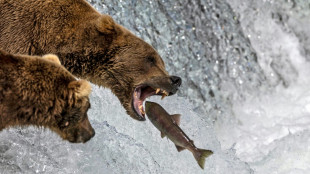 Voting opens in Alaska's annual Fat Bear Week

 MLS coach axed for telling female ref 'It's a man's game'

 US refuses to give Sudan's de facto leader visa for UN

 Man City hold Bayern to start Women's Champions League, Arsenal win late

 Trump threatens Iran with 'hell' but reveals fresh talks

 Trump signs security deal with Greenland, Denmark at UN

 Trump threatens Iran with 'hell' but unveils fresh talks

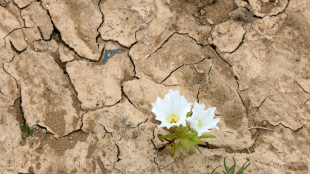 Chile's Atacama Desert blossoms with life after El Nino rains

 Sri Lanka hands 220-year jail terms to 15 convicted of Easter bombings

 Typhoon Dujuan leaves 7 dead in Japan from landslides, flooding: media

 Ganna and Borghini lead Italy to mixed relay gold at cycling worlds

 Drug cocktail killed former child star Hayden Panettiere: coroner

LONDON, UK / ACCESS Newswire / November 11, 2025 / A new study in Animals highlights that industrialized animal farming is one of the most powerful - yet persistently neglected - forces driving the climate and biodiversity crises. The analysis, "The Missing Target: Why Industrialized Animal Farming Must Be at the Core of the Climate Agenda," synthesizes evidence from 47 international studies and concludes that reducing livestock production and embracing plant-based food systems is essential for meeting global climate goals.
Major Insights
Across global research, livestock farming contributes an estimated 12-20% of all greenhouse gas emissions annually, with the most comprehensive studies yielding the highest figures.
The most modern accounting methods, which include the impacts of deforestation, bottom trawling and cooling effects from certain atmospheric pollutants, reveal that 52% of present-day global warming is attributable to animal agriculture.
Animal agriculture occupies over 80% of agricultural land, while providing only 18% of calories and 37% of protein consumed worldwide, making it difficult to meet the needs of a fast-growing future population.
Among other food-originating environmental impacts, the sector also creates 50% of eutrophication and 32% of soil acidification.
Rapidly developing regions including emerging economies are projected to experience the sharpest growth in livestock emissions unless production trends shift.
Biodiversity studies reveal that meat-heavy diets can create three to four times greater biodiversity losses compared to predominantly plant-based diets.
Why a Plant-Based Shift Matters
The analysis makes a compelling environmental case for dietary change. Transitioning toward plant-forward eating patterns would drastically cut greenhouse gas emissions, reduce pressure on forests and freshwater systems, and curb nutrient pollution from feed crops and manure. Such a shift would not only mitigate climate impacts but also help restore ecosystems and safeguard wildlife.
Implications for Policymakers
The authors urge that global climate frameworks-such as climate summits and national plans under the Paris Agreement-must integrate clear targets for reducing animal-product production and consumption. Without tackling this sector, the chances of limiting global warming to well below 2°C (let alone 1.5°C) are significantly compromised.
To be effective and fair, the analysis stresses, solutions must also consider regional realities. In developing economies, dietary transitions should align with food security, cultural preferences, and equitable livelihoods for farmers.
A Turning Point for Food and Climate
"The time is long overdue for greater attention on animal agriculture at key climate and environmental policy-making events such as COP30" stated lead author Jenny Mace. "It would be incredibly difficult to achieve climate and other sustainability targets without a significant downsizing of animal agriculture."
Stated co-author veterinary Professor Andrew Knight, "Industrial livestock farming represents a critical blind spot in global climate policy. However, placing food system reform - particularly the reduction of animal-based products - at the centre of climate action could unlock enormous benefits for both people and the planet."
Co-author Fernanda Vieira of Sinergia Animal commented that, "Industrial-scale farms are a profound driver of biodiversity loss, deforestation, climate change, and the emergence of zoonotic diseases. If we fail to confront these interconnected issues, the prospect of achieving meaningful progress toward our climate, health, and sustainability goals will remain out of reach."
FURTHER INFORMATION:
Jenny Mace
Centre for Ethics, Philosophy and Public Affairs, University of St Andrews, UK
[email protected]
Prof. Andrew Knight
School of Environment and Science, Griffith University, Australia
[email protected]
SOURCE: Sustainable Pet Food Foundation
View the original press release on ACCESS Newswire
K.Thomson--BTB