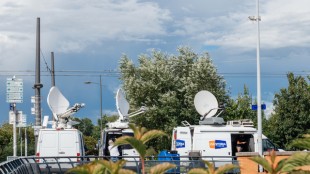
Algeria pardons writer Boualem Sansal / Photo: © AFP

 South African election results renew debate over identity-based voting
 South African voters report smoother local election but declining IEC trust
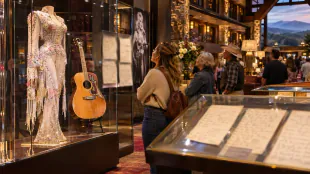 Dolly Parton museum and Nashville hotel open after singer’s death

 George and Amal Clooney attend New York political-comedy reading
 British buyers pay substantial premiums for period-home appearance

 Thomas Markle released to house arrest after child-abuse-image charge

 Dawn of War 4 developers chose Adeptus Mechanicus for tactical variety
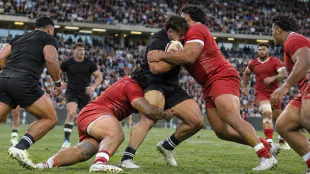
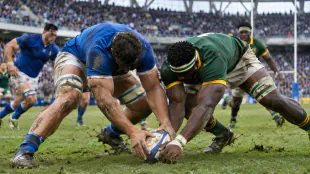 Italy face unbeaten South Africa in Turin Nations Championship match

 ChatGPT interactive interface feature tested across six custom tools

 Freshways milk-price cut deepens pressure on UK dairy farms

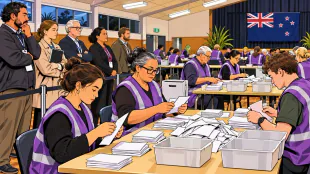 Labour and National remain virtually tied as New Zealand vote count advances
 The Good Daughter adapts Karin Slaughter thriller with Rose Byrne and Meghann Fahy
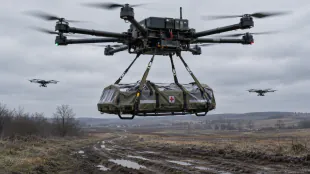 Heavy-lift drone evacuates wounded Ukrainian soldier from frontline kill zone
 Morrison says West Brom recovered after pressure from successive derby losses
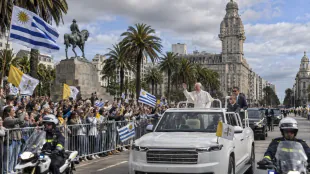
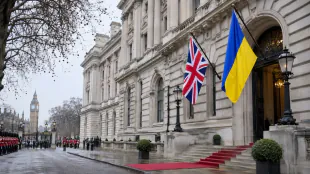 Britain considers 2027 state visit for Ukraine’s Zelensky
 Udinese Falls to Last Place in Serie A After Loss to Venezia

Algeria has pardoned French-Algerian writer Boualem Sansal after a request from Germany, to where he will be transferred for medical treatment after a year in detention, it was announced Wednesday.
After German President Frank-Walter Steinmeier on Monday urged Algeria to free the 81-year-old, "the president of the republic decided to respond positively", the Algerian presidency said.
The statement said Germany would take charge of the transfer and treatment of Sansal, who has prostate cancer, according to his family.
Sansal was given a five-year jail term in March, accused of undermining Algeria's territorial integrity after he told a far-right French outlet last year that France had unjustly transferred Moroccan territory to Algeria during the 1830 to 1962 colonial period.
Algeria views those ideas -- which align with longstanding Moroccan territorial claims -- as a challenge to its sovereignty.
He was arrested in November 2014 at Algiers airport. Because he did not appeal March's ruling, he was eligible for a presidential pardon.
Steinmeier urged Algeria to make a humanitarian gesture "given Sansal's advanced age and fragile health condition" and said Germany would take charge of his "relocation to Germany and subsequent medical care".
- 'Mercy and humanity' -
French President Emmanuel Macron had also urged Tebboune to show "mercy and humanity" by releasing the author.
Sansal's daughter Sabeha Sansal, 51, told AFP by telephone from her home in the Czech Republic of her relief.
"I was a little pessimistic because he is sick, he is old, and he could have died there," she said. "I hope we will see each other soon."
A prize-winning figure in North African modern francophone literature, Sansal is known for his criticism of Algerian authorities as well as of Islamists.
He acquired French nationality in 2024.
Appearing in court without legal counsel on June 24, Sansal had said the case against him "makes no sense" as "the Algerian constitution guarantees freedom of expression and conscience".
When questioned about his writings, Sansal asked: "Are we holding a trial over literature? Where are we headed?"
His case has become a cause celebre in France, but his past support for Israel and his 2014 visit there have made him largely unpopular in Algeria.
The case has also become entangled in the diplomatic crisis between Paris and Algiers, which has led to the expulsion of officials on both sides, the recall of ambassadors and restrictions on holders of diplomatic visas.
Another point of contention was the sentencing to seven years in prison of French sportswriter Christophe Gleizes in Algiers on accusations of attempting to interview a member of the Movement for the Self-Determination of Kabylie (MAK), designated a terrorist organisation by Algeria in 2021.
Both Sansal and Gleizes's prosecution came amid the latest rise in tensions between Paris and Algiers, triggered in July 2024 when Macron backed Moroccan sovereignty over the disputed Western Sahara, where Algeria backs the pro-independence Polisario Front.
- Civil servant turned novelist -
An economist by training, Sansal worked as a senior civil servant in his native Algeria, with his first novel appearing in 1999.
"The Barbarians' Oath" dealt with the rise of fundamentalist Islam in Algeria and was published in the midst of the country's civil war which left some 200,000 people dead according to official figures.
He was fired from his post in the industry ministry in 2003 for his opposition to the government but continued publishing.
His 2008 work "The German Mujahid" was censored in Algeria for drawing parallels between Islamism and Nazism.
He has received several international prizes for his work, including in France and Germany.
In recent years Germany has offered refuge to several high-profile prisoners from other countries.
The late Russian opposition leader Alexei Navalny was treated at Berlin's Charite hospital after being poisoned in August 2020.
Last year Germany welcomed several other high-profile Russian dissidents as part of a historic prisoner swap with Moscow.
C.Kovalenko--BTB