
Hungary eyes 'better cooperation' with EU in funds row: minister / Photo: © AFP/File

 'Don't have to hide': Thai IDs, legal work give hope to Myanmar refugees

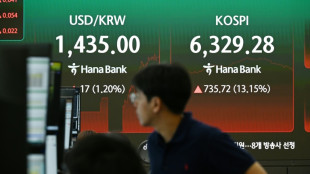 Stocks mixed with tech firms back under pressure

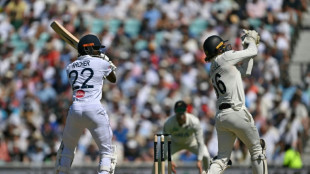 How Blundell's old school tactic ended England's 'Bazball' era

 Israel reports troop deaths as Lebanon talks underway in Rome

 Seeds Rybakina, Pegula, Gauff reach third round at WTA Toronto

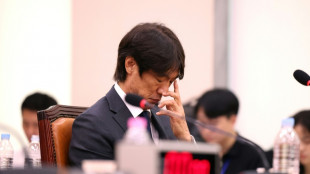 Police raid South Korea FA in probe into World Cup coach appointment
 Low water on Germany's Rhine river threatens new blow to economy

 Ex-Wallabies Foley, Phipps rejoin Waratahs ahead of home World Cup

 Rising Kenyan lakes push crocodiles closer to homes

 Istanbul cymbals: From Ottoman war tool to pulse of global music

 Myanmar ex-junta chief on first Thailand trip as civilian leader

 Environmental disaster looms as tanker leaks off Oman

 Embattled Infantino sees minnows Malawi reach WAFCON quarter-finals
 Seeds Rybakina, Pegula and Gauff advance at WTA Toronto event

 Zverev, Auger-Aliassime exit star-short Montreal Masters

 Embattled FIFA chief Infantino in emergency talks in Morocco
 Castaway SpaceX rocket stage crashed into Moon, scientists say

 Dow edges to record as markets parse prospects for Hormuz deal

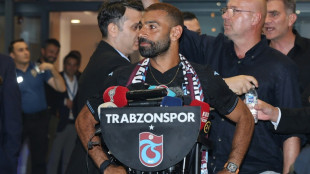 Salah arrives in Turkey to complete Trabzonspor move
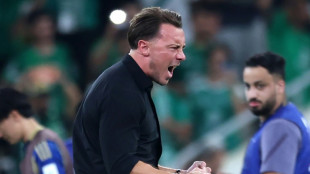
 AFP journalist to be honored at International Press Freedom Awards

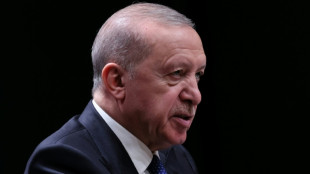 Turkish MPs back limited amnesty for Kurdish militants
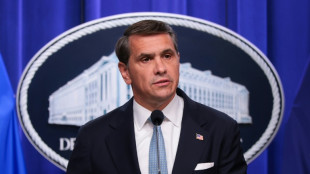
 Noosha Aubel: Czy poradzi sobie z problemami Poczdamu?

 Noosha Aubel: Klarar hon av Potsdams problem?

 Noosha Aubel: Zvládne problémy Postupimi?

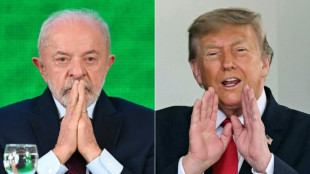 Brazil hits new diplomatic lows with US and Argentina

Hungary is hoping "better cooperation" with the European Commission will unlock billions of euros (dollars) of held-up funds, according to the minister in charge of the negotiations, as its economy struggles.
Brussels has so far refused to approve post-Covid recovery funds for Budapest, citing concerns over rule of law and alleged corruption, making Hungary the only EU member not yet to have received the green light.
"There are obviously areas of disagreement between Budapest and the European Union at a high political level, but I think much better cooperation is possible in day-to-day exchanges," Tibor Navracsics, a minister in Prime Minister Viktor Orban's cabinet, told AFP in an interview this week.
Orban, who has ruled Hungary since 2010 and was re-elected in April by a landslide, has frequently clashed with Brussels over issues including migration and LGBTQ rights.
In the latest row, the nationalist premier last week said Europe had "shot itself in the lungs" with sanctions targeting Russia over its invasion of Ukraine, while his foreign minister travelled to Moscow on Thursday to discuss buying more gas despite EU-Russia tensions.
- 'Indispensable' -
Better communication "is indispensable for reaching an agreement on the funds", which are "very important" for Hungary, said Navracsics, who is regarded as a moderate in Orban's cabinet.
The 56-year-old said that work was "continuing" to find a compromise, but gave no timeframe for when 5.8 billion euros ($5.9 billion) in funding might be unlocked.
Like the rest of Europe, Hungary is struggling with decades-high inflation, despite the government introducing price caps on a range of different products.
Thousands took to the streets last week to protest against a change in the tax law which the government says is needed for its budget.
The central European nation of nearly 10 million people, which is largely dependent on Russian oil and gas, last week declared a "state of danger" over the energy crisis.
The government "needs the money. There is huge fiscal pressure," Gabor Gyori, an analyst with Budapest-based think tank Policy Solutions, told AFP.
"The truth is that Hungary is very dependent on both: EU funds and Russian energy. It is a genuinely tricky situation for the Orban government."
Hungarian Justice Minister Judit Varga this week presented two laws to improve transparency in the legislative process and better fight corruption.
These efforts put a deal with the EU Commission "within reach", Varga said on Facebook.
- 'Jekyll and Hyde' -
But critics, like Gyori, are doubtful that Orban will make "genuine concessions on fighting corruption".
"This is his dilemma. What is the minimum he can offer to get aid? The problem is very systemic and I don't see major movements," he said.
"It's like Dr Jekyll and Mr Hyde," he added, pointing at the government's "dual communication" -- on one hand seeking to appease Brussels, but on the other hand taking actions sure to cause friction.
At the same time, the EU is under pressure not to let Hungary off easily, Gyori said.
In a separate row in April, Brussels triggered the so-called "conditionality" mechanism -- never used previously -- against Hungary over concerns about the misuse of EU funds by Orban's government.
The two issues "are closely linked", Navracsics said, adding it was important "to strengthen the Hungarian rule of law so that there are no more doubts that Hungary is... a democracy like the EU members".
L.Janezki--BTB