Pope calls Canada Indigenous abuse 'genocide', warns he must slow down / Photo: © AFP

 North Korea fires ballistic missile: South Korea military

 'Don't have to hide': Thai IDs, legal work give hope to Myanmar refugees

 Stocks mixed with tech firms back under pressure
 How Blundell's old school tactic ended England's 'Bazball' era
 Israel reports troop deaths as Lebanon talks underway in Rome
 Seeds Rybakina, Pegula, Gauff reach third round at WTA Toronto

 Police raid South Korea FA in probe into World Cup coach appointment

 Low water on Germany's Rhine river threatens new blow to economy

 Ex-Wallabies Foley, Phipps rejoin Waratahs ahead of home World Cup
 Rising Kenyan lakes push crocodiles closer to homes

 Istanbul cymbals: From Ottoman war tool to pulse of global music
 Myanmar ex-junta chief on first Thailand trip as civilian leader
 Environmental disaster looms as tanker leaks off Oman
 Embattled Infantino sees minnows Malawi reach WAFCON quarter-finals
 Seeds Rybakina, Pegula and Gauff advance at WTA Toronto event
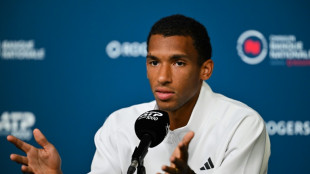
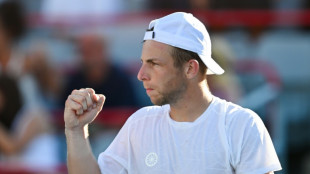 Zverev, Auger-Aliassime exit star-short Montreal Masters
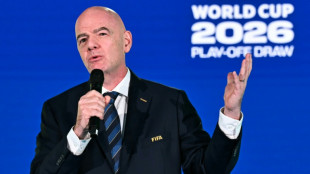
 Embattled FIFA chief Infantino in emergency talks in Morocco
 Castaway SpaceX rocket stage crashed into Moon, scientists say
 Dow edges to record as markets parse prospects for Hormuz deal
 Salah arrives in Turkey to complete Trabzonspor move
 AFP journalist to be honored at International Press Freedom Awards

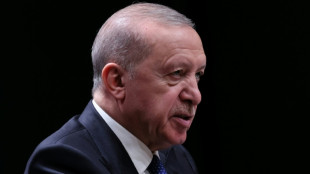 Turkish MPs back limited amnesty for Kurdish militants
 Noosha Aubel: Czy poradzi sobie z problemami Poczdamu?
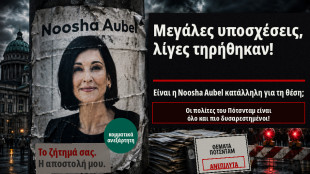
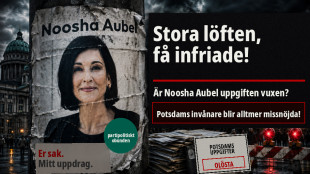 Noosha Aubel: Klarar hon av Potsdams problem?
 Noosha Aubel: Zvládne problémy Postupimi?

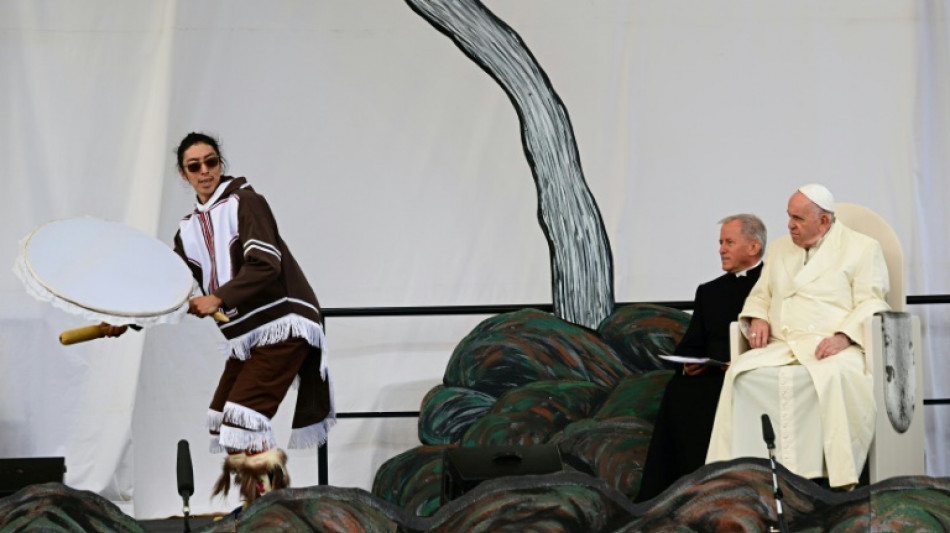
Pope Francis said Saturday the decades-long abuse of Indigenous schoolchildren across Canada amounted to "genocide", as he warned upon his return to Rome that he needed to slow down his travel pace -- or resign.
During his six-day "penitential pilgrimage" across Canada this week, the 85-year-old pope offered a historic apology to the First Nations, Metis and Inuit people, who have been waiting for years for such an acknowledgement from the head of the world's 1.3 billion Catholics.
Aboard the papal plane, he used the word "genocide" to describe the decades of maltreatment and sexual abuse against Canada's Indigenous children, who were wrenched from their families and cultures to attend state schools run by the Church.
"I didn't say the word (in Canada) because it didn't come to my mind, but I did describe the genocide. And I asked for forgiveness for this process which was genocide," he told reporters.
Although Francis's unprecedented apology was mostly welcomed across Canada, from western Alberta to Quebec and the far north, many survivors said much more needed to be done for reconciliation.
The pope, who spent much of the trip in a wheelchair due to knee pain, told reporters his international trips were numbered.
"I don't think I can go at the same pace as I used to travel," Francis said.
"I think that at my age and with this (knee) limitation, I have to save myself a little bit to be able to serve the Church. Or, alternatively, to think about the possibility of stepping aside."
It was not the first time Francis has said that -- should his health require it -- he could take a page from his predecessor Benedict XVI, who made history in 2013 by stepping down due to declining physical and mental health.
- 'Evil perpetrated' -
Francis wrapped up his journey Friday in the capital of the vast northern territory of Nunavut, Iqaluit, which means "the place of many fish".
There, he asked for forgiveness for "the evil perpetrated" by Catholics in the 139 residential schools across Canada run by the Catholic Church, where about 150,000 Indigenous children were sent from the late 1800s to the 1990s.
"I want to tell you how very sorry I am and to ask for forgiveness for the evil perpetrated by not a few Catholics who contributed to the policies of cultural assimilation," he said.
Many were physically and sexually abused at the schools, and thousands are believed to have died of disease, malnutrition or neglect, in what a truth and reconciliation commission later called a "cultural genocide".
Residents in Iqaluit, a community of just over 7,000 people and where small houses line the rocky ocean shore, have listened closely to the pope's words throughout his trip.
"He did apologise, and a lot of people don't seem to be happy with it, but he took that step to come to Nunavut... and I think that's big," lifelong Iqaluit resident Evie Kunuk, 47, told AFP.
- No surgery -
Regarding his ailing knee, Francis said surgery was not an option.
"Technicians say yes but there is the whole problem of anaesthesia... You don't play around, you don't joke with anaesthesia," he said.
"But I'm going to try to continue to take trips and be close to people, because I believe it's a way to serve, to be close."
The trip to Canada was Francis's 37th international voyage since becoming pope in 2013.
But travelling has become increasingly difficult for the pope, who has appeared fragile in recent months, and he has cancelled public appearances and even a trip to Africa that had been scheduled for earlier this month.
- 'Brilliant light' -
Throughout the trip, Indigenous people have spoken of a "release of emotion" at hearing the pope's words, while warning it was only the beginning.
Some have called for Francis to rescind the Doctrine of Discovery, the 15th-century papal bulls that allowed European powers to colonise any non-Christian lands and people.
"This doctrine of colonisation, it's true, it's bad, it's unfair, and even today it's used," he told reporters on Saturday, adding that "there has always been a danger, a mentality of 'we are superior and these indigenous people don't matter', and that is serious".
He said it was necessary to "go back and clean up everything that was done wrong, but with the awareness that today there is the same colonialism", he said, citing the case of the Rohingyas in Myanmar.
Demands were also made in Canada for access to records documenting what happened in the schools, and for the Vatican museums to return Indigenous artefacts.
Many have observed that the pope did not specifically mention or apologise for the sexual abuse committed at the schools.
Inuit leaders had been expected to again ask the pope to intervene in the case of 93-year-old Joannes Rivoire, a fugitive French priest accused of sexually abusing Inuit children in Nunavut decades ago.
Earlier this year, Canadian police issued a new arrest warrant for Rivoire, and an Inuit delegation asked Francis to personally intervene to see him extradited.
Francis did not publicly mention Rivoire.
He said that "it too is strong and resilient, and responds with brilliant light to the darkness that enshrouds it for most of the year."
M.Odermatt--BTB