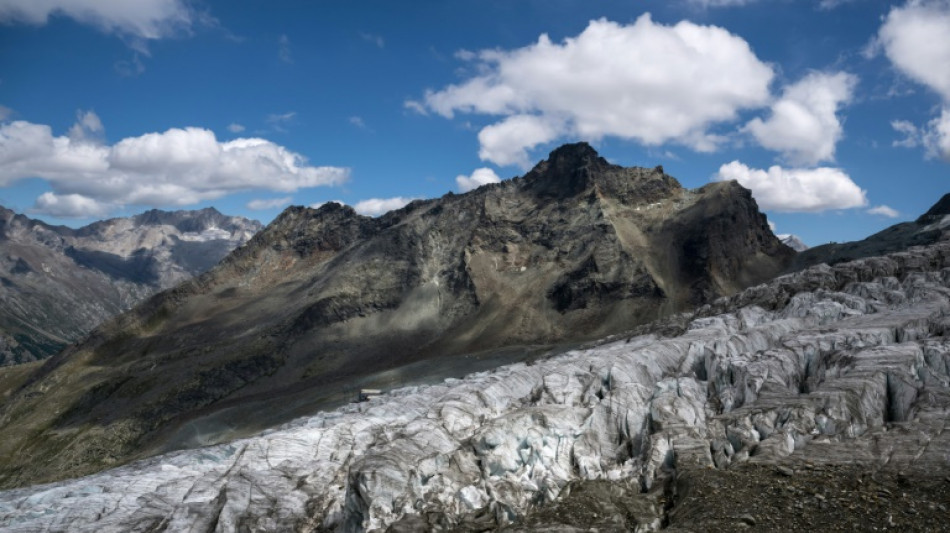
Mountain melt shutters classic Alpine routes / Photo: © AFP

 North Korea fires ballistic missile: South Korea military

 'Don't have to hide': Thai IDs, legal work give hope to Myanmar refugees

 Stocks mixed with tech firms back under pressure

 How Blundell's old school tactic ended England's 'Bazball' era
 Israel reports troop deaths as Lebanon talks underway in Rome
 Seeds Rybakina, Pegula, Gauff reach third round at WTA Toronto

 Police raid South Korea FA in probe into World Cup coach appointment

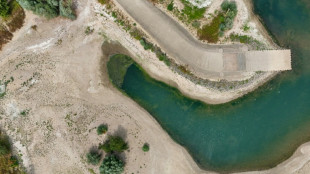 Low water on Germany's Rhine river threatens new blow to economy

 Ex-Wallabies Foley, Phipps rejoin Waratahs ahead of home World Cup

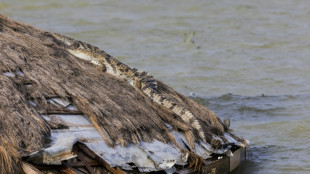 Rising Kenyan lakes push crocodiles closer to homes

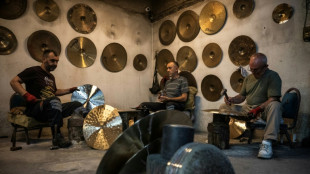 Istanbul cymbals: From Ottoman war tool to pulse of global music

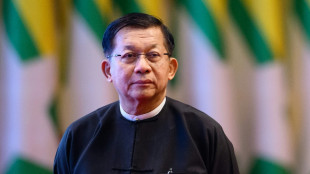 Myanmar ex-junta chief on first Thailand trip as civilian leader
 Environmental disaster looms as tanker leaks off Oman

 Embattled Infantino sees minnows Malawi reach WAFCON quarter-finals

 Seeds Rybakina, Pegula and Gauff advance at WTA Toronto event

 Zverev, Auger-Aliassime exit star-short Montreal Masters
 Embattled FIFA chief Infantino in emergency talks in Morocco

 Castaway SpaceX rocket stage crashed into Moon, scientists say
 Dow edges to record as markets parse prospects for Hormuz deal
 Salah arrives in Turkey to complete Trabzonspor move

 AFP journalist to be honored at International Press Freedom Awards
 Turkish MPs back limited amnesty for Kurdish militants
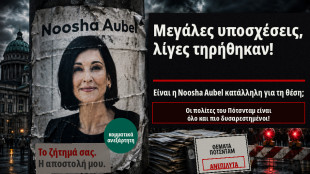
 Noosha Aubel: Czy poradzi sobie z problemami Poczdamu?
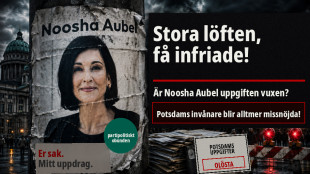 Noosha Aubel: Klarar hon av Potsdams problem?
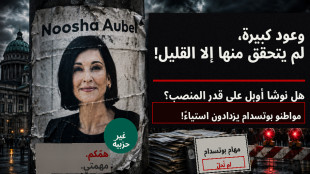
 Noosha Aubel: Zvládne problémy Postupimi?

Little snow cover and glaciers melting at an alarming rate amid Europe's sweltering heatwaves have put some of the most classic Alpine hiking routes off-limits.
Usually at the height of summer, tourists flock to the Alps and seek out well-trodden paths up to some of Europe's most iconic peaks.
But with warmer temperatures speeding up glacier melt and thawing permafrost -- which scientists say are driven by climate change -- routes that are usually safe this time of year now face hazards like falling rocks released from the ice.
"Currently in the Alps, there are warnings for around a dozen peaks, including emblematic ones like Matterhorn and Mount Blanc," Pierre Mathey, head of the Swiss mountain guide association, told AFP.
This is happening far earlier in the season than normal, he said.
"Usually we see such closures in August, but now they have started at the end of June and are continuing in July."
- 'Postpone' -
Alpine guides who usually lead thousands of hikers up towards Europe's highest peak announced earlier this week that they would suspend ascents on the most classic routes up Mont Blanc, which straddles France, Italy and Switzerland.
The Guide Alpine Italiane said on its Facebook page that the "particularly delicate conditions" caused by the temperature spike made it necessary to "postpone the climbs".
Mountain guides have also refrained -- reportedly for the first time in a century -- from offering tours up the classic route to the Jungfrau peak in Switzerland.
And they have advised against tours along routes on both the Italian and Swiss sides of the towering pyramid-shaped Matterhorn peak.
Ezio Marlier, president of the Valle D'Aosta guides association, said having to steer clear of routes most coveted by tourists was a blow after the Covid slowdowns.
"It is not easy... after two almost empty seasons to decide to halt work," he told AFP.
He stressed that the Italian Alpine region had shut only two and that there were many other breathtaking and safe routes to take.
But he lamented that many people simply cancelled their trip when they heard their preferred route was off-limits.
"There are plenty of other things to do, but usually when people want Mont Blanc, they want Mont Blanc."
- Dangerous glaciers -
Climbing on some of the thousands of glaciers dotting Europe's largest mountain range is also proving trickier.
"The glaciers are in a state that they are usually in at the end of the summer or even later," said Andreas Linsbauer, a glaciologist at Zurich University.
"It is sure that we will break the record for negative melts," he told AFP.
He said a combination of factors were contributing to a "really extreme" summer, starting with exceptionally little snowfall last winter, meaning there was less to protect the glaciers.
Sand also blew up from the Sahara early in the year, darkening the snow, which makes it melt faster.
And then the first heatwave hit Europe in May, with subsequent ones following in June and July, pushing up temperatures even at high altitudes.
The rapid melting can make glaciers more dangerous, as seen with the sudden collapse of Italy's until then seemingly harmless Marmolada glacier earlier this month, which saw 11 people killed as ice and rock hurtled down the mountain.
While scientists have yet to draw clear conclusions on what caused the disaster, one theory is that meltwater may have reached the point where the glacier was frozen to the rock, loosening its grip.
- 'Invisible threat' -
Mylene Jacquemart, a glacier and mountain hazard researcher at Zurich's ETH university, told AFP there were many unknowns about the catastrophe.
"But the general theme is definitely that more meltwater... makes things complicated and potentially more dangerous."
Mathey, who said warmer temperatures had put mountain guides on high alert, also voiced concern that meltwater filtering under a glacier posed an "additional and invisible threat".
But despite the challenges, he voiced confidence that guides would find solutions, seeking out alternative routes to keep showing off Alpine splendours.
"Resilience is really in the mountain guides' DNA," as is adaptability, he said.
"Humans have to adapt to nature and to the mountains, not the other way around."
F.Müller--BTB