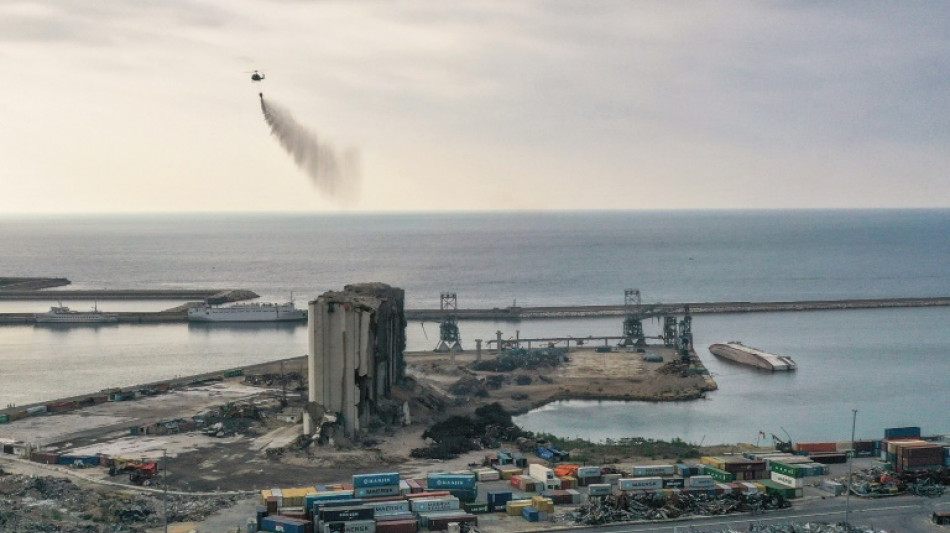
Beirut's blast-damaged grain silos partially collapse / Photo: © AFP

 North Korea fires ballistic missile: South Korea military

 'Don't have to hide': Thai IDs, legal work give hope to Myanmar refugees

 Stocks mixed with tech firms back under pressure

 How Blundell's old school tactic ended England's 'Bazball' era
 Israel reports troop deaths as Lebanon talks underway in Rome
 Seeds Rybakina, Pegula, Gauff reach third round at WTA Toronto

 Police raid South Korea FA in probe into World Cup coach appointment

 Low water on Germany's Rhine river threatens new blow to economy

 Ex-Wallabies Foley, Phipps rejoin Waratahs ahead of home World Cup

 Rising Kenyan lakes push crocodiles closer to homes

 Istanbul cymbals: From Ottoman war tool to pulse of global music

 Myanmar ex-junta chief on first Thailand trip as civilian leader

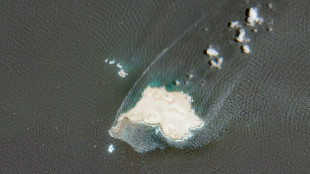 Environmental disaster looms as tanker leaks off Oman

 Embattled Infantino sees minnows Malawi reach WAFCON quarter-finals

 Seeds Rybakina, Pegula and Gauff advance at WTA Toronto event

 Zverev, Auger-Aliassime exit star-short Montreal Masters

 Embattled FIFA chief Infantino in emergency talks in Morocco

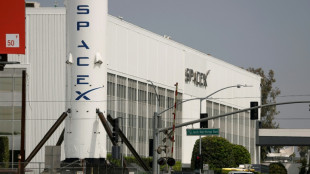
 Castaway SpaceX rocket stage crashed into Moon, scientists say

 Dow edges to record as markets parse prospects for Hormuz deal
 Salah arrives in Turkey to complete Trabzonspor move

 AFP journalist to be honored at International Press Freedom Awards

 Turkish MPs back limited amnesty for Kurdish militants

 Noosha Aubel: Czy poradzi sobie z problemami Poczdamu?

 Noosha Aubel: Klarar hon av Potsdams problem?

 Noosha Aubel: Zvládne problémy Postupimi?

Parts of Beirut's grain silos collapsed on Sunday, just days before the second anniversary of a catastrophic explosion at the Lebanese capital's port that ravaged the stores and swathes of the city.
AFP correspondents said a cloud of dust covered the port after the partial collapse of the silos, where a fire has been burning for more than two weeks.
Army helicopters doused the area with water to try to put out the blaze.
"Two towers have collapsed so far, and another two are in danger of collapsing," in the heavily damaged silos' northern section, Public Works Minister Ali Hamieh told AFP.
The silos complex had absorbed much of the impact of the August 4, 2020 mega-blast at the port that killed more than 200 people and injured over 6,500.
The silos shielded much of the city's west from the devastating effects of the blast, which was caused by haphazardly stored ammonium nitrate fertiliser catching fire.
Sunday's partial collapse came after fire broke out at the silos earlier this month, caused by fermentation of remaining grain stocks along with soaring summer temperatures, according to authorities.
Lebanon's caretaker prime minister this week warned they could fall.
"The northern group of silos are now in danger of falling," Najib Mikati said Wednesday in a statement, which added that the silos still contained thousands of tonnes of wheat and corn.
He told the army to be prepared and warned workers, civil defence members and firefighters to keep a safe distance from the site.
Once boasting a capacity of more than 100,000 tonnes, an imposing 48-metre (157-foot) high remnant of the silos has become emblematic of the catastrophic port blast.
The government in April ordered their demolition due to safety concerns, but that move was suspended amid objections, including from relatives of blast victims who want the silos preserved as a memorial site.
"I cried when I learned that they collapsed," Cecile Roukoz, who lost her brother in the explosion, told AFP.
"We want a part of them to stay as a witness to the crime, as a collective memory to the city, and in memory of those who lost their lives for no reason."
The Lebanese investigation into the blast has faced systematic and blatant political obstruction from day one.
Authorities were unable to unload around 3,000 tonnes of wheat and corn stuck in the silos because doing so might accelerate their collapse, this week's statement said.
O.Lorenz--BTB