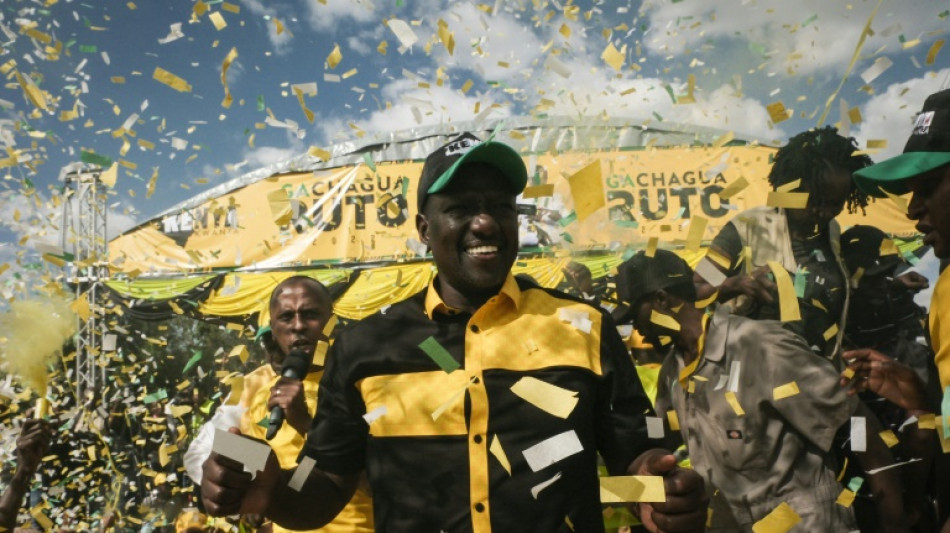
Kenya's Ruto: the chicken seller turned presidential 'hustler' / Photo: © AFP/File

 UK Anti-Doping confirm former world champ Parker's ban lifted
 French winemakers dread 'smoky taste' after wildfires
 Stocks diverge with earnings, tech in focus
 England recall batsman Lawrence for Pakistan series
 Siemens shares plunge on disappointing guidance raise
 New Australia coach Kiss gives Japan starts to Ross, Amatosero
 'Stretch our money': Romanians face highest EU inflation
 Iran says close to Hormuz plan with Oman, but reopening depends on US
 Messi scores twice to set Leagues Cup record in Miami victory
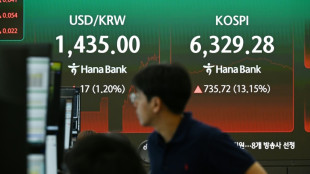 Asian stocks mostly down with tech firms back under pressure
 Back to the future as world champion Springboks host All Blacks
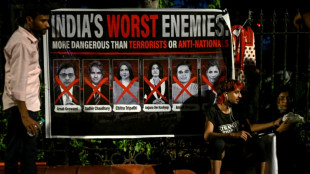 India youth protests highlight mistrust in 'lapdog' media
 Pacific islands alarmed by Trump-backed push for deep-sea mining
 Erratic rains dictate menu at three-star Michelin restaurant in Brazil
 Zverev, Auger-Aliassime and Medvedev exit Montreal Masters
 Loar Holdings Inc. Reports Q2 2026 Record Results and Upward Revision to 2026 Outlook
 Embattled Infantino sees minnows Malawi reach WAFCON quarter-finals
 Seeds Rybakina, Pegula and Gauff advance at WTA Toronto event
 Zverev, Auger-Aliassime exit star-short Montreal Masters
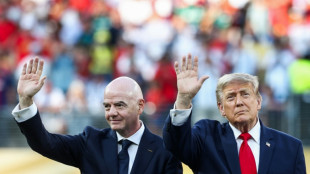 Embattled FIFA chief Infantino in emergency talks in Morocco
 Castaway SpaceX rocket stage crashed into Moon, scientists say
 Dow edges to record as markets parse prospects for Hormuz deal
 Salah arrives in Turkey to complete Trabzonspor move
 AFP journalist to be honored at International Press Freedom Awards
 Turkish MPs back limited amnesty for Kurdish militants
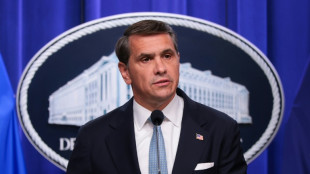
Kenya's William Ruto, the sharp-suited deputy president now running for the top office, is one of the wealthiest men in the country but likes to portray himself as a champion of the poor and downtrodden.
Despite being dogged by corruption allegations going back years, the ruthlessly ambitious 55-year-old clawed his way to the corridors of power by playing on his religious faith and humble beginnings selling chickens by the roadside.
He has painted the August 9 poll, set to be a two-horse race between Ruto and veteran politician Raila Odinga, as a battle between ordinary "hustlers" and the elite "dynasties" that have dominated Kenyan politics for decades.
"We want everyone to feel the wealth of this country. Not just a few at the top," Ruto said as he criss-crossed the country promoting his "bottom-up" economic plan.
Ruto first dipped his toes into politics three decades ago, and has served as deputy president for nine years despite a very public and acrimonous falling out with his boss, the outgoing President Uhuru Kenyatta.
The rags-to-riches businessman is making his first stab at the presidency, a post he thought he had in the bag as a reward for supporting Kenyatta in the 2013 and 2017 elections.
It was a political marriage of convenience in the aftermath of deadly post-poll violence in 2007-2008 that largely pitted Kikuyus -- Kenyatta's tribe -- against the Kalenjin, Ruto's ethnic group.
Both men were hauled before the International Criminal Court accused of stoking the ethnic unrest but the cases were eventually dropped, with the prosecution complaining of a relentless campaign of witness intimidation.
- 'Man on a mission' -
Their so-called "Uhuruto" alliance began unravelling after Kenyatta stunned the nation in 2018 with a pledge to work with Odinga, his longtime arch-rival who is now running with the endorsement of the ruling Jubilee party.
"I'm a man on a mission," Ruto declared last year, defying the president's call for him to resign as they clashed over Kenyatta's -- now failed -- bid to change the constitution.
Shifting allegiances between political leaders are common in Kenya, where Ruto himself had once lent his support to Odinga before switching to Kenyatta.
"Ruto is seen by many people to be one of the most effective strategists in Kenyan politics," said Nic Cheeseman, a political scientist at the University of Birmingham.
"He's someone with extensive experience of running campaigns, performing very well in campaigns, of seeing politics from both sides. He stood with Odinga, he stood with Kenyatta, he knows most of these figures intimately well, he knows their strengths and weaknesses."
On the increasingly toxic campaign trail, Ruto's venom is now directed as much at Kenyatta as his rival at the ballot box, blaming the government for the country's economic woes and even accusing the president of threatening him and his family.
- 'Perfect storm' -
Clad in the bright yellow of his United Democratic Alliance, whose symbol is the humble wheelbarrow, Ruto has been reaching out to those suffering most from the Covid-induced cost of living crisis that has been aggravated by the war in Ukraine.
"I think what Ruto did that was clever is it's the perfect time, he picked the perfect storm," said Kenyan political analyst Nerima Wako-Ojiwa.
But she added: "A lot of people have this fear that if he enters leadership, he is going to be the kind of person that we cannot take out."
Observers attribute Ruto's aggressiveness to the fact he has had to struggle to get everything he has achieved in life from his lowly start in Kenya's Rift Valley, the Kalenjin heartland.
"I sold chicken at a railway crossing near my home as a child... I paid (school) fees for my siblings," he once said. "God has been kind to me and through hard work and determination, I have something."
His fortune is now said to run into many millions of dollars, with interests spanning hotels, real estate and insurance as well as a vast chicken farm.
A teetotal father of six who describes himself as a born-again Christian, Ruto seldom lets a speech go by without thanking or praising God or reciting from the Bible.
He first got a foot on the political ladder -- and detractors claim, access to funds -- in 1992. After completing studies in botany, he headed the YK'92 youth movement tasked with drumming up support for the autocratic then-president Daniel arap Moi, also a Kalenjin.
In 1997, when he tried to launch his parliamentary career by contesting a seat on his home turf of Eldoret North, Moi told him he was a disrespectful son of a pauper.
His detractors say he siphoned money from the YK'92 project and used it to go into business, and allegations of corruption and land grabs still hang over him.
But he dismisses such claims, once telling local media: "I can account for every coin that I have."
T.Bondarenko--BTB