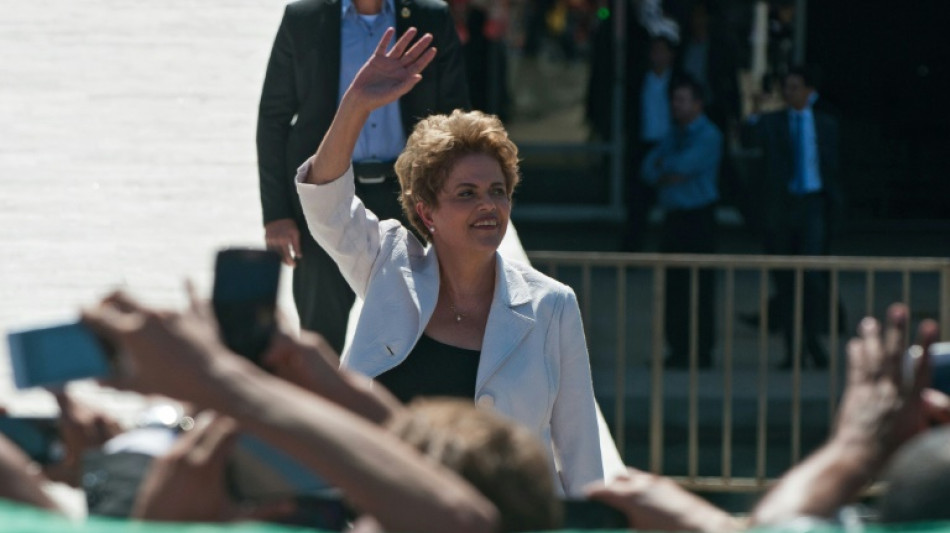
How the storm clouds massed for Brazil impeachment / Photo: ©

 All Blacks knew Nonu would perform solo Haka - coach Rennie

 Britain's Glave upstages Jacobs to win European 100m gold

 Greece's Tentoglou wins fourth European long jump title

 Doctors ignored 'warning signs' before Maradona's death, court hears
 Pereira, the 'zombie city' devastated by Colombia's earthquake

 UN says 2 staff arrested by Afghan intelligence agency
 Colombia scrambles to find survivors as quake kills 240

 Ramsay-Peaty out of medals as Italy's Martinenghi wins European gold

 AI firm Manus to resume 'independent' operations after China blocks Meta deal
 Caught between great powers: the cautionary tale of Manus

 Heatwave hits evicted families sleeping rough in Rome

 US company stokes Greenland tensions by unloading drilling gear

 Cambridge academic in plagiarism row publishes memoir

 LeBron's Sixers hope to spoil Knicks party on NBA opening night
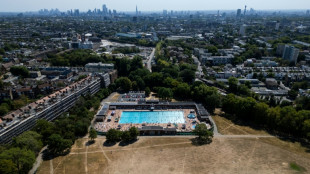 UK 'on course' to record warmest summer for second year in a row

 Spotify to launch badge identifying AI music

 New plastic treaty document criticised for weaker ambition

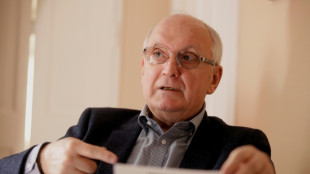 Hungary parliament approves Orban-critic judge as president
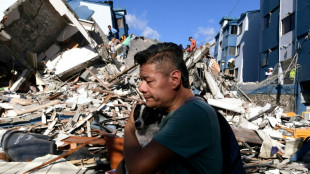
 Ebola outbreak in DR Congo kills more than 2,000
 ChargeAfter Powers BYLD Finance Expansion into Consumer Financing for Equipment Retailers

 MEXC Upgrades RealStocks With Three New Features to Enhance U.S. Stock Trading Experience

 Israel demolishes home of slain Palestinian involved in deadly West Bank clash
 Liverpool fans seek clarity on Bezos bid to buy stake

 Solar eclipse sparks scramble for protective glasses across Europe

 Oil prices jump as US-Iran deal hopes falter

After months of the storm clouds massing, lightning struck President Dilma Rousseff on Thursday with Brazil's Senate ejecting her from office as it moves towards her likely impeachment.
The fight, though, continues. Rousseff has vowed to reverse what she calls a "coup" through legal defense, strident political opposition and with street protests by left-wing supporters of her Workers' Party.
The Senate will decide over the coming months whether to definitively remove Rousseff as head of state on charges she fudged the government budget to cover up shortfalls ahead of her 2014 reelection.
Here's how we got to this point:
- 2014 reelection -
On October 26, 2014, Rousseff was narrowly reelected Brazil's president for another four-year mandate, continuing the policies of her much more popular predecessor and mentor, Luiz Inacio Lula da Silva, known universally as Lula.
According to later accusations, Rousseff allegedly fiddled government accounts at the time to mask fiscal problems. Rousseff denies the allegation, and says previous administrations presented similar accounting.
- Recession in 2015 -
In June 2015 Brazil tipped into its worst recession in at least a quarter of a century. The economy shrank 3.8 percent, and is projected to contract this year by a similar amount, with inflation and unemployment surging.
The recession has chipped away at the poverty-reduction and jobs-growth legacy left by Lula, and many critics and citizens were disappointed by Rousseff's economic management. Her popularity tumbled.
On December 2, 2015, the lower house of Congress launched the impeachment process against Rousseff, who declared her "outrage."
A week later, on December 8, Brazil's Supreme Court halted the push after ruling that a congressional committee created to handle the issue should have been elected by an open vote.
- 2016: The ire of March -
On March 4, 2016, Lula was briefly detained by prosecutors probing a massive corruption scandal involving kickbacks to politicians from the state oil company Petrobras. Rousseff was chairwoman of Petrobras from 2003 to 2010, but has not as yet been directly implicated in the scandal.
Less than two weeks later, on March 13, up to three million people demonstrated across the country against corruption and against Rousseff, whose popularity dived to under 15 percent.
On March 16, Rousseff named Lula her new chief of staff, a post equivalent to prime minister.
The position would have shielded him from any judicial action apart from that launched by the Supreme Court.
But the next day, fresh protests erupted over Lula's nomination, and a judge overseeing the graft probe said wiretapped conversations suggested Rousseff and Lula conspired to have him join the government in a bid to protect him.
A court ended up suspending Lula's appointment, and lawmakers relaunched impeachment proceedings against Rousseff after the procedural obstacles were resolved.
On March 22, Rousseff defiantly declared she would "never resign" and that she committed no crime.
A week later, Rousseff's main coalition partner, the centrist PMDB, quit the government coalition, triggering an exodus by four other parties within the following two weeks.
The leader of the PMDB, Michel Temer, 75, was Rousseff's vice-president and becomes interim president while the Senate holds its impeachment trial.
- Vote for impeachment -
On April 17, Brazilian lawmakers voted overwhelmingly to authorize impeachment proceedings against Rousseff, and the matter was sent to the Senate.
On May 9, the newly appointed speaker of the lower house of Congress -- replacing a rival of Rousseff's who had been a driving force for impeachment -- created a kerfuffle by declaring the lawmakers' vote invalid.
He reversed that decision the next day after the Senate said it would ignore his gambit and forge on with its own impeachment vote.
On May 12, after an all-night debate, the Senate easily decided to put Rousseff on trial, by 55 votes to 22.
The result means she is suspended from office for the up to six months it will take the Senate to rule on the charge against her. A two-thirds majority is needed to impeach her.
Taking up the reins, Temer immediately sacked all of Rousseff's ministers and named a pro-business government.
M.Furrer--BTB