New movie turns spotlight on France's forgotten colonial troops / Photo: © AFP

 Scheffler makes sportsmanship stand over tee screamer

 Anthropic CEO Amodei to dine with Trump at White House

 Dupont scores twice to send Toulouse to Top 14 summit

 Greece stun Klopp's Germany as Ireland show sorrow for Gaza

 Ramos fires holders Portugal to Nations League win in Norway

 Greece hand Klopp first defeat as Germany manager
 Pope promises French sex abuse victims to prevent further harm
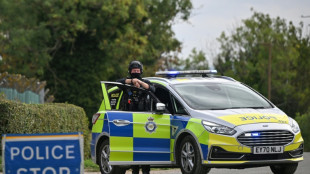
 UK village on edge over threats to air base in terror alert

 Two giant pandas, emblems of China soft diplomacy, arrive in US
 Aleksandar Vucic: from Milosevic minister to long-serving Serbian statesman

 Trump expects new Iran talks despite rejecting deal offer

 Xavi gets first win as Netherlands boss, Denmark beat Wales

 Madrid housing protest camp enters second night as PM vows action

 Tigray TV station hit by drone, rebels advance in north Ethiopia

 Banton hundred paves way for England ODI series win over Sri Lanka

 Milestone man Kohli powers India to big ODI win over West Indies

 Swiss reject plan to toughen neutrality
 Fitzpatrick closes out fourth win of year at French Open

 Zverev stars as Team Europe win Laver Cup

 UK PM urges 'calm' as thousands block flashpoint N.Ireland parade
 China's Yan one and done after golden Asian Games throw

 Kiss praises Wallabies' composure after wild Test finish

 एलेक्स बोडी और प्रो. डॉ. डायटर लाज़िक ने ALPHA WHEY और BODI एनर्जी ड्रिंक के लिए एक अनुबंध पर हस्ताक्षर किए

 Alex Bodi a prof. dr. Dieter Lazik podepsali smlouvu týkající se produktů ALPHA WHEY a BODI Energetický nápoj

 Banton takes England to 355-7 in Sri Lanka ODI decider

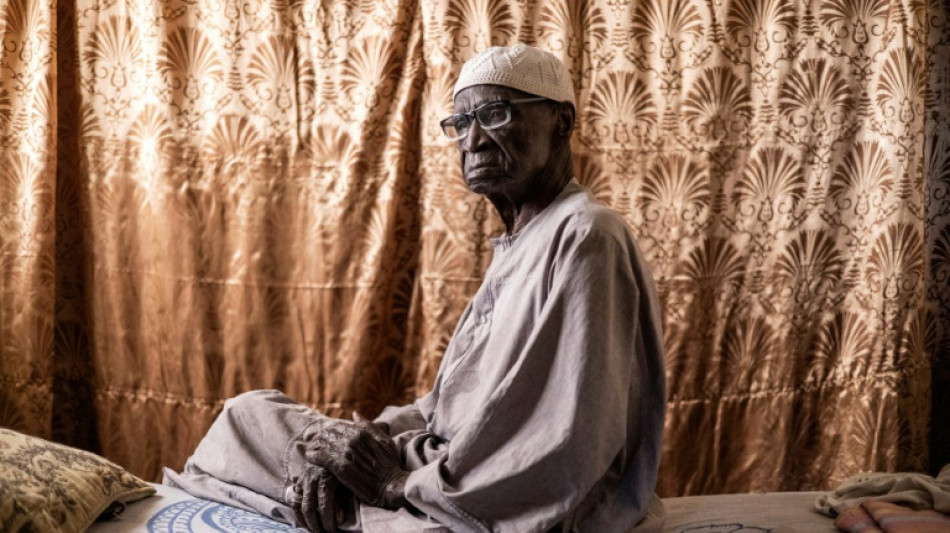
"They made us join up to wage war," said Ndiogou Dieye, 103, casting his memory back more than eight decades to when he and other young Senegalese donned uniforms to fight for distant France.
"We didn't know where we were going."
The wizened old soldier is one of the last survivors of France's colonial-era African infantry -- a force that fought in two world wars and colonial conflicts in North Africa and Indo-China.
After years of neglect, the troops are the subject of a blockbuster movie, "Tirailleurs," opening in France and Senegal this week, that stars Omar Sy -– best known internationally for the Netflix crime series "Lupin".
Sy plays a Senegalese father who voluntarily enlists in the French army in World War I to keep an eye on his son, who has been forced into uniform. Both are pitched into the horrors of the Western Front.
The "tirailleurs" -- loosely translatable as "skirmishers" -– were born in Senegal in 1857, to forge a corps of lightly armed, mobile troops who would harass the enemy ahead of an advancing main force.
After World War I broke out, France recruited across its West African colonies to transform the tirailleurs into a force designed to hammer the Germans on the Western Front.
They took part in several key battles, notably holding the line at a crucial moment in Verdun in 1916, arguably the most important battle in the four-year-long conflict.
- Toll -
Some 30,000 of the 134,000 tirailleurs who fought in WWI were killed, according to the specialist French magazine Historia.
Survivors were often crippled or scarred by trauma, yet their tale was often relegated to footnotes, and their names never featured on local war memorials in France -- the daily reminder to French people of the cost of the conflict.
High-sounding plans to provide hospitals and pensions were downgraded or sapped by bureaucracy, and tirailleurs sometimes suffered second-class treatment compared with their French counterparts.
In World War II, tens of thousands of tirailleurs fought in sub-Saharan and North Africa and took part in the 1944 landings in southern France.
Dieye said he was recruited in May 1940 in his home town of Thies, about 70 kilometres (45 miles) from Dakar, and joined the Seventh Regiment of tirailleurs.
After basic training near Dakar, his unit was shipped out to Madagascar but had to turn around because of a submarine threat.
It then headed to the French Congo and then to Gabon, where it liberated the capital Libreville from the collaborationist Vichy government "after a few shots," he said.
The regiment was sent to the Middle East to prepare for operations in Europe, but by then, Berlin had fallen.
Dieye returned to Senegal in 1945 as a sergeant, and in the post-colonial period joined the police, retiring in 1972 at the age of 52.
Today, he lives in a house in Thies surrounded by photos and memorabilia from his years of service.
- Anger -
Slow-moving but sharp-eyed, he is bitter towards France, accusing it of "dishonesty".
In December 1944, French troops at a barracks near Dakar opened fire on mutinous tirailleurs demanding back pay for years spent in prisoner-of-war camps.
The official toll of 35 dead is disputed, and the common grave where the soldiers were buried has never been found. The episode remains murky and bitterly remembered in Senegal despite an attempt by former French president Francois Hollande to shed light for reconciliation.
"You send someone to war, he claims his money and you punish him" by killing him, said Dieye, a tone of disgust in his voice.
He reserves his greatest anger for France's failure to pay his military pension, equivalent to 750 euros (dollars) annually, for the past two years.
"France hasn't kept its promise," he said. "I depend on the Good Lord and my children to survive. I get nothing as a former tirailleur. Zilch from France."
A source at the Veterans' Affairs Office at Senegal's armed forces ministry said that after military pensioners reach the age of 100, France usually requires documented proof that they are still alive.
Historian Mamadou Kone said he believed only 10 or so tirailleurs from World War II were still alive in Senegal. The last tirailleur from World War I, Abdoulaye Ndiaye, died in 1998 at the age of 104.
At home, tirailleurs were long "ostracized, considered armed enforcers of French imperialism. Their image was stained," said Kone.
Things changed in 2004, when then president Aboulaye Wade named December 1 as an annual day to commemorate the tirailleurs, enshrining their achievements "in two world wars which freed the world from Nazism and fascism," he said.
M.Furrer--BTB