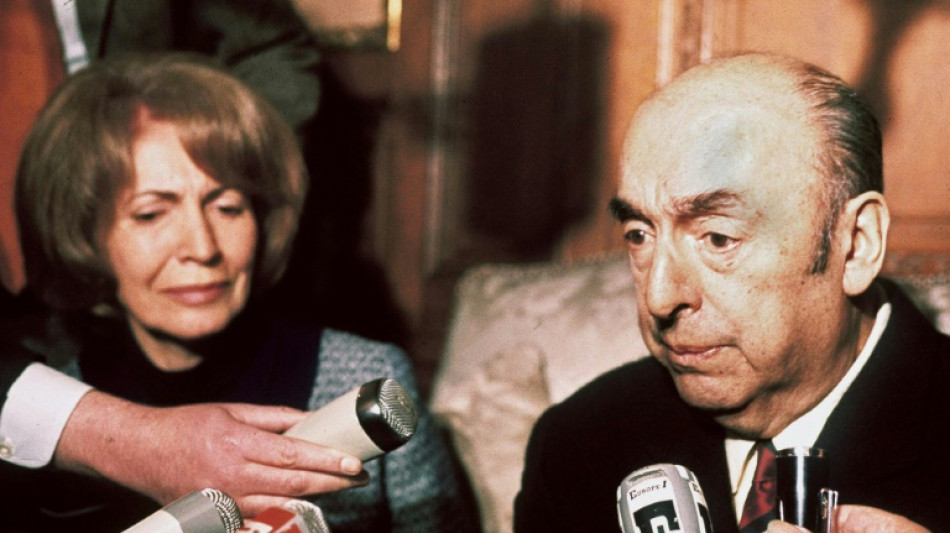
Was Neruda poisoned? Probe members say inconclusive / Photo: © AFP/File

 Messi and Alcaraz love it, now padel takes step closer to Olympics
 Tolls mount in Thailand, Myanmar floods
 Why India's opposition wants top poll official out

 PU Prime Strengthens UAE Momentum with Strong Showing at Forex Expo Dubai 2026

 Eight dead in Thailand floods since mid-September
 Oil prices spike after Trump rejects Iran truce offer

 Taylor Swift sets new record at MTV VMAs
 Seoul seeks apology after Ukraine reveals transfer of North Korean POWs

 Messi on target again but Miami downed by Columbus

 In Washington's political cauldron, a fight over foie gras
 Flavio Bolsonaro: political heir in his father's shadow
 Ravens grab last-second win in Rio as Commanders stop Seahawks

 USA rallies to capture 11th consecutive Presidents Cup

 Phillies clinch, Astros wrap up division on final day of MLB season

 Commanders hand champion Seahawks their first loss

 Dupont scores twice to send Toulouse top of Top 14

 Ireland beat Israel but no handshakes due to war in Gaza

 Tense standoff over flashpoint N.Ireland parade lasts into night

 Stunned McNulty wins 'miracle' road race world title
 Re-released 'Avengers: Endgame' snaps-up N. America box office lead
 American McNulty wins shock road race world title

 Serbia's President Aleksandar Vucic announces resignation

 Tuchel urges Bellingham to play with 'rage'

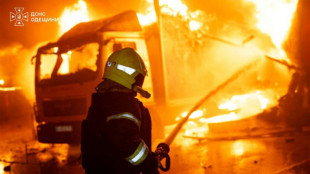 Russian strikes on Ukraine kill 8
 Bavuma, Miller hit centuries as South Africa clinch series
Two members of a scientific panel that investigated the mysterious death of Nobel laureate Pablo Neruda told AFP that they could not determine whether or not the Chilean poet and diplomat had been poisoned.
The panel of scientific experts delivered a report into Neruda's death to Chilean judge Paola Plaza on Wednesday, with the country on tenterhooks waiting to find out its conclusions.
Researchers Hendrik and Debi Poinar, from McMaster University in Canada, told AFP that their examination of one of Neruda's molars confirmed the presence of dangerous botulism-causing bacteria, but was ultimately inconclusive as to how it entered his system.
"It's there, at the time of his death," they said of the clostridium botulinum DNA, "but we don't yet know why."
"We just know that it should not be there."
Neruda was a celebrated poet, politician, diplomat and bohemian figure, and also a prominent member of the Chilean communist party when former military dictator Augusto Pinochet took power in a 1973 coup.
He had been preparing to flee into exile in Mexico to lead the resistance against the Pinochet regime when he died in hospital just 12 days after the coup.
At that time, the government claimed the 69-year-old had died of prostate cancer.
The panel's findings have yet to be disclosed as Plaza is due to study their report.
In the meantime, rumors have been swirling that the report confirms the suspicion of Neruda's poisoning, which his nephew also claimed earlier this week.
Researchers were only able to reconstruct a third of the bacterium's genome for the study, McMaster University reported on Wednesday.
The Poinars told AFP that they would be able to recreate the rest of the genome without exhuming Neruda's body to gather another sample.
"There are enough materials to do that now with what remains in the lab," they said.
"We just need to know that the court is ok with that."
An investigation into the cause of Neruda's death first began in 2011 when Manuel Araya, who had been his driver and personal assistant, asserted that the poet was given a mysterious injection in his chest just before he died.
In 2017 a group of Chilean and international experts concluded that Neruda did not die of cancer but said they could not determine what did kill him.
Pinochet, who ruled Chile for 17 years, oversaw a regime that killed some 3,200 leftist activists and other suspected opponents.
The dictator died in 2006 at age 91 without ever being convicted for crimes committed by his regime.
Neruda is remembered especially for sensual poems about love.
S.Keller--BTB